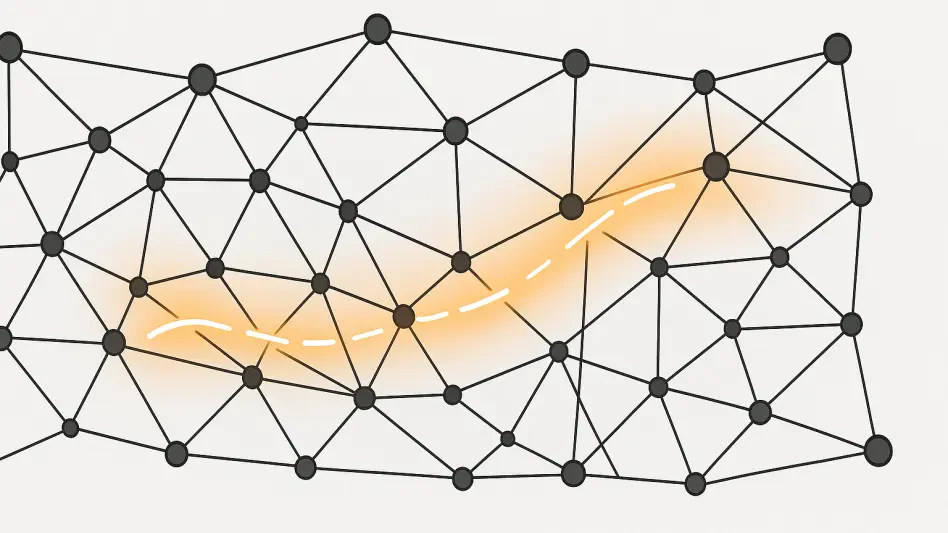

The digital perimeter has effectively dissolved, leaving modern enterprises to rely on granular internal controls that were once thought to be the final line of defense against sophisticated cyber threats. However, the discovery of a CVSS 10.0 vulnerability within the Cisco Secure Workload platform, identified as CVE-2026-20223, has sent a clear signal that even the tools designed to enforce zero-trust principles are not immune to catastrophic failures. This specific flaw targets the internal application program interfaces (APIs) of the management plane, which serves as the central brain for policy enforcement across vast server environments. Because this platform is inherently granted high-level privileges to monitor and restrict traffic, a compromise at this level does not just bypass a single gate; it essentially hands the keys of the entire kingdom to an unauthenticated actor. The gravity of a perfect ten rating underscores a complete breakdown in the expected security posture of a mission-critical infrastructure component.
The Architecture of Trust and Its Fundamental Fractures
The Vulnerability of Centralized Security Enforcement
When a security platform is tasked with microsegmentation, it becomes the most attractive target for an adversary looking to maximize their impact within a corporate network. CVE-2026-20223 exploits a fundamental lack of authentication on the management API of Cisco Secure Workload, which allows unauthorized users to execute administrative commands without providing any credentials. This is particularly dangerous because the platform is designed to be the “source of truth” for security policies across cloud and on-premise data centers. If an attacker can manipulate these policies, they can create silent backdoors, disable logging, or permit lateral movement that would otherwise be blocked by the zero-trust architecture. The blast radius is nearly total, as the very system meant to contain breaches is transformed into an instrument for their expansion. This scenario forces a re-evaluation of how much trust should be placed in a single, centralized policy engine that holds the power to dictate every connection.
The reliance on a single pane of glass for security management has long been touted as a way to reduce complexity, yet this incident highlights the inherent fragility of such an approach. By centralizing control, organizations create a single point of failure that, if exploited, can paralyze operations or lead to widespread data exfiltration. In the case of this CVSS 10.0 flaw, the technical debt associated with legacy codebases often prevents the implementation of robust, modern authentication protocols across all internal interfaces. As researchers move through 2026 and toward 2028, the focus is shifting toward “distributed trust” models where the management plane itself is subject to the same rigorous, multi-factor verification as the users it monitors. The current situation proves that an “inner sanctum” mentality, where internal APIs are assumed to be safe because they are behind a firewall, is a relic of a bygone era that no longer suffices in a world of persistent threats.
Systemic Failures in Modern Software Development
This recent discovery is not an isolated event but rather the third instance in the current year where Cisco has had to patch a 10.0-rated vulnerability related to authentication bypass. This pattern suggests a systemic challenge within the development lifecycle of complex enterprise software, where the speed of feature deployment often outpaces the rigor of security audits. Cisco’s portfolio, characterized by decades of strategic acquisitions, often struggles with the integration of disparate codebases that were never originally designed to communicate securely with one another. When these legacy systems are wrapped in a modern API layer, hidden gaps in the logic of identity verification can remain dormant for years. The sheer scale of these platforms makes manual code review nearly impossible to execute perfectly, leaving organizations to hope that their vendors are utilizing the latest automated testing tools to catch these “low-hanging fruit” flaws before they reach production.
The rise of AI-driven code analysis has fundamentally altered the landscape of vulnerability discovery, giving both defenders and attackers unprecedented capabilities. In 2026, automated tools can scan millions of lines of code in a fraction of the time it would take a human team, pinpointing exact locations where authentication checks are missing or improperly implemented. This technological shift explains why we are seeing a surge in critical ratings for bugs that might have stayed hidden in previous years. While Cisco has been proactive in releasing patches once these flaws are identified, the recurring nature of these critical bugs points to a need for a “Secure by Design” overhaul that goes beyond simple patching. Moving forward from 2026, the industry must demand that vendors provide more transparency into their software bill of materials and the automated testing regimes they employ to ensure that basic administrative interfaces are locked down by default.
Redefining Resilience Beyond Perimeter Defense
Implementing Identity-Based Microsegmentation Strategies
To counteract the risks posed by a compromised management plane, security architects are moving toward a model where identity is the primary unit of trust rather than network location. This approach, often referred to as identity-based microsegmentation, ensures that even if a tool like Secure Workload is compromised, individual workloads still require a unique, short-lived token to communicate with one another. By decoupling the security policy from a single central controller, organizations can create a more resilient fabric that does not collapse when a single node is hit. This strategy involves the use of service meshes and sidecar proxies that enforce mutual TLS (mTLS) and granular authorization at the application layer. In this framework, the central management platform only serves to distribute configuration, while the actual enforcement is handled locally by distributed components that do not inherently trust the management API if its requests lack the proper cryptographic signatures.
Building such a resilient architecture requires a shift in how IT teams view their internal services, treating every API call as a potential vector for attack. This means moving away from broad, network-level rules toward specific, intent-based policies that define exactly which services are allowed to talk to which databases. By 2027, it is expected that more enterprises will adopt “policy-as-code” frameworks that allow for the continuous auditing and validation of security configurations. This ensures that any unauthorized change to a policy—whether made by a malicious actor or a compromised administrator account—is immediately detected and rolled back. This layer of defense-in-depth is essential for mitigating the impact of flaws like CVE-2026-20223. Even if an attacker gains administrative access to the management console, their ability to do damage is severely restricted if the underlying infrastructure requires independent, out-of-band verification for any significant policy modification.
Transitioning to a Continuous Verification Mindset
The primary takeaway from the current wave of high-severity vulnerabilities is the absolute necessity of adopting an “assume breach” mindset across all layers of the technology stack. Security teams must move past the idea that a software patch is a final solution and instead focus on building environments that can withstand the failure of any single component. This involves the implementation of continuous verification systems that constantly monitor the health and integrity of security tools themselves. For instance, by using behavioral analytics to baseline the normal operation of a management API, an organization can receive instant alerts when a series of unauthenticated administrative calls are made. This reactive capability, combined with a proactive reduction in the centralization of security controls, creates a multi-layered defense that is significantly harder to penetrate. The focus should be on reducing the “blast radius” of any potential exploit by ensuring that no single vulnerability can lead to a total system takeover.
In the immediate aftermath of identifying such a critical flaw, the priority was naturally on rapid deployment of the vendor’s patches to close the door on potential exploits. However, the long-term strategy for 2026 and beyond must involve a move toward decentralized security management and the integration of hardware-rooted trust for management interfaces. Organizations should consider isolating their management planes on dedicated, out-of-band networks that require physical or multi-factor proximity for access. Furthermore, the use of “just-in-time” administrative access can ensure that high-level privileges are only granted for specific tasks and for a limited duration, significantly narrowing the window of opportunity for an attacker. By treating security tools as high-risk assets that require their own specialized protection, defenders can better safeguard the foundational assumptions of their zero-trust environments. The era of implicit trust in security vendors has ended, replaced by a requirement for verifiable, distributed, and continuous security enforcement.