A single unlocked door in a digital fortress is all it takes for an entire kingdom to fall, a lesson many organizations learned abruptly with a critical flaw in their core management software. The tool designed to be the central nervous system for complex IT environments became the very vector for their potential collapse. This is not a hypothetical scenario but the reality presented by CVE-2025-37164, a maximum-severity vulnerability in Hewlett Packard Enterprise’s (HPE) OneView software that turned a trusted platform into an enterprise’s most significant liability. The flaw underscores a sobering truth: the more centralized and powerful a management tool is, the more catastrophic its failure can be.
What Happens When a Management Tool Becomes the Biggest Threat
The promise of unified infrastructure management is efficiency and control, consolidating complex operations into a single interface. However, this centralization creates an incredibly valuable target for malicious actors. When the platform designed to secure and manage servers, storage, and networking is itself compromised, it subverts its very purpose. Instead of acting as a shield, it becomes a weapon, providing an attacker with the same administrative power that legitimate users rely on for daily operations. This paradigm shift turns a solution into a critical vulnerability.
The Single Point of Failure You Did Not Know You Had
HPE OneView is far more than a simple software application; for thousands of global enterprises, it is the central orchestration layer that governs the entire hardware stack. Organizations depend on it for mission-critical IT functions, including automated hardware provisioning, firmware updates, and ongoing infrastructure monitoring. Its role is so foundational that it acts as the digital backbone for core business services, making its uninterrupted and secure operation a necessity.
The danger of this deep integration is that a breach does not remain contained within the OneView environment. Because the platform is often connected to other vital systems, a compromise can cascade with devastating effect. An attacker gaining access to OneView could potentially pivot to integrated ticketing platforms, manipulate identity services, or disrupt automated workflow engines. This ripple effect transforms the initial breach from a single application compromise into a full-scale infiltration of the corporate IT ecosystem.
Deconstructing the Flaw CVE 2025 37164
The vulnerability, formally identified as CVE-2025-37164, is classified as an unauthenticated remote code execution (RCE) flaw. In practical terms, this allows a remote attacker to execute arbitrary commands and achieve complete system compromise without needing any credentials. This is the worst-case scenario for any software vulnerability, as it removes the first line of defense—authentication—entirely.
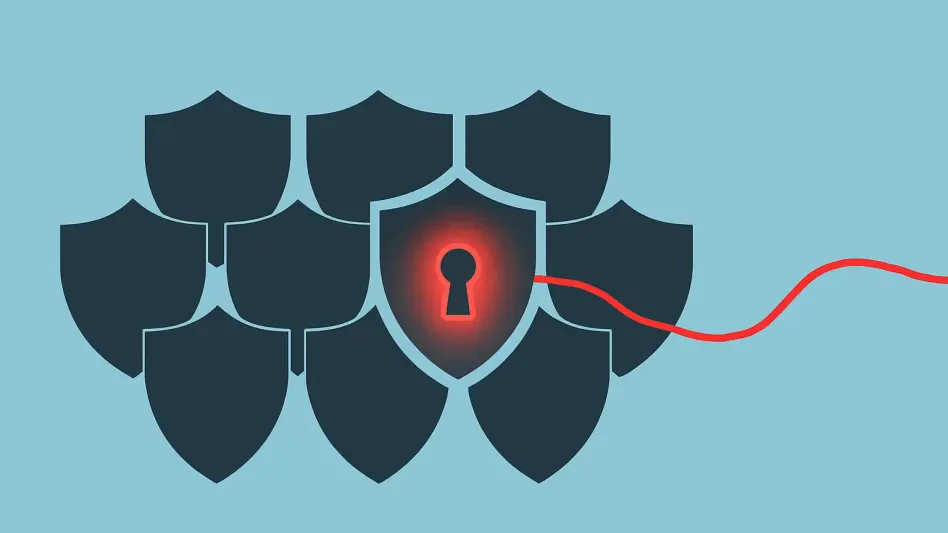
The attack vector was alarmingly straightforward: a publicly accessible REST API endpoint was developed without proper authentication checks. This oversight effectively created an open, unguarded door into the system’s administrative functions. For an attacker, this is the equivalent of finding the master key to a building lying on the front steps. The consequences escalate rapidly, as control of OneView provides the “keys to the kingdom,” enabling attackers to manipulate the very hardware the IT infrastructure is built on. Making matters worse, the public release of a proof-of-concept exploit code dramatically lowered the technical barrier, turning a sophisticated attack into a widely accessible tool for less-skilled threat actors.
A Patch Now Mandate and a Federal Alert
The severity of this threat was formally recognized when the U.S. Cybersecurity and Infrastructure Security Agency (CISA) added CVE-2025-37164 to its Known Exploited Vulnerabilities (KEV) catalog. This designation is not just a warning; it is a confirmation of active exploitation in the wild, which immediately triggered a mandate for federal agencies to apply patches. For the private sector, it served as an unambiguous signal of an immediate and present danger.
Across the cybersecurity community, the verdict was unanimous and unequivocal: immediate patching was non-negotiable for any organization running the affected software. This incident has also become a stark case study in the growing importance of API security. It perfectly illustrates how a seemingly minor oversight, such as a missing authentication check on a single API endpoint, can evolve into a catastrophic failure point, providing a direct pathway for a complete infrastructure takeover in a modern, interconnected environment.
Securing Your Systems with Immediate Mitigation
In response to the active threat, HPE issued clear and direct guidance to its customers. The primary and most effective solution is to upgrade immediately to HPE OneView version 11.00 or a later release, as these versions fully remediate the critical vulnerability. This path offers the most comprehensive protection against exploitation.
For organizations that could not perform a full upgrade right away due to operational constraints, HPE provided a designated security hotfix. Applying this patch was strongly recommended as a crucial interim measure to close the security gap and provide immediate protection while a more permanent upgrade could be planned. The messaging from both security experts and the vendor reinforced that this situation demanded a time-sensitive emergency response, not a routine update, to counter a confirmed and active threat.
The response to CVE-2025-37164 highlighted the fragility of even the most sophisticated IT environments. Organizations that acted swiftly managed to avert disaster, while the incident left a lasting mark on the industry’s approach to infrastructure management and API security. It served as a powerful reminder that the tools providing the greatest efficiency can also introduce the most profound risks, fundamentally shifting the conversation toward building more resilient and defensively layered systems. The vulnerability became a catalyst for renewed scrutiny of all integrated management platforms, ensuring that convenience would no longer come at the cost of security.