The sophisticated landscape of global cyber espionage reached a critical juncture recently as federal authorities and private sector giants disrupted a sprawling infrastructure designed to harvest credentials from high-value government and corporate targets across the United States. This operation represents one of the most significant strikes against state-sponsored actors who have spent years embedding themselves within the hardware that connects modern households to the digital world. By exploiting vulnerabilities in aging networking equipment, these adversaries managed to create a stealthy relay system that masked their true origin and intent from even the most advanced threat detection algorithms. The sheer scale of the coordinated effort suggests that the threat was not merely a collection of isolated attacks but a systematic attempt to undermine the integrity of sensitive communications within the North American energy and defense sectors. Organizations must now confront the reality that peripheral security is just as vital as core systems.
Anatomy of the Digital Strike
Identifying the Vulnerable Vectors
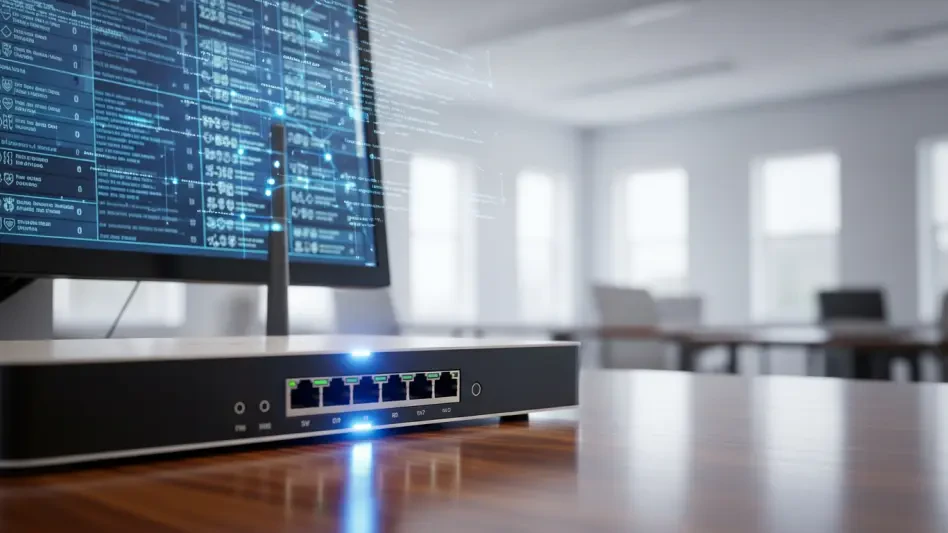
The technical foundation of this massive campaign relied heavily on the exploitation of Small Office and Home Office routers, which often lack the robust security updates found in enterprise-grade equipment. These devices were transformed into a global proxy network, commonly referred to as a botnet, allowing the attackers to route their malicious traffic through legitimate residential IP addresses. This tactic effectively neutralized traditional geo-fencing and IP reputation filters, as the requests appeared to originate from local users rather than foreign servers. Furthermore, the attackers deployed custom malware that resided primarily in the device’s volatile memory, making detection through standard disk-scanning tools nearly impossible. By maintaining such a low profile, the network remained operational for an extended period, silently harvesting login credentials through highly targeted phishing emails that mimicked internal corporate communications with unsettling precision and technical accuracy.
Orchestrating the Tactical Takedown
Cooperation between the public sector and technology leaders proved essential in mapping the extent of this digital intrusion and identifying the command-and-control servers directing the botnet. Google’s Threat Analysis Group provided granular data on the specific phishing templates and domains used to deceive victims, while the FBI utilized legal authorities to dismantle the underlying server infrastructure across multiple jurisdictions. This joint effort involved a series of surgical strikes that disabled the malware’s ability to communicate with its controllers, effectively neutralizing the threat without damaging the host routers. Such a delicate operation required real-time coordination to ensure that the attackers could not migrate their operations to backup servers before the shutdown was complete. The successful neutralization of these nodes demonstrates a maturing model of public-private partnership that is becoming the standard defense against state-aligned adversaries who operate at a global scale.
Establishing Future Security Protocols
The successful dismantling of the network established a vital precedent for how global powers responded to the weaponization of domestic internet infrastructure by foreign entities. Security professionals recommended that administrators prioritize the immediate replacement of legacy hardware that reached its end-of-life status and could no longer receive critical security patches. They also emphasized the necessity of mandatory multi-factor authentication across all entry points, particularly for administrative interfaces that were frequently targeted during the campaign. Future defenses relied on the integration of artificial intelligence to predict phishing domain registration before those domains were utilized in an active attack. By taking these proactive measures, organizations effectively reduced their attack surface and forced adversaries to seek more expensive and detectable methods of infiltration. This transition toward a resilient and automated defense posture marked a significant evolution in the digital ecosystem.