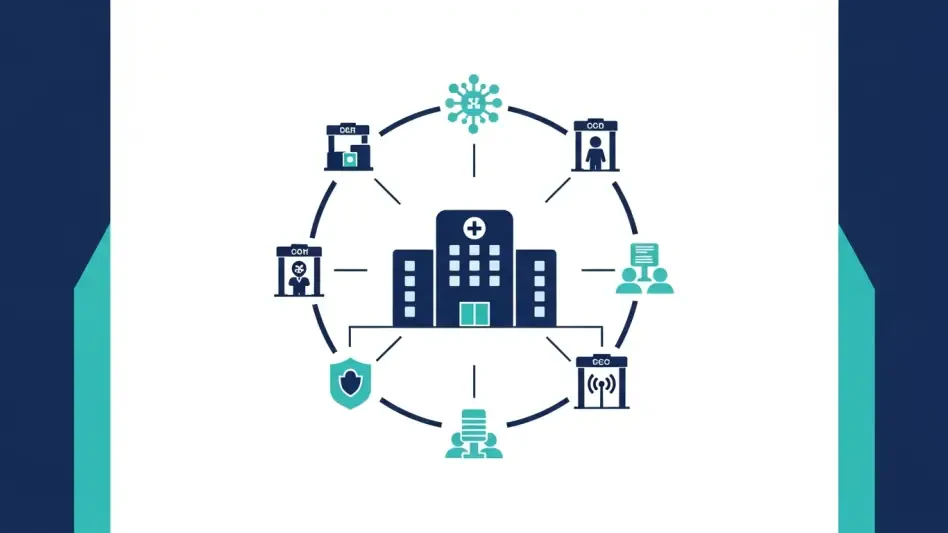

A critical analysis based on tens of thousands of observed cyber incidents has starkly revealed that the security measures many organizations rely on are fundamentally misaligned with the fluid and adaptive nature of modern adversaries. The most significant finding from this research, which maps extensive attack data against the MITRE ATT&CK framework, is that security coverage gaps are most pronounced at the procedural level. While a security tool might recognize a broad attack technique in theory, it often fails to detect the specific, nuanced ways in which attackers execute that technique in a live environment. This critical disconnect highlights an urgent need for a paradigm shift in cybersecurity, moving away from static, checklist-driven postures toward a more dynamic, behavior-centric, and threat-led defense strategy that mirrors the operational reality of today’s threat landscape.
The Shifting Tactics of Cyber Adversaries
The continuous and rapid evolution of threat actor tactics, techniques, and procedures (TTPs) stands as the most prominent trend shaping the current cybersecurity environment. Established cybercriminal organizations are not static; they are actively refining their methodologies to enhance effectiveness and circumvent detection. The group known as Void Rabisu, for example, has significantly expanded its operational scope, transitioning from purely ransomware-driven campaigns to sophisticated, espionage-aligned behaviors targeting high-value sectors such as telecommunications, energy, and government. This evolution is marked by significant changes in tooling, credential access methods, and the use of advanced evasion techniques aimed at cloud and enterprise systems. Similarly, the group Scattered Spider has demonstrated a steady expansion of its activities over the past few years, moving beyond its initial focus on business process outsourcing firms to infiltrate the retail, technology, and financial sectors. Its campaigns show a deep focus on Software-as-a-Service (SaaS) platforms, with over 225 distinct procedures documented to compromise environments like Salesforce and Microsoft Teams.
Another defining trend is the democratization and commoditization of zero-day exploits, which have transitioned from the exclusive domain of highly sophisticated state-sponsored actors to a common tool for a broader range of criminal and hybrid threat groups. Recent analysis has linked over 58 distinct threat objects to known or suspected zero-day exploitation, illustrated by large-scale campaigns from Chinese-linked groups exploiting SharePoint vulnerabilities and another major campaign targeting Ivanti VPN systems. Crucially, financially motivated attackers have now fully entered this space, leveraging zero-day exploits to compromise cloud infrastructure and use the stolen data for extortion. This widespread adoption has drastically compressed the response window for defenders from weeks to mere days, rendering traditional patch-and-pray cycles dangerously insufficient. Consequently, security experts advocate for a more proactive defensive posture focused on identifying the specific behaviors associated with exploitation rather than passively waiting for official vulnerability disclosures and subsequent patches.
New Frontiers in Attack Methodologies
A significant resurgence of social engineering as a primary initial access vector has been fueled by the increasing sophistication and accessibility of automation and artificial intelligence. Attackers are leveraging AI tools to scale their operations, creating highly believable and customized phishing emails, voice calls (vishing), and credential harvesting campaigns that are more difficult than ever to detect. The primary target of these advanced social engineering attacks is identity, with campaigns specifically designed to abuse SaaS access, compromise cloud administration accounts, and exploit single sign-on (SSO) systems. For instance, the Luna Moth group evolved from simple callback phishing schemes into complex, multi-channel operations that combine voice, email, and infrastructure control to manipulate victims. Another group, UNC6040, successfully targeted Salesforce environments through impersonation and consent abuse, enabling massive data exfiltration without deploying a single piece of malware. This trend underscores a critical defensive challenge, as these identity-focused attacks often bypass traditional endpoint security controls entirely.
The ransomware ecosystem has also undergone a significant transformation, characterized by fragmentation and strategic diversification. Analysis has tracked 54 distinct ransomware groups, including 16 newly identified entities, indicating a multiplying and increasingly complex threat landscape. While many groups still use encryption, the core of their extortion strategy has shifted toward data theft, identity compromise, and operational disruption—a model often referred to as double or triple extortion. Groups like Medusa and Qilin now routinely target backups, cloud assets, and identity systems to maximize pressure on their victims. This fragmentation has also led to the rise of smaller, more agile teams that leverage multi-platform tooling, cloud service abuse, and living-off-the-land techniques to minimize their operational footprint and increase their speed of execution. A key finding is that 92% of observed ransomware procedures were clustered with previously seen activity, suggesting a shared ecosystem of TTPs that makes a behavioral approach to defense, focused on identifying common procedures rather than specific malware families, essential for effective protection.
Redefining Defensive Strength for a New Era
Ultimately, all of these evolving trends converge on a single, critical conclusion: defensive gaps consistently manifest at the behavioral and procedural layer of an attack. It became clear that many organizations possessed security controls that could detect a known technique in a controlled testing environment, but these same controls often failed during a live intrusion when an attacker made even minor alterations to the execution steps. This reality argues for a paradigm shift where defensive strength is measured not by a checklist of covered techniques, but by the specific adversary behaviors an organization can actively detect and stop. The focus shifted toward understanding how attackers operate and the exact procedures they use. This required organizations to meticulously map their security controls directly to observed, real-world attacker procedures to verify their effectiveness and identify the precise points where coverage broke down, thereby enabling the development of a truly resilient, threat-led defense posture.