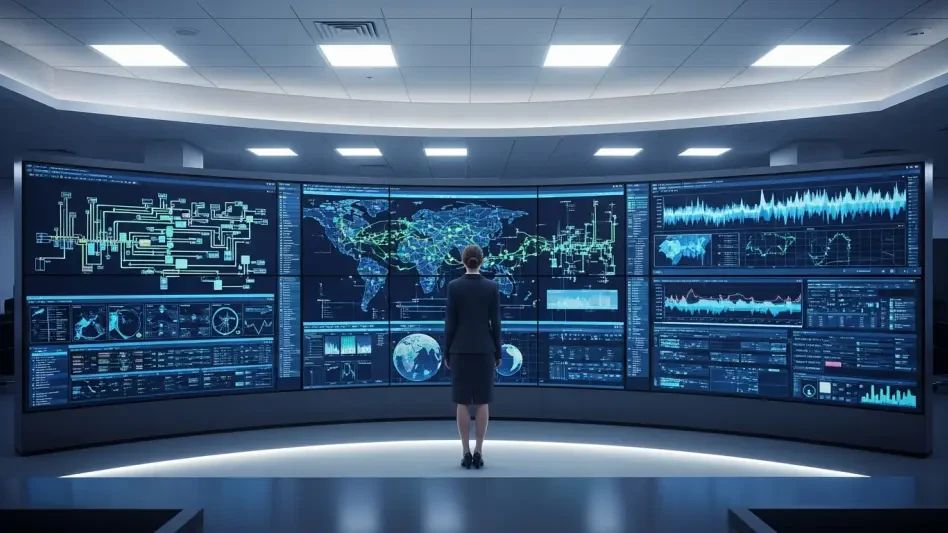
The traditional boundaries of sovereign warfare have dissolved as the roar of physical explosions now finds an instantaneous and terrifyingly precise echo across the global fiber-optic landscape. In the wake of recent military operations conducted by the United States and Israel against Iranian targets, the international community has witnessed a massive escalation in digital hostility that transcends simple protest. This surge signifies a fundamental shift in how state-aligned actors perceive the utility of the internet, transforming it into a primary theater for reprisal. Unlike the isolated incidents of the past, this current wave demonstrates a high degree of synchronization where physical strikes act as immediate catalysts for a multi-pronged cyber offensive. This phenomenon underscores the reality that modern kinetic actions no longer occur in a vacuum but instead trigger a cascade of digital consequences that can impact civilian infrastructure and economic stability thousands of miles from the original conflict zone.
The intensification of these digital operations provides a clear look at how geopolitical friction is now managed through a blend of physical force and virtual disruption. State-aligned hacktivists and organized collectives have leveraged this period of instability to exert psychological pressure on their adversaries, utilizing propaganda and high-profile claims of system breaches to dominate the narrative. While the physical strikes focus on tactical military objectives, the retaliatory cyber surge targets the foundational elements of modern life, including energy, telecommunications, and finance. This article analyzes the specific mechanisms behind this surge, the complex web of international alliances that drive these attacks, and the long-term implications for global security as digital and physical warfare become inextricably linked in a cycle of perpetual escalation.
From Kinetic Strikes to Digital Echoes: The Evolution of Conflict
The historical relationship between physical engagement and digital counter-attacks has undergone a radical transformation, moving from delayed responses to near-simultaneous reactions. In earlier decades, cyber operations were often treated as secondary or supportive measures, frequently utilized for intelligence gathering long before or after a physical campaign. However, by 2026, the timeline for retaliation has narrowed significantly, with digital strikes often launching within hours of a missile impact. This acceleration is driven by the maturation of hacktivist networks that maintain a constant state of readiness, allowing them to pivot their focus toward specific national targets as soon as a geopolitical trigger is pulled. This evolution reflects a broader trend where the digital realm serves as a release valve for state-sponsored frustration, offering a way to project power without the immediate risks of traditional combat.
Understanding this shift requires an examination of how regional tensions in the Middle East have pioneered the use of hybrid tactics to bypass conventional defenses. In previous years, border-based conflicts were largely contained within geographic limits, but the proliferation of cloud-based infrastructure and globalized supply chains has removed these constraints. Adversaries now recognize that striking a domestic utility company or a defense contractor provides a more direct path to eroding public confidence than traditional frontline skirmishes. This strategy allows smaller actors or those facing military disadvantages to punch above their weight, creating an environment where no entity is truly insulated from the fallout of distant military engagements. Consequently, the digital echo of a kinetic strike has become just as significant as the strike itself, necessitating a complete re-evaluation of national defense doctrines.
The Mechanics of Retaliation and Targeted Vulnerabilities
Pro-Iranian Collectives and the Pursuit of Disruption
In the immediate aftermath of the military strikes, a diverse coalition of pro-Iranian hacktivist groups, including prominent names like Handala Hack and UniT 313, mobilized to launch coordinated strikes against Israeli and Western interests. These entities operate with a degree of technical agility that allows them to cycle through a variety of attack vectors, ranging from standard denial-of-service campaigns to more sophisticated attempts at breaching core infrastructure. One of the most notable trends during this period was the targeting of the energy and research sectors, with claims surfacing regarding the compromise of oil and gas organizations. These groups often prioritize sectors that are critical to the economic engine of their opponents, seeking to create visible disruptions that can be amplified through social media to maximize the perception of vulnerability.
Beyond simple disruption, these collectives have demonstrated a growing interest in intellectual property and defense-related data. By targeting aerospace and technology firms, these actors attempt to degrade the long-term military superiority of their adversaries while simultaneously gathering intelligence that could be used in future operations. The collaborative nature of these groups is also evolving; instances of joint operations between disparate hacktivist teams indicate a higher level of strategic coordination than previously observed. This unified front complicates the defensive efforts of national security agencies, as it blends different technical skill sets and obscures the origin of specific attacks. Even when claims of compromise are exaggerated for propaganda purposes, the persistent attempt to breach high-value targets creates a climate of constant operational strain for cybersecurity teams.
The Russian Connection and Geopolitical Alliances in Cyberspace
A significant development in the current surge is the overt alignment of Russian-aligned cyber collectives with Iranian strategic interests, suggesting a broadening anti-Western digital alliance. Groups such as NoName057(16) and the Z-Pentest Alliance have spearheaded a movement titled #OpIsrael, which seeks to synchronize attacks against critical infrastructure and telecommunications providers. This partnership allows Russian actors to leverage Middle Eastern conflicts as a means of diversifying their targeting profiles beyond the European theater, effectively opening a second front in their ongoing digital campaign against Western-aligned nations. The participation of these highly experienced groups brings a level of technical sophistication to the conflict that might otherwise be absent, as they often target complex industrial control systems and water management infrastructure.
This cross-border collaboration is not merely a tactical arrangement but a strategic move to reinforce a shared geopolitical narrative of resistance against Western influence. When a group like the Russian Legion claims to have breached radar or interception systems associated with the Iron Dome, the goal is to project an image of a global coalition capable of challenging even the most advanced military technology. These claims, regardless of their verifiable accuracy, serve to embolden regional actors and create a sense of widespread encirclement for the target nations. This alignment of interests suggests that future conflicts will increasingly involve “digital mercenaries” who shift their focus based on shifting geopolitical alliances, making it difficult for defenders to predict the source or scale of incoming threats.
Psychological Warfare and the Illusion of Infrastructure Breach
The use of hacktivism as a tool for psychological warfare has reached a new peak, with groups like Cyber Av3ngers and Mr. Soul focusing their efforts on instilling fear within civilian populations. By issuing public threats against power grids and civilian warning systems, these actors aim to create a pervasive sense of insecurity that transcends the actual technical success of their operations. This “perception hacking” relies on the rapid dissemination of alarming claims via social media, often accompanied by leaked data or videos that appear to show control over vital services. Experts highlight that while the material damage is frequently minimal, the psychological impact can be profound, leading to a loss of public trust in the state’s ability to protect its citizens from invisible threats.
The conflict is further complicated by a counter-offensive launched by anti-Iranian groups, who have engaged in aggressive “doxing” campaigns against military and government officials. By leaking personally identifiable information and disrupting domestic e-commerce platforms, these actors attempt to create internal instability within Iran, mirroring the tactics used against the West. This bidirectional flow of digital hostility illustrates a high-stakes information war where data is used as a weapon to destabilize societies from within. In this environment, the line between technical hacking and social engineering becomes blurred, as the ultimate objective is not just to break into a computer system, but to break the collective resolve of an entire population.
Anticipating the Next Wave: Future Trends in Digital Hostility
The trajectory of the current conflict points toward an even more seamless integration of cyber capabilities into national military doctrines, where the digital component is no longer an afterthought. We will likely see a transition from short-term disruptions toward more persistent and insidious threats targeting the global supply chain. This shift will involve deep-seated compromises in software and hardware that can be activated during periods of heightened tension, giving adversaries the ability to disable critical functions at a moment’s notice. Furthermore, the increasing prevalence of GPS jamming and the manipulation of global navigation satellite systems in conflict zones will present new challenges for industries that rely on precise positioning data. Maritime shipping and aviation are particularly vulnerable to these disruptions, which could lead to significant economic bottlenecks if not addressed through the adoption of more resilient navigation technologies.
As the novelty of individual hacktivist campaigns begins to wear off, state-sponsored actors will likely focus on more quiet, long-term infiltration of industrial control systems (ICS). The goal will shift from public defacements to the quiet acquisition of control over essential utilities like water, electricity, and waste management. This move toward “silent persistence” means that the threat to critical infrastructure will become a permanent fixture of international relations, rather than a temporary spike during military crises. Organizations must prepare for an era where the digital battlefield is constantly active, necessitating a move toward autonomous defense systems and enhanced international cooperation to identify and mitigate threats before they manifest into physical catastrophes.
Strategies for Resilience in a Volatile Threat Landscape
In response to this heightened environment of digital retaliation, organizations must abandon purely reactive defense models in favor of proactive resilience strategies. One of the most critical steps involves the hardening of Supervisory Control and Data Acquisition (SCADA) systems, which are increasingly targeted by regional actors looking to cause physical disruption. Implementing zero-trust architectures, where every access request is rigorously verified regardless of its origin, is essential for protecting sensitive internal networks from lateral movement by intruders. Additionally, businesses must recognize that they can easily become “collateral damage” in geopolitical disputes, requiring them to conduct comprehensive audits of their supply chains to identify potential weak points that could be exploited by state-aligned hackers.
Maintaining robust, offline backups of critical data is another indispensable practice, ensuring that an organization can recover from a destructive attack without succumbing to extortion or prolonged downtime. Resilience also requires a shift in organizational culture, where cybersecurity is treated as a core component of operational safety rather than just an IT concern. By staying informed on shifting geopolitical alliances and the tactics of specific hacktivist collectives, security professionals can better anticipate the types of threats likely to emerge during periods of kinetic conflict. Ultimately, the ability to withstand a digital shock will be determined by the depth of an organization’s preparation and its capacity to maintain essential functions even when its primary networks are under significant duress.
Navigating the Interconnected Battlefield
The surge in cyber retaliation following recent military strikes proved that the digital and physical domains existed as a single, unified battlefield. These events demonstrated that every significant kinetic action triggered an immediate and often aggressive response in cyberspace, effectively ending the era of isolated military engagements. This cycle of retaliation emphasized the enduring significance of digital defense as a fundamental pillar of both national security and corporate stability. The conflict highlighted how state-aligned actors used the internet to bypass traditional defenses, striking at the heart of economic and civilian life to project power and influence public perception.
The analysis of these developments showed that the future of international relations would be defined by the ability to manage these interconnected threats. Stakeholders recognized that staying vigilant and adaptable was the only viable path to security in a world where a physical strike on one side of the globe could lead to a digital blackout on the other. This period of heightened hostility reinforced the necessity of viewing cybersecurity not as a technical hurdle, but as a strategic imperative for the modern age. As the world moved forward, the lessons learned from this surge in retaliation provided a blueprint for building more resilient systems capable of withstanding the inevitable shocks of a volatile geopolitical landscape. Through increased cooperation and technological innovation, the international community sought to stabilize this new digital frontier.