
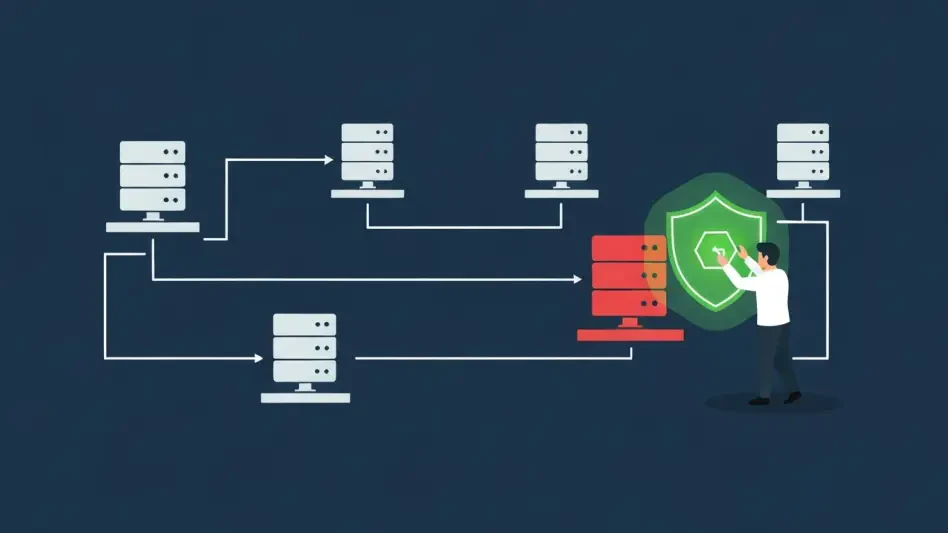
A single, carefully constructed network packet is all an attacker needs to potentially crash critical services or seize complete control of countless systems across the globe, thanks to a severe vulnerability discovered in a foundational network management tool. This guide provides a clear pathway for administrators to understand this threat, identify their exposure, and implement the necessary countermeasures to secure their infrastructure before it can be exploited. This is not a theoretical exercise; it is an urgent call to action for anyone responsible for network stability and security.
A Critical Flaw Exposing Countless Networks to Takeover
A critical vulnerability, tracked as CVE-2025-68615, has emerged in the widely deployed Net-SNMP software suite, sending a ripple of concern through the cybersecurity community. Net-SNMP is a cornerstone of network monitoring for millions of devices, from servers and routers to printers and IoT hardware. This flaw is not a minor bug; it represents a direct and potent threat to the integrity and availability of any network relying on this ubiquitous protocol for management and oversight.
The potential consequences of this vulnerability are severe, ranging from disruptive to catastrophic. At a minimum, an attacker can exploit this flaw to trigger a denial-of-service (DoS) condition, crashing essential monitoring services and blinding administrators to the health of their network. In a worst-case scenario, the same vulnerability can be leveraged to achieve remote code execution, effectively handing an attacker the keys to the kingdom. This would allow them to hijack the system, steal sensitive data, or use the compromised machine as a launchpad for further attacks across the network.
This how-to guide is designed to serve as a comprehensive response plan for system administrators and security professionals. It will deconstruct the technical nature of the threat posed by CVE-2025-68615, provide clear instructions for identifying vulnerable systems within your environment, and outline a step-by-step mitigation strategy. The goal is to empower organizations to move swiftly from a position of vulnerability to one of hardened, resilient security.
Why a Flaw in Network Management Can Topple Your Infrastructure
To appreciate the gravity of CVE-2025-68615, one must first understand the role of the Simple Network Management Protocol (SNMP). SNMP is the workhorse of network management, a standardized protocol that allows administrators to monitor the performance, health, and configuration of nearly every device connected to a network. It provides the visibility needed to diagnose problems, manage resources, and ensure operational continuity. Without it, managing any network of significant size would be an almost impossible task.
The Net-SNMP project provides a suite of applications that implement this protocol, and its open-source nature has led to its integration into countless operating systems, network appliances, and commercial software products. From major Linux distributions to specialized embedded systems, Net-SNMP is often the default implementation. Consequently, a vulnerability in this single tool does not just affect one product; it creates a systemic risk that spans across industries, impacting everything from small businesses to large enterprise data centers and critical infrastructure.
At the heart of this specific vulnerability is a component known as snmptrapd. This daemon’s primary function is to listen for and process SNMP “traps,” which are unsolicited messages sent by network devices to report a significant event, such as an error condition or a change in status. Because snmptrapd is designed to receive data from numerous sources across the network, it serves as a critical listening post. This design, however, also makes it an ideal target for an attacker looking for an entry point, transforming a vital monitoring tool into a potential gateway for compromise.
From Vulnerability to Lockdown: A Step-by-Step Response Plan
Step 1: Deconstructing the CVE-2025-68615 Exploit
Understanding how an attack unfolds is crucial for implementing an effective defense. The exploit for CVE-2025-68615 targets the snmptrapd daemon directly, leveraging its role as a network listener to initiate the attack sequence. The process begins when an unauthenticated attacker sends a malicious packet to the port where the daemon is active, which is a straightforward action that requires no prior access or credentials.
This simplicity is what makes the vulnerability so dangerous. The attack can be launched from anywhere on the network that has a route to the vulnerable system. In poorly configured environments where the SNMP trap port is exposed to the internet, the threat actor could be located anywhere in the world. The exploit relies entirely on the system’s willingness to process an incoming trap message, a fundamental part of its intended operation.
The Attack Vector: How a Crafted Packet Causes Chaos
The attack itself is executed through a single, specially designed network packet. This is not a complex, multi-stage operation but rather a direct assault on a vulnerable process. The attacker crafts a packet that appears to be a legitimate SNMP trap but contains malformed data designed to exploit a specific weakness in how snmptrapd processes incoming information.
Because the snmptrapd daemon must parse this data to understand the reported event, it becomes susceptible to manipulation. The malicious packet is constructed in such a way that it bypasses any standard validation checks, delivering its harmful payload directly to the flawed code within the application. This makes detection difficult without specialized tools, as the initial traffic may not immediately register as malicious.
The Root Cause: Triggering a Critical Buffer Overflow
The technical root cause of CVE-2025-68615 is a classic and severe type of software flaw: a buffer overflow. When the snmptrapd daemon receives the malicious packet, it attempts to store a portion of the incoming data in a fixed-size memory buffer. However, the crafted packet contains more data than the buffer can hold, causing the application to write the excess information into adjacent memory areas.
This memory corruption has two primary outcomes. In the more benign scenario, the overflow overwrites critical program data or instructions, causing the snmptrapd daemon to crash. This results in a denial-of-service attack, as the system can no longer receive important network alerts. In the far more dangerous scenario, a skilled attacker can craft the overflow data to contain executable code and overwrite a return address on the stack. When the function completes, instead of returning to its normal execution path, the program jumps to the attacker’s code, granting them full control over the compromised system.
Step 2: Identifying Your Exposure and Implementing Immediate Containment
The first priority for any administrator is to determine which systems are at risk. This involves inventorying all devices running the Net-SNMP suite and checking their version. On most Linux-based systems, this can be done by running a command such as snmpd -v or querying the installed package version using a manager like apt or yum. Any system running a version prior to the patched releases should be considered vulnerable and in need of immediate attention.
This process should not be limited to traditional servers. It is essential to also audit network appliances, storage devices, and any other hardware that may have an embedded version of Net-SNMP. Close collaboration between network, system, and security teams is vital to ensure no vulnerable instances are overlooked.
Urgent Action: Why Network Segmentation is Your First Line of Defense
For organizations where immediate patching is not feasible due to operational constraints or complex dependencies, network segmentation is the most effective interim containment strategy. The principle is simple: if the attacker’s packet cannot reach the vulnerable snmptrapd port, the exploit cannot succeed. This involves creating a protected network segment for systems running Net-SNMP and using firewalls to control all traffic entering that segment.
Specifically, administrators should configure firewall rules to ensure that only trusted, authorized monitoring servers can send traffic to the SNMP trap port (typically UDP port 162) on vulnerable machines. All other traffic from untrusted sources, especially from the public internet or general user segments, must be explicitly blocked. This measure effectively isolates the vulnerable service, buying valuable time for the permanent patch to be tested and deployed.
Critical Insight: All Unpatched Net-SNMP Versions Are at Risk
It is critical to understand that this vulnerability is not confined to legacy or outdated versions of the software. According to the official advisory, all versions of Net-SNMP prior to the security updates are impacted by this flaw. This broad scope means that even organizations with a seemingly robust patch management program may be exposed if they have not yet applied these specific updates.
The urgency, therefore, applies to all users of Net-SNMP. Administrators should not assume their systems are safe simply because they are running a relatively recent version. A thorough audit is non-negotiable. This vulnerability underscores the importance of subscribing to security advisories for all critical software components and maintaining a dynamic inventory of software versions across the entire IT environment.
Step 3: Applying Permanent Fixes and Hardening Defenses
While containment measures are essential for immediate risk reduction, they are not a substitute for a permanent solution. The only way to fully eliminate the threat posed by CVE-2025-68615 is to apply the security patches released by the Net-SNMP project. This involves upgrading the software to a version where the buffer overflow has been corrected.
This step should be the ultimate goal of any response effort. Relying solely on network-level controls like firewalls can leave systems exposed to insider threats or future misconfigurations. Patching the software itself addresses the root cause of the vulnerability, rendering the exploit completely ineffective.
The Definitive Solution: Upgrading to Net-SNMP 5.9.5 or 5.10.pre2
The Net-SNMP developers have released updated versions that remediate this vulnerability. Administrators are strongly urged to upgrade all affected systems to Net-SNMP version 5.9.5 or 5.10.pre2 (or any subsequent stable release) as soon as possible. These versions contain the necessary code changes to properly handle the malformed packets that trigger the buffer overflow.
For most systems, the upgrade process can be handled through the operating system’s native package manager. A command like sudo apt-get update && sudo apt-get upgrade on Debian-based systems or sudo yum update on Red Hat-based systems will typically install the patched version once it is available in the distribution’s repositories. In cases where a custom or older installation is used, it may be necessary to compile the new version from source code obtained from the official Net-SNMP project website.
Layered Security: Fortifying Firewall Rules for the snmptrapd Port
In addition to patching, security can be significantly enhanced by implementing a defense-in-depth strategy. This includes creating or reinforcing firewall rules to strictly control access to the snmptrapd port. Even on a patched system, it is a security best practice to ensure that only designated management stations can communicate with this service.
Administrators should configure host-based or network firewalls to create an explicit “allow list” for the SNMP trap port (UDP 162). This list should contain only the IP addresses of trusted servers responsible for collecting and processing SNMP traps. A default “deny” rule should block all other incoming connections to this port, effectively shielding it from unauthorized access attempts from both internal and external networks.
A Universal Best Practice: Restricting All Public-Facing SNMP Ports
The discovery of CVE-2025-68615 serves as a powerful reminder of a universal security best practice: SNMP ports should never be exposed to the public internet. SNMP, by design, was intended for use within trusted, private networks. Exposing it externally provides attackers with a large and well-documented attack surface to probe for vulnerabilities, gather information about your network, or attempt brute-force attacks against SNMP community strings.
A comprehensive security audit should be conducted to identify and close any public-facing access to SNMP ports, including both the standard request port (UDP 161) and the trap port (UDP 162). All network perimeter firewalls should be configured to block incoming SNMP traffic from the internet. This single configuration change dramatically reduces the risk profile of the entire network, not just against this specific flaw, but against a wide range of potential future threats as well.
Your Essential Net-SNMP Security Checklist
To effectively respond to this threat, system administrators should follow a clear and concise action plan. The following checklist summarizes the most critical steps needed to secure your environment against CVE-2025-68615.
- Identify: Conduct a comprehensive audit of your entire network to find all systems running the Net-SNMP service. Determine the specific version installed on each machine to create a definitive list of all vulnerable assets.
- Upgrade: Prioritize the deployment of the official security patch. Immediately update all identified systems to Net-SNMP version 5.9.5, 5.10.pre2, or a newer stable release. This is the only way to permanently fix the vulnerability.
- Isolate: If immediate patching is not possible, use network segmentation and strict firewall rules as a temporary containment measure. Isolate vulnerable systems and ensure the
snmptrapdport is only accessible from trusted, authorized monitoring stations. - Restrict: Harden your network perimeter as a universal best practice. Configure firewalls to block all external, internet-based access to the
snmptrapdport and any other SNMP-related ports. Ensure SNMP is treated exclusively as an internal management protocol.
The Ripple Effect: What This Flaw Teaches Us About Threat Management
The emergence of CVE-2025-68615 is more than just another vulnerability announcement; it is a stark reminder of the systemic risks embedded within the foundational software that underpins modern IT infrastructure. Net-SNMP is not an obscure application but a ubiquitous component present in millions of devices. A flaw in such a widely used tool demonstrates how a single point of failure can have a disproportionately massive impact, creating a security challenge that transcends individual organizations and becomes an ecosystem-wide problem.
This incident aligns with broader trends in cybersecurity, particularly the increasing focus on supply chain vulnerabilities and the targeting of critical management protocols. Attackers are shifting their attention from direct, head-on assaults toward exploiting weaknesses in third-party components and “behind-the-scenes” protocols that are often assumed to be secure. The compromise of a trusted management tool like Net-SNMP provides a powerful pivot point for attackers to move laterally within a network, bypassing many traditional security controls.
Ultimately, this situation highlights the absolute necessity of a mature and responsive vulnerability and patch management program. A strategy that relies on periodic, scheduled scans is no longer sufficient to counter the speed at which critical exploits are discovered and weaponized. Organizations require a dynamic, intelligence-driven approach that enables them to rapidly identify new threats, accurately assess their exposure, prioritize remediation based on risk, and deploy patches in a timely and efficient manner.
Don’t Wait for the Trap: Securing Your Network Proactively
The severity of the Net-SNMP flaw cannot be overstated, as the high stakes for unpatched systems included service disruption and complete system hijacking. The potential for a remote, unauthenticated attacker to gain full control of a system elevates this vulnerability to the highest level of priority for any security team. Ignoring this threat was not an option for any organization that valued its operational integrity and data security.
The response to this critical vulnerability demanded immediate and decisive action from security administrators and IT teams everywhere. Prioritizing the recommended patches, implementing robust firewall rules, and auditing the entire network for exposure were the essential steps to neutralize the threat. These actions were not just about closing a single security hole but about reinforcing the overall defensive posture of the network.
In the end, addressing CVE-2025-68615 served as a critical real-world test of an organization’s security responsiveness. The experience underscored that a reactive stance is inherently a losing strategy. The true lesson was the reaffirmation that security is a continuous process, not a final state. Proactive hardening, defense-in-depth, and constant vigilance became the key takeaways, providing the necessary foundation to defend effectively against the inevitable threats of tomorrow.