The relentless expansion of modern enterprise software repositories has created an environment where manual security audits are increasingly becoming a logistical impossibility for even the most well-funded engineering teams. In response to this complexity, Cisco has introduced the Antares family of AI models, a specialized suite of open-weight security tools designed to fundamentally change how developers identify critical flaws within massive codebases. Unlike the general-purpose large language models that currently dominate the technology landscape, the Antares-350M and Antares-1B versions are purpose-built for the highly specific task of vulnerability localization. This focus allows the models to navigate complex repositories and pinpoint exactly which files contain code patterns corresponding to known security weaknesses. By making these models available under the Apache 2.0 license, the initiative offers a locally deployable alternative to proprietary, cloud-based coding assistants, allowing organizations to scan sensitive source code without the inherent risk of data leakage.
Architectural Innovation: Specialized Models for Targeted Analysis
The Antares ecosystem currently features a 350-million and a one-billion parameter model, with a more robust three-billion parameter version currently in development to address increasingly large software projects. These models are unique because they are not designed for generative tasks; they do not write new code or suggest patches for existing bugs. Instead, their architecture is optimized for a learned search process, functioning as agent-like entities that interact with a software repository through a terminal interface to simulate the investigative workflow of a human security analyst. This approach allows the model to process vast amounts of data without the high computational overhead typically associated with large-scale generative AI systems. By focusing strictly on the discovery and isolation of vulnerabilities, the models maintain a high level of accuracy and speed. This specialization ensures that the AI remains a dedicated tool for security researchers rather than a general-purpose programming assistant with broad but shallow capabilities.
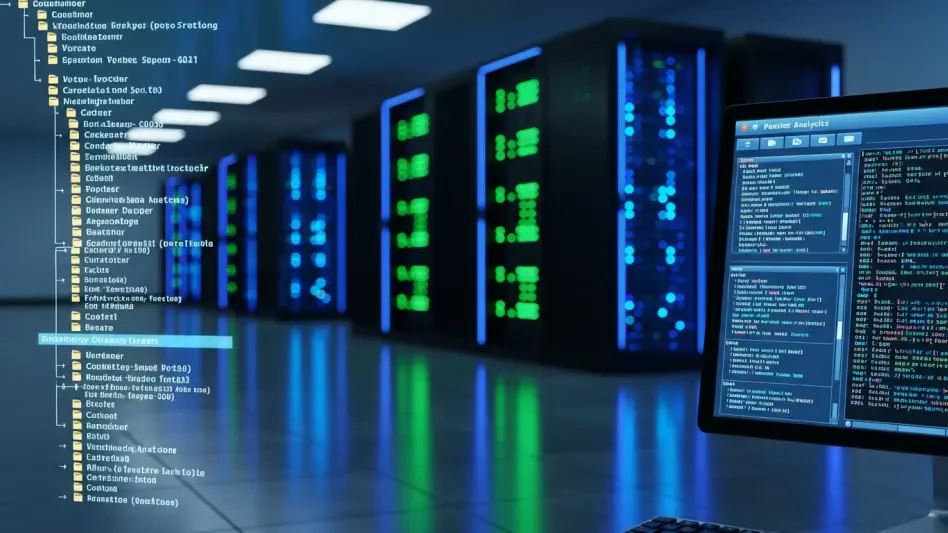
To navigate the code effectively, the model utilizes standard Unix-style commands like grep, find, and cat to explore the internal structures of a codebase. In controlled environments, Cisco restricts the model to a specific number of commands to force efficiency and maintain focus on the most probable locations for bugs. Through this iterative process of searching, inspecting, and revising its path, Antares identifies candidate file paths that likely house the specific vulnerability described in the initial input. For example, if an analyst is looking for a potential buffer overflow or a string-handling error, the model will methodically traverse the directory tree to find the relevant functions. This method effectively replicates the logical steps taken by an experienced security engineer during the triage phase. By automating this tedious manual exploration, the model significantly reduces the cognitive load on human teams, allowing them to jump straight into the analysis and remediation phases once the relevant code segments are identified.
Integrating Intelligence: Enhancing Current Security Workflows
Cisco positions the Antares family as a complementary technology rather than a total replacement for established Application Security Testing (AST) tools. While traditional tools rely on predefined rules and data-flow analysis to find potential issues, Antares begins with an external advisory or an existing security database entry and works backward to find the relevant code. This creates a synergistic workflow where the AI handles the exhausting localization phase, allowing human reviewers to focus on validating the bug and implementing a fix. This backward-looking methodology is particularly effective for large-scale legacy systems where documentation might be sparse or outdated. By using the AI to bridge the gap between a reported vulnerability and its physical location in the source code, organizations can dramatically speed up their response times. This shifts the focus of security teams from the ‘where’ to the ‘why’ and ‘how,’ enabling a more strategic approach to enterprise-wide software security and long-term architectural stability.
The output generated by the Antares command-line interface is highly versatile, supporting both human-readable reports and machine-readable formats like JSON and SARIF. This ensures that findings can be seamlessly integrated into existing development pipelines and platforms like GitHub Code Scanning or other continuous integration systems. By automating the triage process, the models act as a force multiplier for security teams, reducing the time spent hunting for flaws across disparate files. This integration allows for a more streamlined DevSecOps approach, where security alerts are automatically enriched with precise file locations and relevant code snippets. Furthermore, the standardized output format makes it easy for organizations to build custom dashboards or alerting mechanisms based on the model’s findings. As security threats become more frequent, the ability to rapidly ingest advisory data and map it directly to a local codebase provides a significant tactical advantage, ensuring that critical vulnerabilities are addressed before they can be exploited in a production environment.
Data Sovereignty and Performance: The Case for Local Deployment
One of the most compelling aspects of the Antares release is the emphasis on local deployment and infrastructure security. Because these models are relatively small compared to massive general-purpose models, they can be hosted on an organization’s internal servers, mitigating the privacy risks associated with third-party providers. Cisco recommends a sandbox approach, running the models in isolated containers with read-only access and no network connectivity to prevent any potential data leaks during the analysis process. This architecture ensures that sensitive intellectual property never leaves the enterprise perimeter, addressing a major barrier to AI adoption in highly regulated industries. Moreover, the open-weight nature of the models allows for deeper scrutiny by internal security teams, who can verify the model’s behavior and ensure it complies with corporate governance standards. This level of control is essential for maintaining trust in automated tools, especially when they are granted access to the core components of an organization’s digital infrastructure and software supply chain.
The initial deployment of the Antares models demonstrated a significant shift toward specialized, high-performance security assistants. Early benchmarks showed that the one-billion parameter version completed complex localization tasks in minutes, providing a cost-effective alternative to larger systems. While the models faced limitations with extremely large repositories, they proved highly effective at identifying vulnerabilities with distinct searchable patterns. To maximize the impact of this technology, organizations were encouraged to integrate these tools into isolated CI/CD environments where they could act as a first line of defense during the triage process. Development teams also focused on creating better training datasets to further refine the models’ ability to handle abstract logic issues. Ultimately, the release of Antares established a new standard for transparent, locally hosted security AI. By prioritizing data sovereignty and task-specific accuracy, Cisco provided a practical roadmap for companies looking to leverage machine learning to secure their most valuable software assets.