
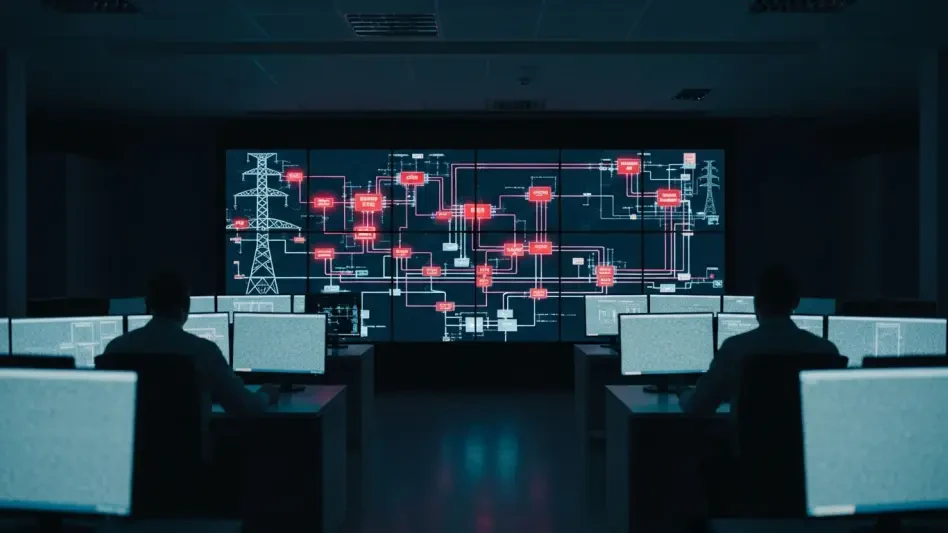
A targeted and destructive cyberattack against Poland’s energy infrastructure has offered a chilling real-world demonstration of how easily theoretical vulnerabilities in operational technology can be weaponized. The incident, which blinded operators at dozens of power facilities, connected a series of common security oversights to tangible, physical consequences, elevating the threat from a hypothetical risk to an immediate and present danger for industrial operators across the globe.
This breach serves as a critical wake-up call, emphasizing that the security of industrial control systems is no longer a niche concern but a matter of national security and economic stability. The anatomy of the attack, meticulously analyzed by the U.S. Cybersecurity and Infrastructure Security Agency (CISA) and its Polish counterpart, CERT Polska, provides a dual-sided roadmap. For adversaries, it validates a low-effort, high-impact attack methodology. For defenders, it lays bare the exact security gaps that must be closed to prevent catastrophic failure, turning the Polish incident into a crucial, if unsettling, learning opportunity.
Anatomy of an OT Breach: From a Single Entry Point to Systemic Failure
The Unlocked Front Door: How Default Passwords and Exposed Devices Created a Pathway to Ruin
The initial intrusion into the Polish energy network began at its most vulnerable perimeter: internet-facing edge devices. These systems, often deployed to enable remote access and monitoring, became the digital beachhead from which threat actors launched a far more insidious campaign. By exploiting these exposed assets, the attackers bypassed initial layers of security and gained a crucial foothold inside the operational environment, proving that even a single insecure device can compromise an entire network.
Once inside, the attackers pivoted to the heart of the control systems by leveraging one of the most persistent and catastrophic flaws in industrial security: the use of default credentials. Human-machine interfaces (HMIs) and remote terminal units (RTUs), the very tools operators use to manage physical processes, were accessible using factory-set passwords. CISA and CERT Polska concur that this fundamental oversight remains a primary enabler of severe OT breaches, as it allows malicious actors to move laterally with ease, turning a simple intrusion into a full-blown system takeover without needing to deploy complex exploits.
From Disruption to Destruction: The Alarming Impact of Firmware Corruption on OT Assets
The payload delivered in this attack went far beyond simple service disruption; its goal was the permanent destruction of critical hardware. Attackers deployed tools designed to corrupt the firmware of RTUs and wipe data from HMIs, a tactic that effectively transforms a digital breach into a lasting physical loss. This escalation from temporary interference to irreversible damage represents a significant and alarming evolution in OT-focused cyberattacks.
The real-world consequence was immediate and severe, leaving operators completely blind. Though power generation continued, the ability to monitor or control dozens of facilities was instantly lost, creating a dangerous and unstable operational state. This incident starkly illustrates a critical risk inherent in legacy OT assets: devices that lack modern firmware verification mechanisms can be “bricked” remotely. An attacker can render them permanently inoperable, turning a costly but recoverable cyber incident into a far more damaging scenario requiring complete hardware replacement and extended downtime.
A Vendor-Agnostic Problem: Challenging the Industry’s Reliance on Insecure-by-Default Systems
A crucial finding from the post-incident analysis is that the vulnerability was not isolated to a single manufacturer’s product line. Instead, the exploitation of default credentials highlights a systemic, industry-wide issue rooted in the practice of shipping devices with insecure, default configurations. This vendor-agnostic problem exposes a deep-seated cultural challenge within the OT sector, where ease of deployment has often been prioritized over built-in security.
This attack methodology directly challenges the long-held assumption that OT environments are inherently safe due to network segmentation or “air-gapping.” Malicious actors are increasingly targeting the weak internal configurations of these networks, knowing that perimeter defenses alone are insufficient. The incident serves as a powerful refutation of the belief that physical isolation provides adequate protection, demonstrating that adversaries can and will exploit the soft underbelly of industrial networks once they gain even a minimal foothold.
A Broader Threat Landscape: Connecting Destructive Attacks to Persistent Disruption
While the Polish attack demonstrated a sophisticated, destructive capability, it exists within a broader context of persistent cyber threats against NATO members. In a parallel warning, the U.K.’s National Cyber Security Centre (NCSC) highlighted ongoing campaigns by Russian-aligned hacktivists. These groups are leveraging less complex but highly effective denial-of-service (DoS) attacks to disrupt public services and government operations, illustrating a different but complementary form of cyber aggression.
Contrasting these two threats reveals a multifaceted risk landscape. The OT attack in Poland was a targeted strike aimed at causing lasting physical damage to critical infrastructure. In contrast, the DoS campaigns against the UK are designed for widespread, albeit temporary, disruption to cripple online access and erode public trust. When synthesized, these distinct incidents paint a comprehensive picture of the persistent cyber pressure facing Western nations, ranging from foundational service interruptions to the strategic degradation of essential industrial assets.
Fortifying the Front Lines: CISA’s Mandate for Proactive OT Defense
The core takeaways from the international analysis are unambiguous: insecure edge devices, ubiquitous default credentials, and non-verifiable firmware constitute an existential threat to critical infrastructure. These are not theoretical vulnerabilities but proven pathways to destructive attacks. CISA, in conjunction with the Department of Energy, has translated these findings into an urgent mandate for all OT asset owners to adopt a more proactive and hardened security posture.
The agency’s recommendations are direct and actionable. Organizations are urged to immediately change all default passwords across their operational environments and, more strategically, to mandate that suppliers provide equipment with unique credentials from the outset. Furthermore, asset owners must prioritize firmware updates that include verification capabilities. Where such updates are not feasible, incident response plans must be fundamentally revised to account for the potential of permanent hardware loss, ensuring that resilience strategies extend beyond data recovery to include rapid asset replacement.
The New Imperative: Moving from Reactive Security to Built-in Resilience
The cyberattack on Poland’s energy sector marks a pivotal moment for industrial security, demanding a fundamental shift away from reactive measures and toward a culture of built-in resilience. The incident effectively dismantles the outdated notion that OT environments are protected by obscurity or isolation, proving that foundational cybersecurity hygiene is non-negotiable in an interconnected world.
Successfully defending against these evolving threats requires bridging the longstanding gap between IT cybersecurity practices and the unique operational requirements of industrial control systems. This involves not only implementing technical controls but also fostering a security-first mindset among engineers, operators, and procurement specialists. Ultimately, the strategic call to action for all OT operators is clear: treat basic security measures not as a compliance checkbox, but as a core operational imperative essential for survival in a contested digital landscape.