
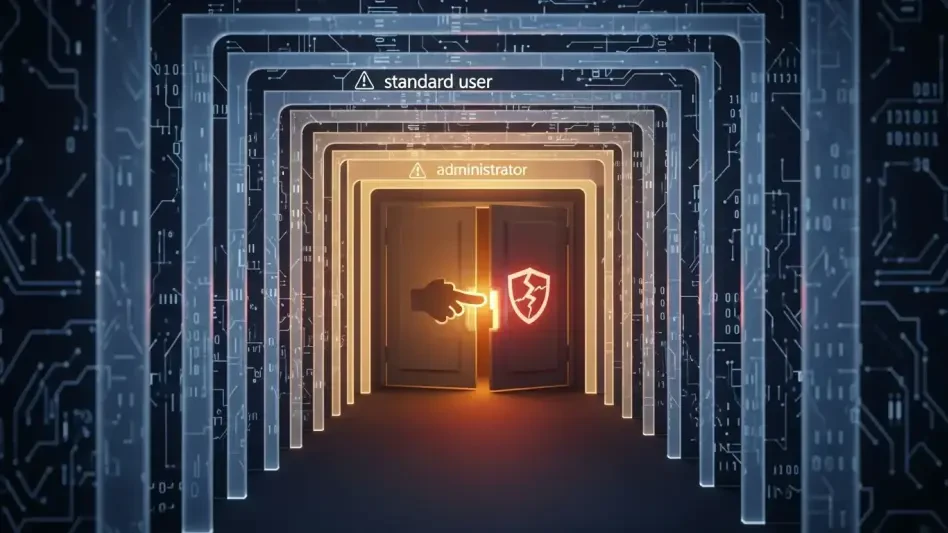
The discovery of the LegacyHive zero-day vulnerability, colloquially known as MSNightmare, represents a significant shift in how modern cybersecurity professionals must approach the inherent trust placed in core Windows system services. This flaw targets the User Profile Service, a component that has long been considered a stable foundation for environment isolation and data security within multi-user operating systems. By identifying a logic error in how registry hives are managed during the login process, researchers have exposed a pathway that allows unprivileged users to ascend to the highest level of administrative control. This local privilege escalation is particularly dangerous because it does not rely on traditional social engineering or external network penetration but instead capitalizes on the very architecture designed to maintain security boundaries. As organizations from 2026 to 2028 continue to digitize their core operations, the existence of such a fundamental vulnerability underscores the critical necessity of a zero-trust architecture. Furthermore, the exploit demonstrates that even standard administrative tasks can be subverted by a clever attacker who understands the underlying mechanics of hive loading. By manipulating the UsrClass.dat file, an unauthorized actor can effectively breach the security containers meant to keep sensitive user profiles separate, leading to a total compromise of the local machine.
The Technical Mechanics: Understanding Local Privilege Escalation
Manipulating the Profile Service: The Registry Redirection Logic
The technical heart of this vulnerability resides within the specific logic used by the Windows User Profile Service to mount and unmount registry hives, which are the database files storing user configuration settings. Under normal operating conditions, these hives, specifically the UsrClass.dat file, are strictly isolated to ensure that one user cannot view or modify the environment of another. However, the LegacyHive exploit manipulates this loading routine by forcing the service to point toward a target user’s hive instead of the current user’s local profile. This redirection occurs before the system has fully established the security tokens for the active session, creating a brief but exploitable window where the profile service mistakenly grants access to sensitive registry branches. This manipulation effectively breaks the logical barriers that prevent standard accounts from interacting with the underlying structures of administrative profiles, granting the attacker a foothold. By targeting the UsrClass.dat file specifically, an attacker can bypass the file-level permissions that typically safeguard this information, as the User Profile Service itself runs with System-level privileges. When the service is tricked into loading the wrong hive, it does so using its own high-level permissions, thereby inadvertently providing the low-privileged user with a direct interface to modify or read administrative data.
Bypassing the Object Manager: Navigating System Level Access
To achieve such a high degree of control, the LegacyHive exploit must navigate the complexities of the Windows Object Manager, which is responsible for managing internal symbolic links and handles. When a standard user attempts to access a protected registry hive through conventional means, the system triggers an “Access Denied” response based on the Access Control Lists associated with that object. The exploit circumvents this roadblock by utilizing a secondary access method that leverages a system-level context to override these specific restrictions. Instead of fighting the ACLs directly, the malware identifies a sequence of system calls that the Object Manager treats as legitimate administrative overhead. By mimicking these calls, the attacker can reconfigure the way the system interprets the relationship between the session and the registry hive, essentially granting themselves a skeleton key to the most sensitive areas of the operating system’s configuration. This sophisticated bypass is not merely a matter of brute-forcing credentials but involves a deep understanding of the kernel-mode routines that handle registry operations. By injecting specific parameters into the hive loading logic, the exploit ensures that the Windows kernel treats the unauthorized access request as a routine maintenance task performed by a trusted service. This allow the attacker to tamper with high-level system configurations without providing the credentials usually required.
Risks and Mitigations: Securing the Windows Environment
Persistence and Evasion: The Danger of Hijacked Objects
The long-term risks associated with gaining administrative access through a registry hive breach are profound, specifically concerning the ability of an attacker to establish permanent persistence. Once inside an administrator’s registry hive, a hacker can modify the handling of Component Object Model objects, which are essential for many Windows functionalities. By hijacking these objects, malicious code can be set to execute automatically whenever the administrator opens a specific file type or starts a routine system utility. This type of hijacking is particularly insidious because it does not require a traditional startup folder entry or a scheduled task that might be easily flagged by antivirus software. Instead, the malicious instructions are woven into the very fabric of how the operating system handles everyday tasks, turning standard administrative workflows into triggers for unauthorized background processes that maintain the attacker’s presence. Furthermore, the exploit allows for the modification of file associations, which can redirect common system calls to malicious executables without the user’s knowledge. For example, by altering the registry keys that determine which application opens a text file or a system log, an attacker can ensure that their malware runs with administrative privileges every time the victim performs their job duties. This method of defense evasion is highly effective because it mimics legitimate system behavior so closely.
Proactive Security Measures: Strategic Hardening and Isolation
To address these emerging threats, IT departments prioritized the deployment of enhanced registry monitoring and restricted administrative access across all local workstations. They established new protocols for auditing Component Object Model object registrations and ensured that high-privileged sessions were strictly isolated from standard user environments. By adopting these proactive security measures, organizations successfully reduced their attack surface and maintained system integrity during the period before a formal patch was issued. These actions provided a critical buffer, allowing security teams to safeguard sensitive data against the inherent risks of the LegacyHive zero-day exploit. In addition to structural changes, the implementation of administrative silos proved to be a vital defense, as it prevented the exposure of privileged credentials on machines where standard users had local access. Security professionals also utilized advanced logging to track any failed access attempts that were immediately followed by successful system-level hive mounts, as this pattern often indicated an ongoing attempt to use the secondary bypass method. Through the combination of rigorous monitoring and the enforcement of the principle of least privilege, the impact of the vulnerability was significantly minimized. These defensive strategies allowed for more thorough remediation and prevented further lateral movement across internal networks during the critical response phase.