The familiar multi-factor authentication prompt that flashes across your screen has long been championed as the digital lockbox for corporate data, but a sophisticated wave of cybercrime is proving that the most advanced security measures can be dismantled with nothing more than a convincing voice over the phone. A large-scale identity theft campaign is actively demonstrating that the human element, not the technology, is the most vulnerable point of entry. This operation underscores a critical reality in modern cybersecurity: attackers are no longer just breaking down digital walls; they are talking their way through the front door.
Your Trust in a Human Voice May Be MFA’s Weakest Link
Multi-factor authentication was designed to be a robust barrier against automated attacks like credential stuffing and password spraying, adding a crucial layer of security beyond a simple password. It requires users to verify their identity through a secondary method, such as a code sent to their phone or a biometric scan, effectively stopping attackers who only possess stolen credentials. This technology has become the gold standard for securing corporate and personal accounts, fostering a sense of security among users and organizations alike.
However, the effectiveness of MFA hinges on the assumption that the person entering the credentials and the MFA code is the legitimate user. This is precisely the assumption that modern social engineering attacks are designed to exploit. By shifting the focus from breaking encryption to manipulating human psychology, attackers have found a critical vulnerability. When a threat actor can convince an employee they are a trusted IT support agent, the employee may willingly hand over the very information MFA is meant to protect, turning a powerful defense mechanism into a bypassed checkpoint.
The Strategic Shift to Targeting SSO Platforms
Cybercriminals are increasingly moving away from brute-force, automated attacks toward highly sophisticated, human-led social engineering campaigns. This evolution marks a strategic pivot to exploiting trust rather than just technical vulnerabilities. The primary target in this new landscape is the Single Sign-On (SSO) platform, such as Okta, which acts as a central gateway to an organization’s entire suite of applications and data. Attackers recognize that compromising a single SSO account is far more efficient than targeting individual applications one by one.
A compromised SSO account is the digital equivalent of a skeleton key, granting attackers sweeping access to everything from internal communication platforms like Slack and Teams to sensitive financial systems and cloud infrastructure. This high-value prize has led to the formation of professional cybercrime alliances like SLSH, a syndicate combining the specialized talents of notorious groups including Scattered Spider, LAPSUS$, and ShinyHunters. By pooling their expertise in social engineering, data exfiltration, and extortion, these groups have created a highly effective and scalable model for breaching enterprise defenses.
Deconstructing the Live Phishing Attack Method
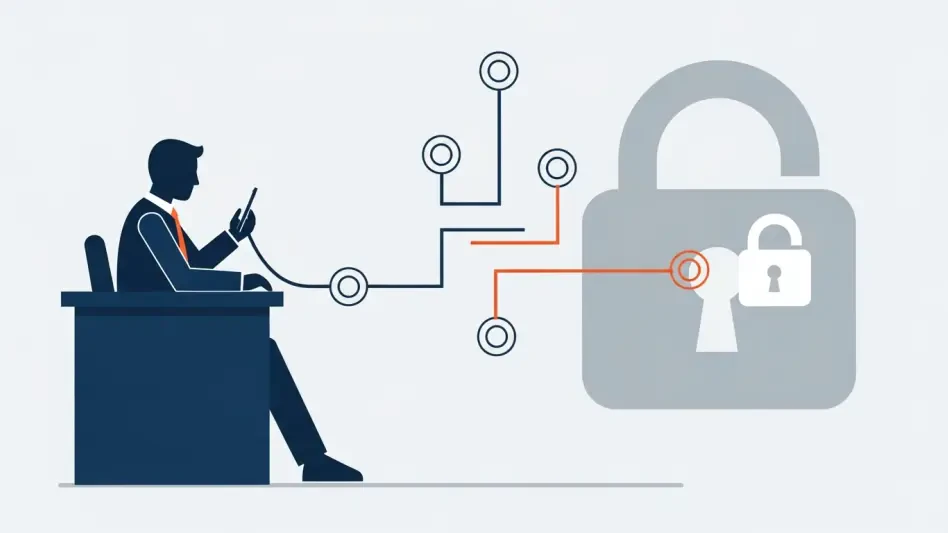
The attack begins not with a malicious email, but with a phone call. This method, known as voice phishing or vishing, involves an attacker impersonating a member of the IT help desk or a support agent from a trusted vendor. The goal is to establish a rapport and create a sense of urgency, guiding the unsuspecting employee to a phishing website that perfectly mimics their organization’s legitimate SSO login portal. By engaging the victim directly, the attacker can troubleshoot any issues and ensure the target completes the login process.
What makes this technique so potent is the use of a new human-in-the-middle live phishing panel. This tool allows the attacker to monitor the victim’s keystrokes in real-time as they enter their username and password on the fraudulent page. When the MFA prompt appears on the victim’s device, the attacker calmly instructs them to enter the one-time code into the phishing site. The live panel captures this code instantly, allowing the attacker to use the complete set of credentials—username, password, and MFA token—to hijack the session on their own machine, gaining immediate access to the corporate network while the employee is still on the call.
Once inside, the attackers follow the aggressive playbook popularized by groups like LAPSUS$. They move with incredible speed to exfiltrate large volumes of sensitive data, often using their initial foothold to pivot into collaboration tools to launch further internal attacks against high-privilege accounts. The intrusion frequently culminates in a multi-faceted extortion scheme where the stolen data is used for public blackmail, and ransomware is deployed to encrypt the victim’s systems, creating immense pressure on the organization to pay a ransom.
A Widespread Campaign Unveiled by New Research
This highly effective campaign is not theoretical; recent cybersecurity research has uncovered an active and large-scale operation targeting organizations globally. The investigation attributes this widespread activity to the SLSH cybercrime alliance, which has been methodically setting up malicious infrastructure to target a diverse range of industries. The breadth of this campaign highlights the universal appeal of SSO platforms as a target, regardless of the sector an organization operates in.
The target list is extensive and includes major players across critical sectors, from technology and finance to healthcare and energy. High-value organizations where targeting has been detected include technology giants like Atlassian and HubSpot, pharmaceutical firms such as Gilead Sciences and Moderna, energy leaders like Halliburton, and even prominent legal services firms like Jones Day and Paul Hastings LLP. This broad scope demonstrates that any organization relying on a centralized identity provider is a potential target for this sophisticated vishing and session-hijacking methodology.
A Practical Defense Plan Against Vishing Attacks
Protecting an organization from such a human-centric attack requires a combination of human-layer defenses and proactive technical measures. The first and most immediate step is education. All employees, especially those in customer-facing or support roles, must be educated about this specific SLSH campaign and the tactics they employ. A clear and simple protocol should be established for escalating any suspicious phone calls, text messages, or emails to security teams without fear of reprisal. This creates a human firewall that can detect and report vishing attempts before they succeed.
On the technical front, organizations must meticulously audit their SSO provider logs for key indicators of compromise. A critical pattern to watch for is a “new device enrolled” event immediately followed by a login from an unfamiliar IP address or geographic location, as this often signals a successful account takeover. Beyond detection, proactive threat neutralization is paramount. By implementing pre-attack intelligence, security teams can identify and monitor malicious infrastructure at the DNS level before it is used in a campaign. This allows for the preemptive blocking of look-alike domains, effectively dismantling the phishing component of the attack before it can ever reach an employee.
Ultimately, defending against these advanced social engineering threats demanded a shift in security posture. Organizations that recognized the limitations of technology alone and invested in both employee awareness and proactive threat intelligence were better positioned to withstand the evolving landscape of cybercrime. The fight against these attacks proved that a prepared and vigilant workforce, supported by intelligent security systems, was the most effective defense against an attacker wielding a telephone as their primary weapon.