
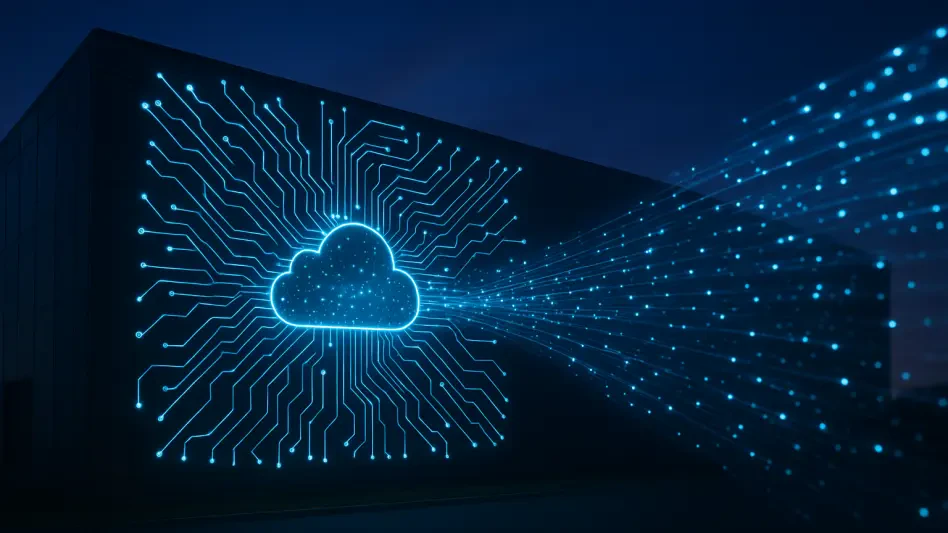
Traditional service providers managing large-scale traffic must now contend with AI-driven probes designed to identify and exploit infrastructure weaknesses instantly. This shift in the threat landscape has forced a reevaluation of perimeter security, as manual intervention often proves too slow to stop modern distributed denial of service attacks that adapt in milliseconds. To address this, Corero Network Security introduced AI Cloud-Assist, a major advancement for the SmartWall ONE platform that bridges the gap between local hardware and global intelligence. By creating a continuous feedback loop, the system ensures that network defenses are not merely reactive but predictive, leveraging deep learning models to recognize patterns before they can cripple vital digital services. As these automated probes become more sophisticated, the necessity of integrating cloud-level computing power with edge-level enforcement becomes undeniable for maintaining operational continuity in a world where downtime translates directly into significant financial loss and damage.
1. The Multi-Stage Intelligence Loop: A Coordinated Sequence
The five-stage intelligence loop begins with granular information gathering, where SmartWall ONE hardware captures live traffic statistics and forensic evidence directly at the network edge. This localized collection is vital because it provides the raw data necessary for identifying the subtle anomalies often missed by broader monitoring tools. Once this data is harvested, it is transmitted to Corero’s cloud-based AI engine for an exhaustive assessment. This engine operates at a scale far beyond the capacity of individual network appliances, examining massive datasets to identify new or evolving attack patterns that suggest a coordinated breach attempt. By offloading this intensive computational work to the cloud, the system maintains high performance on-site while benefiting from a global perspective on emerging threats. This ensures that even the most innovative attack signatures are identified with high precision, allowing the network to stay ahead of adversaries who use automation to bypass older security.
Following the initial assessment, the system transitions into defense strategy formulation, where the AI suggests optimized security rules tailored to the specific nature of the detected threat. This ensures that the defense is not a generic block but a surgical intervention designed to preserve legitimate traffic while neutralizing malicious packets. Before these rules are applied, they undergo expert validation, a critical step where Corero’s security professionals review the AI’s suggestions to ensure they align with organizational policies. This human-in-the-loop approach provides a necessary safeguard against unintended consequences in complex network environments. Once approved, implementation happens almost instantly, with validated policies pushed to the network edge in a matter of seconds. This rapid deployment cycle minimizes the window of vulnerability, effectively neutralizing attacks before they can scale. This seamless movement from detection to enforcement creates a robust shield against the rapid-fire nature of modern cyber threats.
2. Critical Applications: Securing Data Centers and Infrastructure
The deployment of AI Cloud-Assist is particularly critical for AI-focused data centers and NeoCloud infrastructure providers, where even a momentary increase in latency can disrupt massive distributed workloads. These environments require zero-downtime solutions because their clients rely on constant availability for high-performance computing and real-time data processing. Traditional mitigation techniques often introduce enough lag to degrade service quality, but the edge-focused approach of this new platform allows for transparent protection. By processing traffic at the source of entry, the system ensures that legitimate user experiences remain unaffected while background processes work to filter out noise. For NeoCloud providers, this capability serves as a competitive differentiator, offering a level of resilience that traditional cloud platforms might struggle to match. As infrastructure becomes more decentralized and complex, the ability to maintain consistent security performance becomes a fundamental requirement for service providers.
Beyond specialized cloud providers, large-scale internet service providers and digital businesses that maintain a constant online presence find significant value in these dynamic defenses. These organizations often serve as the backbone of the digital economy, making them primary targets for large-scale volumetric attacks designed to saturate bandwidth and cause widespread outages. The ability to distinguish between a sudden surge in genuine user demand and a coordinated DDoS attack is essential for preventing the accidental blocking of customers during peak periods. By using AI to refine these distinctions, the platform reduces the operational burden on security teams who would otherwise be overwhelmed by a flood of false alerts. This efficiency allows personnel to focus on high-level strategy rather than constant manual rule tuning. In a digital ecosystem where reliability is the primary currency, implementing such advanced mitigation strategies ensures that businesses can operate with confidence, regardless of the evolving tactics of attackers.
3. Strategic Outcomes: Future-Proofing Through Human-AI Synergy
The strategic integration of human judgment and automated response proved to be a decisive factor in maintaining high accuracy levels during recent security trials. By balancing the raw processing power of machine learning with the nuanced understanding of security professionals, organizations successfully reduced the frequency of false positives that previously disrupted service. This supervised model allowed for a more granular approach to traffic management, where the most complex threats were neutralized without affecting the performance of critical business applications. It was observed that this hybrid methodology provided a safer environment for digital transactions by ensuring that every AI-generated rule was verified against real-world operational contexts before deployment. This approach addressed the fundamental mistrust many administrators felt toward fully autonomous systems, establishing a new standard for collaborative cybersecurity. The results demonstrated that the window of opportunity for attackers was narrowed.
Organizations that adopted these dynamic defensive frameworks established a more resilient posture against the relentless evolution of digital threats. The transition from static security measures to adaptive, AI-enhanced systems represented a necessary shift in strategy for those managing high-value network infrastructure. These entities prioritized the deployment of hybrid intelligence models to ensure that their defenses remained as agile as the adversaries they faced. By investing in technologies that merged edge-level enforcement with cloud-level analysis, they secured a long-term advantage in the ongoing cybersecurity landscape. Moving forward, the focus shifted toward deepening the integration between various security layers to create a unified front against automated attacks. This evolution underscored the importance of continuous learning and adaptation as the primary means of safeguarding the digital economy from increasingly sophisticated disruptions. The successful implementation of these strategies offered a clear roadmap for others to follow carefully.