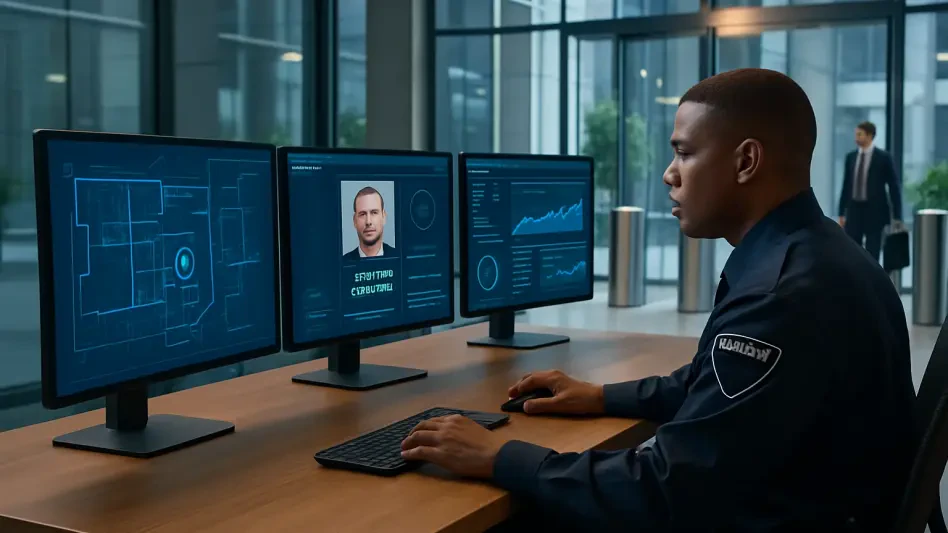

The critical infrastructure enabling artificial intelligence within modern enterprises is quietly introducing a new and formidable security vulnerability that most organizations are unprepared to address. While developed to streamline operations, these systems have inadvertently created a high-stakes backdoor, transforming trusted developer tools into powerful vectors for sophisticated supply-chain attacks. This analysis focuses on the significant cybersecurity threat posed by Model Context Protocol (MCP) servers, arguing that the rapid adoption of third-party components has dangerously outpaced necessary security controls, fostering a high-risk environment.
The central challenge addressed is the urgent need for a paradigm shift in how MCP servers are perceived and secured. Organizations must move beyond viewing them as implicitly trusted developer utilities and instead recognize them as high-privilege, high-risk automation engines. The failure to do so leaves a critical gap in enterprise security, one that malicious actors are increasingly poised to exploit.
The Emergent Threat MCP Servers as a New Attack Vector
Model Context Protocol servers have rapidly become an integral part of enterprise AI strategy, designed to facilitate safe interactions between AI models and internal corporate tools. However, their proliferation has exposed a critical blind spot in cybersecurity. As organizations increasingly rely on third-party MCP components to accelerate development, they are also inheriting opaque and unvetted codebases that operate with significant privileges. This dynamic transforms the AI supply chain into a new frontier for attackers seeking to compromise corporate networks from within.
The core issue stems from a fundamental miscategorization of risk. MCP servers are not passive plugins; they are active, autonomous agents with the authority to access sensitive data, trigger internal workflows, and communicate with external systems. When these capabilities are provided by third-party software without rigorous security oversight, the risk of a supply-chain attack escalates dramatically. A single compromised MCP component can grant an attacker a foothold deep inside an organization’s most trusted digital environments, bypassing traditional perimeter defenses entirely.
Consequently, a new security mindset is required. The implicit trust that organizations place in these components is no longer sustainable. Instead, a zero-trust approach must be applied, treating every MCP server as a potential threat until proven otherwise. This involves a comprehensive re-evaluation of how these servers are deployed, monitored, and controlled, ensuring that their powerful capabilities do not become a liability.
Why This Matters The High Stakes of Implicit Trust in AI Infrastructure
The power of MCP servers is frequently misunderstood and, as a result, dangerously underestimated. While their intended purpose is to act as a secure bridge between AI and corporate systems, their actual function is that of a potent automation engine. This distinction is critical because it reframes the security conversation from one of managing a simple tool to one of governing a high-privilege autonomous system with deep access to sensitive corporate infrastructure.
This research gains its importance from the widespread failure to recognize this reality. By misclassifying these servers, organizations leave a highly attractive target open for exploitation. Attackers who compromise an MCP server gain more than just access to a single system; they gain control over a powerful orchestrator connected to email servers, document repositories, and proprietary internal APIs. This level of access provides an unprecedented opportunity for data exfiltration, internal reconnaissance, and the disruption of critical business processes.
The broader relevance of this threat is underscored by the recent release of a secure-usage guide from the OWASP Generative AI Security Project. This guide provides a foundational framework for mitigating these risks, signaling a growing industry awareness of the problem. Its principles offer a clear path forward for organizations to begin securing their AI infrastructure, moving from a reactive posture to a proactive and defensible one.
Research Methodology Findings and Implications
Methodology
The research methodology for this analysis involved a synthesis of the three core security principles proposed by the OWASP Generative AI Security Project. These principles—understanding privileges, restricting behavior, and continuous monitoring—provide a robust framework for evaluating and securing MCP server deployments. Each principle was examined not just in theory but through its practical application in real-world scenarios.
To substantiate this analysis, a detailed examination of two recent security incidents was conducted. These incidents, one involving malicious code in an open-source package and the other a critical vulnerability in a hosting platform, served as cautionary case studies. They provided concrete evidence of how the failure to adhere to the OWASP principles leads directly to significant security breaches, illustrating the tangible consequences of implicit trust in the AI supply chain.
Findings
The first principle, Comprehensively Understand Server Privileges, reveals a consistent pattern of underestimation by organizations. MCP servers are frequently treated as low-risk developer tools, yet they are granted high-trust access to core enterprise systems, including email, confidential documents, and internal APIs. The Smithery.ai incident expanded this understanding, demonstrating that privilege extends beyond runtime permissions to encompass the entire software supply chain. A vulnerability in the build and hosting environment allowed attackers to compromise the underlying infrastructure, proving that trust in the development pipeline is as critical as trust in the final deployed server.
Building on this, the second principle, Meticulously Restrict and Validate Behavior, highlights that implicit trust in the functionality of third-party servers is a failing strategy. In one analyzed breach, malicious activity was successfully camouflaged by legitimate server functions, allowing data to be exfiltrated under the guise of normal operations. This attack could have been prevented by implementing granular controls, such as network egress filtering and rigorous input validation, which would have restricted the server’s behavior to a predefined, approved set of actions.
Finally, the third principle, Continuously Monitor Runtime Activity, points to a significant visibility gap. The autonomous actions of MCP servers are often not subjected to the same level of scrutiny as user accounts or critical APIs. This lack of monitoring for network traffic and build environment activity creates a blind spot where malicious actions can go undetected for extended periods. In the incidents examined, anomalous network traffic and unexpected build processes were clear indicators of compromise that went unnoticed due to insufficient oversight.
Implications
The practical implication of these findings is that failing to secure MCP servers is no longer a viable or defensible posture for any organization. The evidence clearly indicates that these servers represent a potent and actively targeted attack vector. Ignoring this threat is not a calculated risk but a critical oversight that exposes the organization to severe consequences, including data breaches, financial loss, and reputational damage.
Furthermore, this failure effectively hands attackers the keys to an organization’s most critical automated workflows. As AI agents become more autonomous and deeply integrated into business processes, the potential for a compromised MCP server to cause systemic and catastrophic damage increases exponentially. This creates a systemic exposure that can undermine the very foundation of an organization’s AI-driven operations.
Reflection and Future Directions
Reflection
The study’s findings reflected a critical cognitive dissonance in the industry. The high-privilege, active nature of MCP servers was dangerously overlooked, with many organizations continuing to treat them with the same level of trust as passive, low-risk software components. This fundamental misunderstanding of their capabilities and inherent risks was a primary contributor to the vulnerabilities identified.
A central challenge identified was the pervasive lack of visibility. Because these servers often operate “behind the scenes,” their interactions with other systems frequently went unexamined. This operational obscurity was a key enabling factor in the incidents analyzed, as it allowed malicious activity to persist without triggering alerts or investigation. The oversight underscored the need for a security model that accounts for autonomous, non-human actors within the corporate environment.
The research could be significantly expanded by analyzing a broader range of MCP server implementations and attack vectors across different industries. A more extensive survey would likely reveal industry-specific risks and provide a more nuanced understanding of how different deployment models affect an organization’s security posture.
Future Directions
Future efforts must have focused on the formal reclassification of MCP servers as high-trust, high-risk components integral to the AI supply chain. This change in classification should drive the development of new security standards and governance policies specifically designed to address the unique threats they pose.
The three OWASP principles—understanding privilege, restricting behavior, and continuous monitoring—should have been adopted not as optional best practices but as foundational pillars of a modern cybersecurity strategy. Their integration into the entire lifecycle of MCP server management, from procurement and development to deployment and operation, was essential for building a resilient defense.
Future research should have also explored the development of automated tools for monitoring MCP server behavior and enforcing security policies at runtime. Such tools would provide the necessary visibility and control to detect and respond to threats in real time, reducing the reliance on manual oversight and enabling security teams to manage the growing complexity of their AI infrastructure.
The Unavoidable Conclusion Securing the AI Supply Chain Is Not Optional
This research reaffirmed that MCP servers represented a significant and growing attack surface within the enterprise AI supply chain. The evidence from real-world incidents provided a clear and compelling case that the implicit trust placed in these components was misplaced and created an unacceptable level of risk.
The key takeaway was the critical need to have shifted from a posture of implicit trust to one of rigorous, proactive defense. This approach was firmly rooted in the three core principles of comprehensively understanding privilege, meticulously restricting behavior, and continuously monitoring all activity. Adhering to this framework was no longer a recommendation but a necessity for any organization leveraging AI.
The final contribution of this analysis was a stark warning: organizations that failed to adapt their security posture to address this new threat risked ceding control of the very automated systems that were becoming central to their AI-driven operations. The failure to secure the AI supply chain was, in effect, a failure to secure the future of the enterprise itself.