Traditional security operation centers have long been paralyzed by a relentless deluge of disjointed alerts that force human analysts to spend more time filtering noise than actually neutralizing sophisticated digital threats. This persistent inefficiency has necessitated a paradigm shift from manual monitoring toward agentic cybersecurity systems, which function not as passive tools but as active participants in the defense architecture. These systems represent the latest iteration of automated defense, moving beyond the limitations of basic machine learning to embrace autonomous reasoning and goal-oriented execution. By integrating deeply with existing infrastructure, such as the Forescout 4D Platform, agentic systems like VistaroAI provide the clarity required to navigate a landscape where the speed of attack now routinely outpaces human reaction time.
The emergence of these autonomous frameworks is a direct response to the exhaustion of the legacy security model. For years, organizations relied on a “collect and alert” strategy that prioritized data accumulation over actionable intelligence, resulting in a cognitive overhead that left critical vulnerabilities exposed. The evolution toward an agentic defense mechanism signifies a fundamental change in how security logic is applied. Instead of requiring a human to manually correlate data across multiple silos, the system inherently understands the operational context of every connected device. This context allows the technology to transition from a state of constant notification to one of strategic recommendation, effectively bridging the gap between raw technical data and executive decision-making.
The Evolution of Agentic Defense Mechanisms
The trajectory of cybersecurity technology has historically moved from static signatures to behavioral heuristics, but the leap into agentic systems marks the most significant architectural advancement in recent history. At its core, agentic defense is built on the principle of delegated autonomy, where the software is granted the capability to perceive its environment, reason about threats, and execute complex workflows without constant human intervention. This evolution was accelerated by the realization that generative AI, while impressive, often lacked the grounded reality of a specific network environment. By embedding AI directly into the asset management and threat detection layers, developers have created a system that “understands” the mission-critical nature of the hardware it protects.
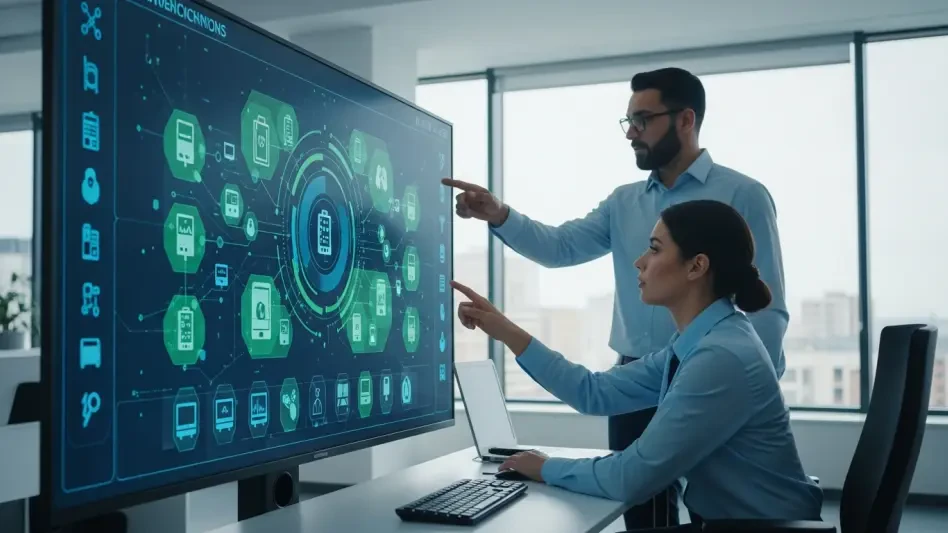
In the broader technological landscape, this shift mirrors the general move toward autonomous systems in fields like logistics and finance. However, in cybersecurity, the stakes are uniquely high because the environment is adversarial. The context of this evolution is defined by the need for “vista”—a clear, unobstructed view of the entire digital estate. Modern agentic systems achieve this by synthesizing massive datasets from internet-of-things (IoT) devices, operational technology (OT), and traditional IT assets into a single, coherent narrative. This comprehensive visibility ensures that security teams are no longer operating in the dark, but are instead guided by a system that recognizes configuration drifts and role misalignments before they can be exploited.
Technical Framework and Core Architectural Components
Transition from Reactive Chatbots to Autonomous Agent Skills
The primary distinction between earlier AI implementations and modern agentic systems lies in the movement away from prompt-driven interfaces toward skills-based execution. While early chatbots required users to master complex prompt engineering to extract useful information, agentic systems utilize pre-coded “skills” that function as modular, goal-oriented programs. These skills allow the system to perform backend technical tasks—such as querying databases, analyzing traffic patterns, and verifying compliance—automatically. This transition ensures that the burden of translation is moved from the human practitioner to the software, allowing analysts to focus on high-level strategy rather than syntax.
Furthermore, these autonomous skills are governed by rigorous guardrails to prevent the hallucinations or erratic behaviors often associated with unconstrained large language models. By operating within a structured framework, the agentic system can deliver evidence-based recommendations that are grounded in the specific realities of the organization’s network. This technical performance is characterized by a significant reduction in mean time to respond (MTTR), as the system can perform preliminary investigations in seconds that would traditionally take an analyst hours. The significance of this architectural shift cannot be overstated; it transforms the security platform from a digital encyclopedia into a seasoned virtual practitioner.
Role-Based Personas and Specialized Operational Workflows
To maximize operational efficiency, agentic systems have adopted a persona-based architecture that tailors the user experience to specific professional roles. Whether the user is a SOC analyst, a network operator, or a biomedical engineer, the system filters and prioritizes information based on that individual’s unique objectives and responsibilities. This specialization ensures that a network security analyst sees configuration drifts and connectivity issues, while a biomedical engineer receives insights into the integrity of life-critical medical devices. By organizing the daily workflow into landing pages with prioritized tasks, the system effectively eliminates the “where do I start?” dilemma that plagues many security teams.
These specialized workflows go beyond simple filtering; they provide a narrative explanation of why certain risks are prioritized. For instance, if a risk score fluctuates, the agentic system does not just report the change; it explains the underlying drivers, such as a newly discovered vulnerability or an unusual change in device behavior. This role-based approach facilitates better organizational alignment, as different departments can look at the same environment through the lens of their specific duties while maintaining a unified source of truth. Consequently, the technology acts as a force multiplier, allowing teams to handle a higher volume of assets and more complex threats without a corresponding increase in headcount.
Emerging Trends in AI-Driven Threat Landscapes
The development of agentic defense is occurring alongside a rapid escalation in AI-powered attacks. Adversaries are increasingly leveraging generative models to automate the creation of polymorphic malware and highly convincing phishing campaigns that bypass traditional filters. Moreover, there is a visible trend in the abuse of cloud infrastructure to launch globally distributed attacks that are difficult to trace and neutralize. These shifts in industry behavior have made the “human-only” defense model obsolete, as attackers can now scan for vulnerabilities and execute exploits at a scale and speed that no manual team can match.
In response to these innovations, the cybersecurity industry is moving toward a model of “active resilience.” This trend involves the use of AI to predict potential attack paths by simulating adversary behavior within a digital twin of the network. By identifying the “blast radius” of a potential breach, agentic systems can proactively recommend segmentation policies or configuration changes to isolate sensitive assets. This shift from reactive patching to proactive isolation is becoming the gold standard for protecting critical infrastructure, where the cost of downtime is measured in both financial and societal terms.
Real-World Applications and Sector Deployment
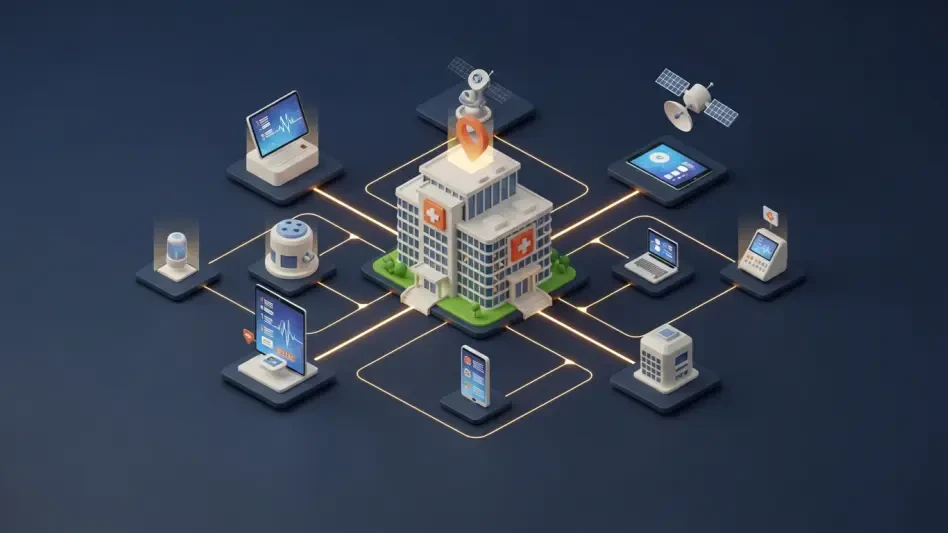
The deployment of agentic cybersecurity is particularly transformative in sectors with high asset diversity, such as healthcare and manufacturing. In a hospital environment, for example, the system must simultaneously manage traditional IT servers, sensitive medical imaging equipment, and thousands of mobile IoT devices. Agentic systems excel here by providing deep visibility into device behavior within its operational context, ensuring that a heart rate monitor is behaving like a heart rate monitor and not like a botnet node. This ability to detect role misalignment is crucial for maintaining the integrity of life-saving infrastructure.
Another notable implementation is found in large-scale industrial settings where operational technology and IT converge. In these environments, the system can perform attack path analysis to visualize how a breach in a corporate email system could potentially move laterally into the factory floor control systems. By providing these granular investigations with a single click, the technology allows operators to move from high-level risk summaries to specific remediation steps instantly. This real-world application proves that agentic systems are not just theoretical enhancements but are essential tools for securing the complex, interconnected foundations of modern society.
Critical Challenges and Implementation Barriers
Despite the clear benefits, the adoption of agentic cybersecurity faces significant technical and regulatory hurdles. One of the primary obstacles is the “black box” problem, where the complexity of the underlying AI makes it difficult for human operators to fully understand why a specific recommendation was made. This lack of transparency can lead to hesitation in high-stakes environments where an incorrect automated action could disrupt essential services. To mitigate this, developers are focusing on “explainable AI” and maintaining a “human-in-the-loop” philosophy, ensuring that practitioners remain the final authority on critical configuration changes.
Furthermore, regulatory frameworks are still catching up with the speed of AI development, leading to a fragmented landscape of compliance requirements. Organizations must navigate varying standards regarding data privacy, automated decision-making, and algorithmic accountability. There is also the persistent challenge of data quality; an agentic system is only as effective as the telemetry it receives. If the underlying data is incomplete or biased, the system’s reasoning will be fundamentally flawed. Ongoing efforts to standardize data ingestion and improve the accuracy of asset identification are essential for the long-term success of these technologies.
Future Outlook and Longitudinal Industry Impact
The long-term impact of agentic cybersecurity will likely be defined by the total democratization of advanced defense capabilities. As these systems become more autonomous and easier to deploy, smaller organizations that lack the budget for a massive security team will be able to achieve a level of protection previously reserved for Fortune 500 companies. This shift will fundamentally alter the economics of cybercrime, as the cost of a successful attack increases while the pool of vulnerable targets shrinks. Potential breakthroughs in quantum-resistant encryption and automated threat hunting will further strengthen the defensive posture of the global digital ecosystem.
Moreover, the relationship between human analysts and their tools will continue to evolve into a collaborative partnership. Rather than being replaced, security professionals will transition into “system orchestrators” who define the high-level goals and ethical boundaries for their agentic fleets. This evolution will lead to a more resilient society where digital infrastructure can automatically heal itself from minor intrusions, allowing humans to focus on solving the most complex and creative security challenges. The trajectory is clear: the future of cybersecurity is not just about faster tools, but about smarter, more autonomous systems that act as a permanent, vigilant shield.
Conclusion and Summary of Findings
The review of agentic cybersecurity systems revealed a technology that has moved far beyond the initial hype of generative AI to deliver tangible operational value. The findings indicated that the transition from reactive, prompt-based tools to autonomous, skills-oriented agents provided the necessary clarity to manage the overwhelming complexity of modern networks. It was observed that the implementation of role-based personas and deep asset context significantly reduced the cognitive load on security teams, allowing for faster and more accurate incident response. The technology proved particularly effective in sectors like healthcare and manufacturing, where visibility into diverse asset types was critical for maintaining safety and continuity.
Ultimately, the assessment showed that while challenges regarding transparency and regulatory compliance remained, the shift toward agentic defense was an inevitable necessity in an era of AI-driven threats. The system functioned as a vital bridge between technical data and strategic action, transforming security from a manual struggle into a scalable, automated process. The potential for future advancements suggested a landscape where organizational resilience is built into the fabric of the network itself. This evolution marked a definitive end to the era of alert fatigue, establishing a new standard for how digital environments are monitored, managed, and protected in a high-velocity threat environment.