
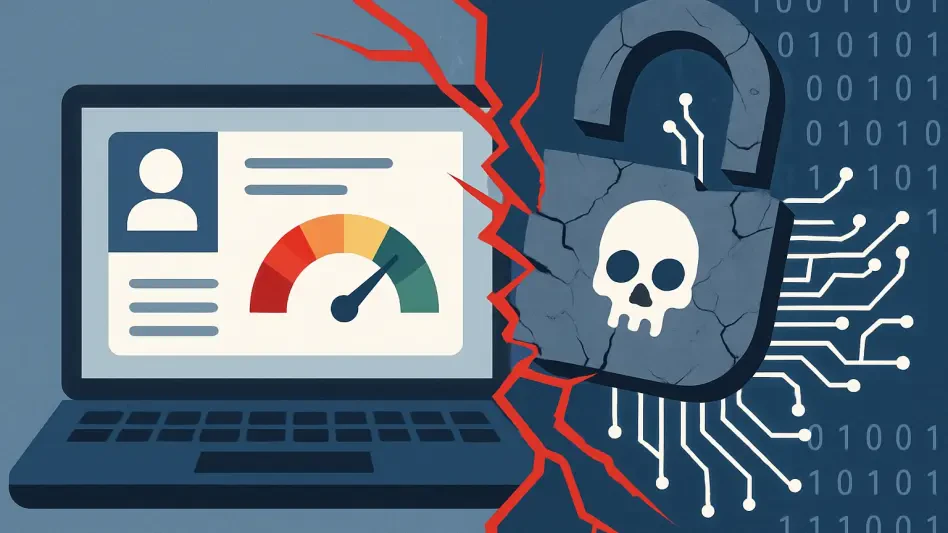
A routine application for an auto loan has become the key that unlocked the private financial lives of millions of Americans, exposing a critical vulnerability deep within the automotive industry. The breach at 700Credit, a company many consumers have never heard of, underscores a dangerous reality: the most significant threats to personal data often come from the interconnected, third-party services that power everyday transactions. The gravity of this situation is amplified by the nature of the compromised information, which includes Social Security numbers, transforming a one-time security failure into a lifelong risk of identity theft for 5.6 million individuals.
This incident is more than just another headline; it serves as a crucial case study in the mechanics of modern cybercrime and the cascading failures that enable it. An in-depth analysis of the attack reveals not only how hackers targeted the automotive sector but also how this event fits into a global surge of similar breaches across unrelated industries. Understanding this pattern is essential, as it shifts the burden of protection, demanding that every consumer now consider essential defensive measures to safeguard their financial identity in an increasingly insecure digital world.
Anatomy of a Widespread Digital Threat
Inside the 700Credit Heist How Your Auto Loan Application Became a Target
The security incident at 700Credit unfolded over several months, with an unauthorized actor accessing sensitive consumer data collected through auto dealerships between May and October of this year. For the 5.6 million people affected, the stolen information represents a near-complete profile for identity fraud, including names, addresses, dates of birth, and Social Security numbers. The breach exposed a fundamental weakness in the data-handling practices of an industry that relies on the rapid exchange of highly personal information to facilitate sales and financing.
In the immediate aftermath, 700Credit began the process of notifying victims by mail and offering standard credit monitoring services. However, the response from regulatory bodies, such as the urgent fraud warning from Michigan’s Attorney General Dana Nessel, highlighted the inadequacy of a passive approach. The call for consumers to proactively implement credit freezes underscored the critical security lapses within the automotive retail supply chain, which allowed such a vast and sensitive dataset to become a target in the first place.
A Contagion of Cyberattacks Charting the Pattern from Libraries to Airlines
The 700Credit breach is not an isolated event but a symptom of a much broader contagion of cyberattacks affecting organizations of all types. Recent incidents illustrate a pervasive trend where no sector is immune. The attack on Washington’s Pierce County Library System, claimed by the INC ransomware group, compromised the data of over 340,000 individuals, proving that even public service institutions are valuable targets. Similarly, the hack of U.S. medical supplier Fieldtex Products, attributed to the Akira ransomware operation, led to the theft of details from more than 238,000 people, demonstrating the vulnerability of the healthcare sector.
This pattern extends to critical infrastructure and major international corporations, often through unexpected vectors. A significant operational disruption at the Russian airline Aeroflot was not the result of a direct assault on its core systems but stemmed from the compromise of a third-party mobile app developer. This case powerfully demonstrates how vulnerabilities in seemingly minor partners can create catastrophic ripple effects, crippling the operations of a global enterprise and further solidifying the supply chain as a primary front in cybersecurity.
The Supply Chains Gateway Flaw Pinpointing the Real Point of Entry for Hackers
These incidents collectively expose a recurring vulnerability: the strategic targeting of smaller, third-party vendors as a backdoor to sensitive corporate and consumer data. Cybercriminals recognize that while a major corporation may have formidable defenses, its network of suppliers, service providers, and software developers often represents a much softer target. This “gateway flaw” has become the preferred point of entry for sophisticated attacks.
This strategy offers a distinct advantage to organized ransomware groups like INC and Akira, allowing them to bypass the stronger security protocols of larger organizations and access their most valuable assets indirectly. It challenges the common assumption that risk is concentrated within major, brand-name companies. The reality is that modern data ecosystems are deeply interconnected and fragile, and a security failure at any single point in the supply chain can compromise the entire network.
The Shifting Onus of Security When Consumer Vigilance Becomes the Last Line of Defense
For the millions of individuals affected by these breaches, the corporate response of offering complimentary credit monitoring services is only a partial solution. The practical consequences of having one’s Social Security number exposed demand a more direct and assertive approach, moving the onus of security from the breached corporation to the individual consumer. Identity management becomes a personal, ongoing responsibility.
A stark contrast exists between the corporate solution and the more effective, individual-led actions required to mitigate harm. While credit monitoring alerts a person to fraud after it has occurred, a credit freeze proactively blocks new accounts from being opened. The long-term societal impact of these breaches is profound, as vast quantities of unchangeable personal data are now permanently exposed in the digital wild, making consumer vigilance the last and most critical line of defense.
From Victim to Defender A Practical Guide to Securing Your Financial Identity
The core takeaway from this wave of data breaches is that personal data exposure is no longer a question of “if” but “when.” This reality necessitates a fundamental shift in consumer mindset, moving away from reactive panic toward proactive, sustained defense. The goal is to create personal security habits that reduce the opportunity for criminals to exploit stolen information.
For anyone impacted by the 700Credit breach or concerned about future incidents, implementing a credit freeze with all three major credit bureaus—Equifax, Experian, and TransUnion—is the single most effective step. This action restricts access to a credit report, making it difficult for identity thieves to open new accounts. Furthermore, individuals should vigilantly monitor their existing financial statements, credit reports, and even medical bills for any signs of fraudulent activity.
Beyond these immediate actions, best practices for managing personal information are crucial. This involves scrutinizing any request for sensitive data, whether online or in person, and questioning why information like a Social Security number is necessary for a given transaction. Adopting a posture of digital caution in all dealings, automotive or otherwise, is no longer optional but an essential component of modern financial literacy.
The Inescapable New Reality of Data Privacy
The relentless series of large-scale, third-party data breaches made it clear that such events are a persistent feature of our digital landscape, not isolated incidents. They exposed a systemic vulnerability that extends far beyond the servers of any single company, revealing the inherent risks in a highly interconnected global economy where data is constantly shared between partners.
These events also amplified the critical, ongoing importance of corporate accountability. It was no longer sufficient for organizations to secure their own digital perimeters; they had to assume responsibility for the security practices of their entire data supply chain. The breaches at 700Credit and others proved that a company is only as strong as its weakest vendor.
Ultimately, this period marked a turning point in public understanding. In an era of constant exposure, personal data security evolved from a passive expectation into a vital, lifelong skill. The belief that institutions alone could protect personal information was replaced by the inescapable reality that vigilance had become a personal, and permanent, responsibility.