
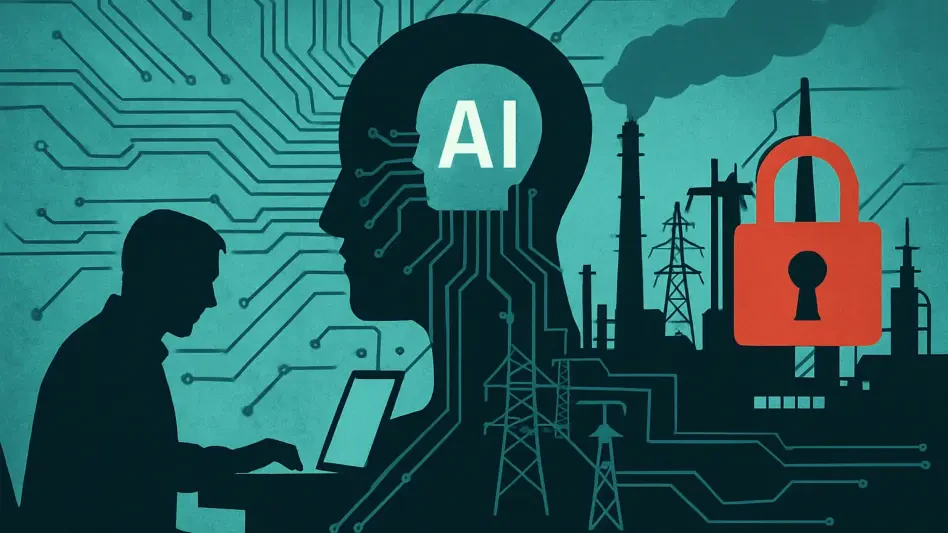
The long-held concept of an insider threat, traditionally envisioned as a disgruntled employee or a compromised user account, is undergoing a profound transformation that security leaders can no longer afford to ignore. As artificial intelligence systems become deeply embedded within critical workflows, the very definition of an “insider” is expanding to include these non-human agents, creating complex and unprecedented risk vectors. This evolution is particularly acute within the engineering sector, a domain uniquely positioned at the vulnerable intersection of information technology (IT) and operational technology (OT). Because this industry underpins critical national infrastructure and relies on vast, interconnected supplier networks, it is exceptionally exposed to these emerging threats. The convergence of persistent economic pressures, ongoing workforce challenges, and the rapid, often ungoverned, integration of AI is creating a perfect storm, demanding a fundamental and urgent rethinking of traditional, perimeter-based security models in favor of a more dynamic, identity-centric approach.
The New Catalysts and Tactics of Insider Risk
Economic Pressures and the “Insider as a Service” Model
Ongoing economic uncertainties and geopolitical instability are placing immense strain on engineering firms, compelling them to operate with leaner teams while facing demands for accelerated project timelines and continuous operational uptime. This high-pressure environment inevitably leads to an over-reliance on a limited number of senior engineers who possess extensive, often excessive, privileged access credentials to a wide array of critical systems. To compensate for resource gaps and meet aggressive deadlines, organizations are also turning to automated systems. The combined operational strain frequently results in security protocols being sidelined in the name of velocity and efficiency. This practice cultivates a significant buildup of “technical debt” within identity and access management (IAM) systems, as proper governance is bypassed, creating unmonitored security vulnerabilities that can be easily exploited. This creates a fertile ground for sophisticated new attack models to thrive within an organization’s most trusted digital spaces.
This environment of high stress and compromised security protocols has given rise to a dangerous model termed “insider-as-a-service.” In this scenario, overburdened, under-resourced, or even disgruntled employees with privileged access become high-value targets for malicious external actors. These threat groups can more easily compromise or coerce these insiders, effectively renting their credentials to exfiltrate sensitive data, manipulate critical systems, or deploy ransomware. The human element—fatigue, frustration, and financial pressure—becomes the weakest link in the security chain. To effectively counter this growing threat, organizations must move beyond static rule-based security and proactively deploy advanced solutions like User and Entity Behavior Analytics (UEBA). These systems can monitor access patterns across the network in real-time, establish baseline behaviors for every user and system, and rapidly flag anomalous activities that deviate from the norm, indicating a potential compromise before significant damage can occur.
The Subtle Threat of Data Manipulation
A significant tactical evolution is underway as malicious insiders and external actors shift their focus from the noisy, often conspicuous act of data theft toward more subtle and insidious forms of data manipulation and poisoning. Unlike large-scale data exfiltration, which frequently triggers volume-based security alerts and is more easily detected, the slow and deliberate alteration of datasets can fly under the radar of most traditional security systems. The consequences of such attacks are profound and far-reaching. By subtly corrupting source data, attackers can silently erode stakeholder trust, systematically distort strategic business intelligence, and sabotage critical C-suite decision-making processes that rely on the integrity of that information. Within the engineering sector, where AI and automated systems depend on the absolute accuracy of underlying data for everything from structural design specifications to operational safety monitoring, data poisoning represents a potentially catastrophic risk with severe real-world implications.
The proliferation of digital touchpoints through widespread automation and interconnected systems makes it easier than ever for such manipulation to go undetected for extended periods. A minor, malicious change to a blueprint file, a sensor reading, or a materials database could have cascading effects, leading to product failures, safety incidents, or financial ruin. The very systems designed to improve efficiency and accuracy become vectors for catastrophic failure when the data they consume is compromised. Consequently, implementing rigorous and continuous data integrity validation processes is no longer just a best practice; it has become an essential and fundamental component of risk management for all engineering firms. This requires a multi-layered approach that includes checksums, version control, anomaly detection in data patterns, and regular audits to ensure that the information fueling critical operations remains trustworthy and unaltered from its intended state.
Adapting Security for an AI Driven World
The Rise of “Shadow AI” a Modern Security Blind Spot
The ungoverned and unauthorized use of external AI tools by employees is rapidly emerging as a critical security blind spot, a phenomenon now known as “Shadow AI.” This trend is the modern equivalent of the risk once posed by uncontrolled USB drives, which allowed users to easily bypass established perimeter defenses and introduce malware or exfiltrate data. As engineering teams strive for greater efficiency, especially when operating under tight deadlines and with limited resources, employees are increasingly turning to publicly available AI chatbots and sophisticated analytical tools to automate tasks, generate code, and streamline complex workflows. While often done with the intention of boosting productivity, this practice creates a significant and largely invisible security challenge for the organization. These external AI platforms operate completely outside the organization’s established IT and OT security controls, creating a direct channel for sensitive data to leave the protected environment.
When employees input proprietary information into these third-party AI systems, they may be unintentionally exposing invaluable intellectual property, confidential project designs, or even data related to critical infrastructure. The terms of service for many public AI tools grant the provider broad rights to user-submitted data, potentially for training their models, which means sensitive corporate information could become part of the AI’s knowledge base and accessible to others. This necessitates the urgent development and implementation of comprehensive AI usage frameworks that go beyond simply banning such tools. Effective governance must establish clear policies, provide visibility into which tools are being adopted by employees, and enforce controls that align with real-world behaviors. The goal is to create a secure “sandbox” that enables the safe and productive use of AI, harnessing its benefits while mitigating the inherent risks of data exposure and loss of control.
Insider Risk as a Measure of Business Resilience
The management of insider threats is evolving from a siloed IT security task into a key indicator of an organization’s overall business resilience. This fundamental shift requires a strategic move away from static, check-box security controls and toward a framework of measurable, continuously validated, and adaptive safeguards that can evolve with the threat landscape. Organizations must now develop a new generation of Key Performance Indicators (KPIs), industry benchmarks, and sophisticated risk models capable of contextualizing the actions of both human users and, crucially, non-human entities like AI agents across all operational environments. This signals the critical need for an advanced form of security analytics, sometimes termed “machine identity UEBA,” which extends behavioral monitoring to encompass AI agents and their activities within various workloads, treating them as insiders with their own unique risk profiles.
A foundational principle of this future-ready state is ensuring that every single action performed within the digital ecosystem, whether by a human or a machine, is irrevocably bound to a unique and verifiable identity. This level of granular identity governance is no longer optional; it is crucial for rapidly detecting, containing, and preventing insider threats from cascading across the enterprise and disrupting wider engineering operations. By achieving this comprehensive visibility and control, organizations can move from a reactive posture to a proactive one. This approach not only strengthens security but also aligns with the broader regulatory trajectory, which increasingly emphasizes demonstrable evidence of continuous risk management and operational impact tolerance over simple adherence to static control frameworks, preparing firms for the complex challenges of the years to come.