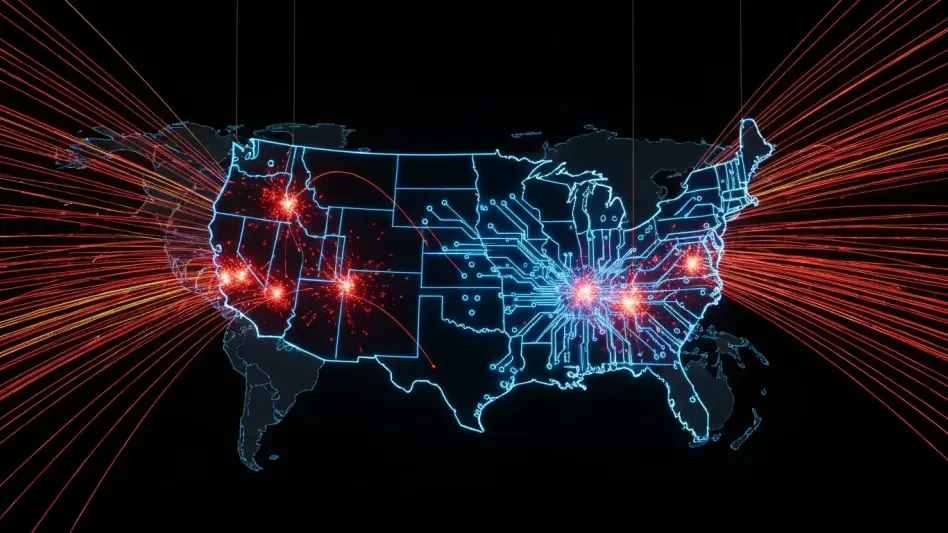
The contemporary battlefield is no longer a geographically defined space but a complex, multi-layered arena where great-power maneuvering, technological acceleration, and internal societal fractures converge to create a persistent state of conflict. The clear delineation between peacetime and wartime has eroded, replaced by a continuous struggle waged across geopolitical, digital, and domestic fronts simultaneously. This evolving landscape is being actively shaped by the strategic alignment of revisionist powers, the disruptive and destabilizing arms race in artificial intelligence, and the insidious threat of extremism festering within the nation’s own institutions. These are not separate, isolated challenges but interconnected forces creating a synergistic threat that demands a new level of awareness, adaptability, and readiness from the United States and its military apparatus, as abstract developments in foreign capitals and tech labs now have direct and tangible consequences for national security.
An Axis of Convenience
Recent intelligence, purportedly derived from a leak of approximately 800 pages of Russian internal documents, suggests a significant deepening of military cooperation between Moscow and Beijing, specifically focused on a potential invasion of Taiwan. The analysis indicates that a 2023 agreement goes far beyond simple arms sales, detailing a sophisticated transfer of both specialized military hardware and, more critically, tactical expertise. According to the documents, Russia has committed to supplying China with assault vehicles, anti-tank weaponry, and airborne armored personnel carriers tailored for airborne assault operations. The cornerstone of this agreement, however, is a provision for Russian forces to train a Chinese parachute battalion, effectively imparting Moscow’s doctrine and extensive experience in air landing capabilities. This knowledge transfer is designed to address a key operational challenge for Beijing, enabling a rapid and decisive initial strike that could fundamentally alter the course of an invasion before a conventional response could be mounted by defending forces or their allies.
This Russo-Chinese collaboration informs a plausible invasion scenario that eschews a high-risk amphibious landing in favor of a swift airborne assault. The operation would likely begin with the clandestine infiltration of small Chinese special operations teams, potentially disguised as civilians, to conduct reconnaissance and prepare key landing zones. The main assault would follow, with a large-scale airborne insertion of heavy equipment and troops using Russian-style systems and tactics to seize critical infrastructure. The primary objective would be the capture of Taipei’s port, which would serve as a vital logistical hub—a “welcome mat” to facilitate the rapid arrival of a much larger, conventional seaborne invasion force. Russia’s strategic motivation is not altruistic but based on cynical realpolitik. By helping to instigate a protracted conflict in the Pacific, Moscow aims to create a massive diversion of American military resources, political focus, and economic capital away from Europe. This “Pacific food fight” would relieve immense pressure on Russia in its own sphere of influence, granting it greater freedom of action while its primary adversary is preoccupied elsewhere.
The Algorithmic Battlefield
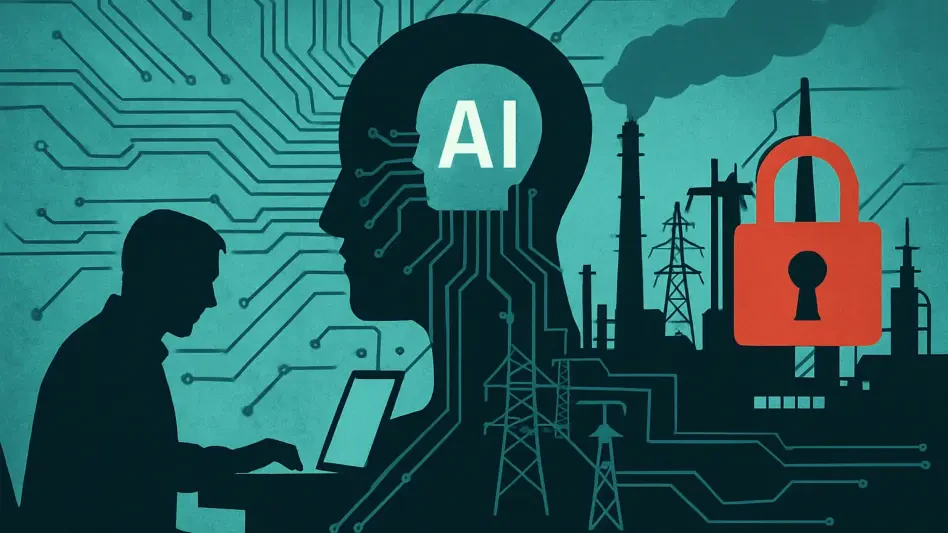
Shifting from geopolitical chess to the technological frontier, the global competition over artificial intelligence is rapidly becoming a central theater of national security. In recognition of this, the U.S. Senate is considering the bipartisan SAFE CHIPS Act, a legislative measure intended to prevent a future administration from weakening export controls on advanced AI semiconductors to adversary nations, including China, Russia, Iran, and North Korea. The bill represents a crucial, if arguably belated, understanding that allowing adversaries access to the foundational hardware of modern AI is a strategic error of catastrophic proportions. The urgency is driven by China’s aggressive and rapid advancements in the field, with labs like DeepSeek releasing powerful new AI models that are pushing the boundaries of long-context reasoning, complex problem-solving, and strategic planning—all areas with direct military applications. Beijing’s clear objective is to leverage its vast data resources and industrial-scale infrastructure to first close the gap with, and then surpass, Western AI leaders to weaponize this technological supremacy.
The entire Western tech ecosystem, despite its own internal arms race between giants like OpenAI and Google, remains fundamentally dependent on access to these cutting-edge microchips. Should these critical components leak to adversaries in bulk, the entire structure of export controls would become ineffective, rendering the American technological advantage moot. Beyond the direct military implications, AI is generating a profound socioeconomic “blast wave” on the home front. Tech industry experts are forecasting a stark future of unprecedented economic growth coupled with mass unemployment, as AI automates vast swaths of white-collar jobs. This societal disruption is directly relevant to national security for two reasons. First, the same AI tools revolutionizing office work are precisely what adversaries are racing to integrate into their targeting systems and autonomous platforms. Second, the potential for severe economic shock, widespread job loss, and social anxiety could drastically affect future defense budgets, complicate military recruitment, and erode the political will necessary to sustain long and costly conflicts.
The Hammer from Within
The threat landscape turns inward with a stark incident of internal security failure at Joint Base Lewis-McChord, where two former service members now face federal charges for attempting to rob a U.S. Army Ranger compound. The case is a textbook example of the insider threat, where individuals with past service and knowledge of procedures exploit their residual access for criminal ends. The pair allegedly used their existing identification to drive onto the base, proceeded to a Ranger operations facility, and staged approximately $14,000 worth of sensitive equipment, including helmets, body armor, and communications gear, for theft. When confronted by a soldier, the intruders attacked him with a hammer, striking him repeatedly in the head and torso. The soldier managed to disarm one assailant, at which point the second brandished a knife before both fled, leaving behind a hat with one suspect’s last name written inside, providing an immediate lead for investigators.
The subsequent investigation revealed that this was not an isolated event, with one suspect reportedly confessing to stealing equipment from the same compound for about two years. More disturbingly, a search of a residence used by both men uncovered a massive cache of 35 weapons, including a machine gun and suppressors, alongside military-grade night vision devices, explosives, and blasting caps. Critically, each suspect’s bedroom was adorned with Nazi and white-power flags, murals, and literature, with the local sheriff confirming that the pair were “actively involved” in white nationalist activities. The incident exposed a critical failure in physical security protocols, as thieves were able to repeatedly access a sensitive facility over an extended period. At the same time, it highlighted the resilience of the individual warfighter. Despite facing two armed assailants, the Ranger who was attacked fought back, disarmed them, and was instrumental in their capture, demonstrating that even amid systemic failures, individual courage and capability remain paramount.
Confronting a Converged Threat
The distinct challenges presented by geopolitical alliances, technological competition, and internal extremism ultimately revealed themselves not as separate issues but as facets of a single, converged threat. The strategic pact between Russia and China was more than a political alignment; it was a tactical collaboration aimed at exploiting specific military and political vulnerabilities. The race for AI supremacy was not merely a technological sprint but a force creating both new military capabilities for adversaries and profound socioeconomic instability at home—an instability that could be amplified by those same adversaries and exploited by radicalized insiders. The insider threat itself was shown to be more than just a security lapse; it was a symptom of corrosive ideologies that find fertile ground in times of social anxiety and division. It became clear that the era of viewing national security threats in silos had passed. Instead, these events underscored the necessity of a holistic and integrated approach, recognizing that the next major conflict would be fought simultaneously on battlefields abroad, across digital networks, and within the nation itself.