
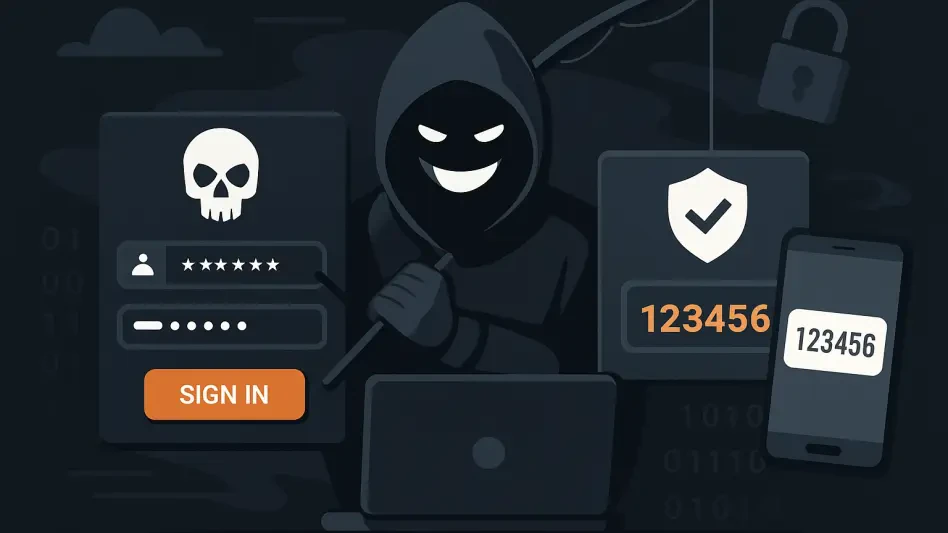
The widespread adoption of multifactor authentication (MFA) has long been championed as a critical defense against account takeovers, but a sophisticated new phishing kit demonstrates that even this robust security layer can be circumvented through a clever combination of automation and human intervention. A newly identified threat, dubbed “BlackForce,” is actively using Man-in-the-Browser (MitB) attacks to not only steal primary credentials but also to intercept one-time passcodes in real time, effectively neutralizing MFA protections. What sets this kit apart is its operational model, which incorporates a rigorous vetting system to qualify high-value targets before a live human operator takes control of the attack. This hands-on approach allows the threat actor to guide the victim through the compromise with precision. Furthermore, the kit is designed for stealth, with its malicious JavaScript file comprising over 99% legitimate code from production builds of React and React Router. This composition gives the file a deceptively benign appearance, enabling it to bypass many automated security scanners that look for overtly malicious signatures, making detection exceptionally difficult for traditional security solutions.
1. The Anatomy of a Guided Compromise
The meticulously orchestrated attack sequence begins when an unsuspecting victim clicks on a phishing link, which directs them to a server controlled by the attacker. This server immediately initiates a filtering process, using an Internet Service Provider (ISP) and vendor blocklist to analyze the visitor’s IP address and User-Agent. This crucial first step is designed to weed out any traffic identified as a security crawler, automated scanner, or analysis bot, ensuring that the phishing content is only served to a genuine potential victim. Once the user is validated, a phishing page, crafted to be an exact replica of a legitimate website, is displayed. Believing the page to be authentic, the victim enters their login credentials. These details are instantly captured and exfiltrated to the attacker’s command-and-control (C2) panel and simultaneously sent as a real-time alert to a private Telegram channel. This alert signals to the live operator that an active target is engaged. The operator then uses the stolen credentials to attempt a login on the actual, legitimate website, which in turn triggers an MFA request. Using advanced MitB techniques, the attacker pushes a fake MFA prompt directly into the victim’s current browser session via the C2 panel. Unaware of the deception, the victim enters their MFA code into the fraudulent prompt, completing the final step of the compromise and granting the attacker full access.
A New Benchmark in Phishing Sophistication
The emergence of the BlackForce kit represented a significant escalation in the ongoing battle for digital security. Its operational success hinged on a blended approach that seamlessly integrated automated credential harvesting with the tactical guidance of a live human operator. This methodology proved highly effective in dismantling the security assurances provided by conventional MFA systems, which often rely on the assumption that the authentication session is secure from real-time interference. The attack’s core ingenuity was found not only in its technical execution but also in its deep-rooted psychological manipulation, as it weaponized the user’s trust in the very security protocols designed to protect them. This development underscored the critical need for organizations to look beyond basic MFA and toward more resilient, context-aware authentication solutions that can detect anomalous session activities. Ultimately, the BlackForce campaign served as a powerful reminder that technology-based defenses alone were insufficient and that comprehensive security awareness remained an indispensable component of any effective defense strategy, reinforcing that the human element was still the most pivotal factor in cybersecurity.