
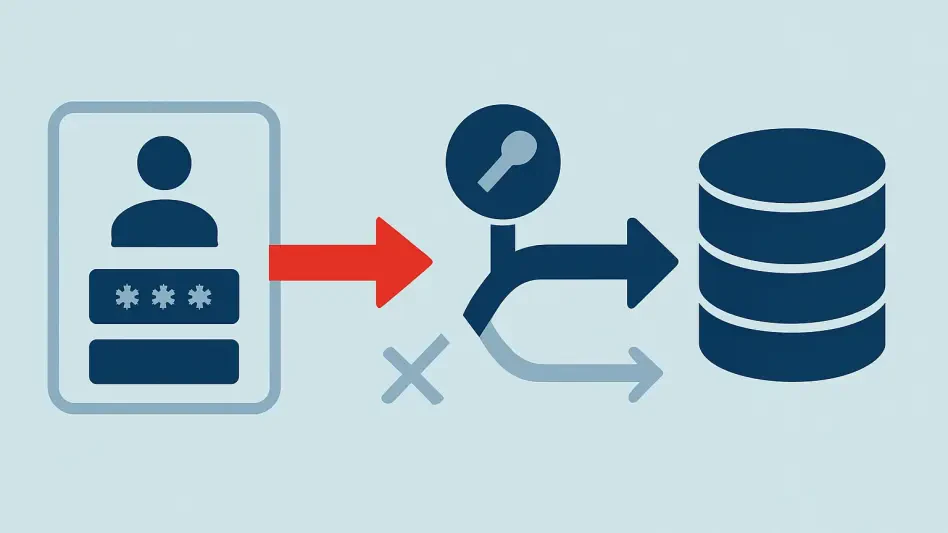
A highly sophisticated Phishing-as-a-Service (PaaS) operation has been uncovered, systematically targeting the credentials and personal data of Spanish-speaking Microsoft Outlook users with unprecedented precision. First identified in the early months of 2025, this campaign, dubbed “Mycelial Mage,” leverages a meticulously crafted phishing kit designed to create pixel-perfect replicas of Microsoft’s official login portals, effectively deceiving even cautious users. Security researchers were able to track the campaign’s rapid spread across a multitude of compromised domains by identifying a unique signature string, “🍄🍄0UTL🍄🍄,” cleverly embedded within the phishing kit’s source code. This distinctive marker has served as a digital breadcrumb, revealing the coordinated nature and scale of the attacks. The operation’s architecture, which combines advanced evasion techniques with a scalable service model, signals a disturbing evolution in the cybercrime landscape, where threat actors are increasingly able to deploy potent and adaptable tools with minimal technical overhead.
The Evolution of a Sophisticated Phishing Kit
The initial variants of the Mycelial Mage phishing kit, observed beginning in March 2025, demonstrated a deliberate focus on modularity and operational flexibility. At the core of these early versions was a script named xjsx.js, which utilized lightly obfuscated Telegram bot tokens to exfiltrate stolen data. This design choice was strategically significant, as it allowed the operators to rapidly cycle through different command-and-control (C2) channels. If one Telegram bot was discovered and taken down, the attackers could seamlessly switch to a new one with minimal disruption to their campaign. This plug-and-play approach to C2 infrastructure highlights a foundational principle of the operation: building a resilient and easily maintainable phishing service. The script would capture the submitted Outlook credentials, enrich the data with the victim’s IP address and geolocation information, and then transmit the complete package to the attacker-controlled Telegram channel via a standardized HTTPS POST request, a method that remained consistent across all subsequent versions of the kit.
As the campaign matured, its developers introduced significant upgrades aimed at hardening the kit against analysis and detection by cybersecurity professionals. A subsequent iteration, identified by its script name tlgram.js, incorporated a suite of advanced anti-analysis features designed to frustrate reverse-engineering efforts. These included debugger traps, which are code segments intended to detect and halt the execution of the script if it is being run within a debugging environment commonly used by researchers. Furthermore, the script employed console hijacking techniques, which prevent security tools from logging or inspecting the script’s output and network activities. This escalation in defensive capabilities demonstrates a clear intent by the threat actors to protect their intellectual property and prolong the operational lifespan of their phishing kit. By making the tool more difficult to dissect, they not only shielded their methods but also increased its value as a commercial offering within the cybercrime ecosystem.
AI’s Role and Shifting Exfiltration Tactics
In its most recent and formidable iteration, the phishing kit has evolved once again, with a new script named disBLOCK.js revealing a critical shift in data exfiltration tactics. The operators have moved away from Telegram bots and have instead integrated Discord webhooks as their primary C2 mechanism. This is not merely a change of platform but a calculated move to enhance operational security. Discord webhooks function as “write-only” channels, meaning that while the attackers can send stolen data to the webhook, they cannot use it to view, query, or replay the information that has been submitted. This one-way communication stream effectively blinds security researchers and defenders, who can no longer intercept and analyze the flow of stolen credentials by compromising the C2 channel. This adaptation showcases the attackers’ deep understanding of platform mechanics and their ability to leverage legitimate services for illicit purposes, making attribution and mitigation significantly more challenging for defense teams.
A compelling body of evidence suggests that artificial intelligence, specifically a large language model, played a significant role in the development of the latest versions of the Mycelial Mage kit. The source code is exceptionally well-structured, adheres to consistent formatting standards, and is extensively documented with clear, coherent comments written in Spanish. This level of quality and clarity is rarely seen in typical manually coded malware and strongly indicates that an AI was used to generate or at least refine the code. This AI-assisted development model likely enabled the threat actors to rapidly prototype, iterate, and deploy increasingly sophisticated versions of their tool. The underlying architecture has remained remarkably stable throughout this evolution, with the core process of capturing credentials, enriching them with metadata, and sending them via an HTTPS POST request being a shared feature across all variants. This combination of a stable framework, interchangeable C2 modules, and AI-driven development points definitively to Mycelial Mage operating as a PaaS, offering tiered versions of its powerful phishing tool to a broader market of cybercriminals.
A New Paradigm in Cyber Threats
The emergence of the Mycelial Mage operation ultimately highlighted a formidable convergence of trends that presented significant challenges for the cybersecurity community. The campaign demonstrated how threat actors successfully leveraged AI to streamline development, creating sophisticated and well-documented tools that lowered the barrier to entry for less-skilled cybercriminals. This was combined with a modular framework that allowed for interchangeable command-and-control channels, enabling attackers to adapt swiftly to defensive measures by swapping out compromised infrastructure like Telegram bots for more secure alternatives like Discord webhooks. This operational agility, powered by a disposable infrastructure model, rendered many traditional data interception and C2 takedown strategies less effective. The rise of such Phishing-as-a-Service platforms signaled a paradigm shift, where sophisticated cyberattacks became a commoditized service, forcing defenders to focus more on proactive threat intelligence and behavioral analysis rather than reacting to static indicators of compromise.