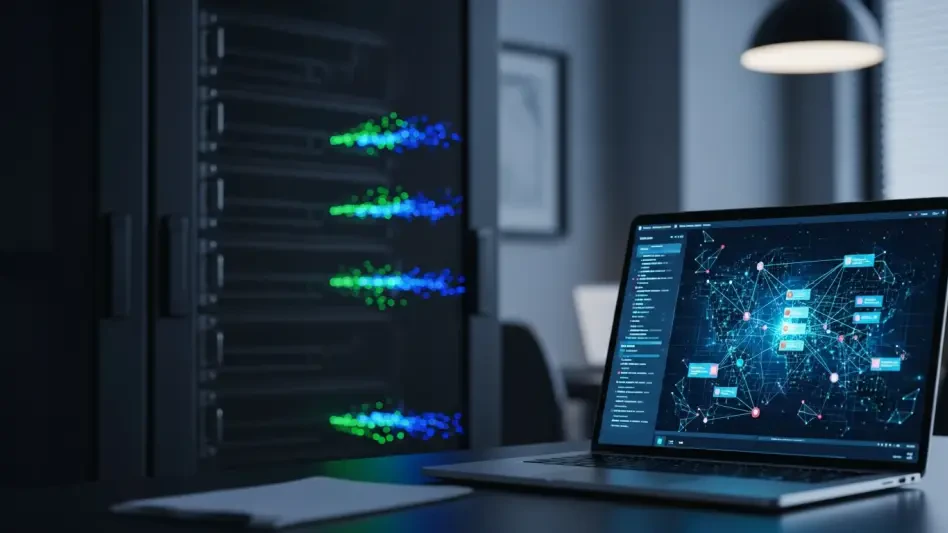
The persistent evolution of state-sponsored cyber operations has entered a new, more resilient phase, with threat actors increasingly adopting modern programming languages to build cyber weaponry that is harder to detect, analyze, and mitigate. At the forefront of this trend is the Muddy Water Advanced Persistent Threat (APT) group, a highly active entity known for its strategic focus on critical infrastructure and government organizations across the Middle East. Recent campaigns reveal a significant pivot in their tradecraft: a deliberate move away from traditional scripting-based tools toward a sophisticated, multi-stage implant engineered in Rust. This strategic shift is not merely a technical upgrade; it represents a fundamental change in offensive philosophy, prioritizing stealth, modularity, and operational longevity over the rapid, often noisy, methods of the past. The emergence of this new malware, dubbed RustyWater, signals a calculated effort to outmaneuver the current generation of security defenses and establish a persistent, low-observability presence within high-value networks.
The Evolving Threat Landscape: A Strategic Shift to Rust
Muddy Water has long been a notable player in the geopolitical cyber threat arena, consistently targeting telecommunications, financial services, and diplomatic entities to conduct espionage and intelligence gathering. Historically, the group relied heavily on accessible and often legitimate system tools, leveraging PowerShell and VBS scripts to orchestrate their attacks. This approach, while effective, created a recognizable forensic trail and was susceptible to signature-based detection and improved script-block logging. The transition to a compiled, Rust-based implant marks a significant leap in their operational maturity and technical sophistication.
This evolution is a direct response to advancements in defensive technologies. Rust, a programming language lauded for its memory safety, performance, and cross-platform capabilities, offers distinct advantages for malware development. Its compilation process produces highly optimized, self-contained binaries that do not rely on external interpreters, making them more difficult to reverse engineer than script-based payloads. Furthermore, the language’s robust ecosystem of libraries, known as “crates,” enables attackers to rapidly integrate complex functionalities, such as advanced networking and encryption, into their implants. For Muddy Water, this shift to RustyWater is a strategic investment in creating a more resilient and evasive cyber weapon capable of sustaining long-term operations inside well-defended networks.
Deconstructing the Attack: From Phishing Lure to Payload Execution
The Initial Breach: A Highly Credible Spearphishing Campaign
The attack chain commences with a meticulously crafted spearphishing email, a vector that continues to prove effective by exploiting human trust. The lure in this campaign is exceptionally well-designed, featuring the subject line ‘Cybersecurity Guidelines’ to pique the interest of security-conscious employees within the target organizations. This theme preys on the recipient’s sense of professional duty, making them more likely to engage with the email’s content.
The credibility of the lure is significantly enhanced by its origin. The emails are sent from the ‘info@tmcell’ domain, which is associated with a major telecommunications operator in Turkmenistan. By spoofing or compromising a legitimate, industry-relevant domain, the attackers create a powerful illusion of authenticity that can bypass both technical email filters and casual human scrutiny. The primary delivery vehicle is an attached Microsoft Word document, ‘Cybersecurity[dot]doc,’ which contains the hidden malicious code necessary to initiate the infection process.
Unpacking the Dropper: How VBA Macros Unleash the Threat
Once a victim opens the Word document and is prompted to enable macros, a sophisticated, multi-stage VBA script is executed, bridging the gap from social engineering to code execution. The first key component of this script, a function named WriteHexToFile, is responsible for reconstructing the primary payload. The malware’s authors cleverly embedded a long, hex-encoded byte stream within a text box control inside the document’s form data, a technique designed to hide the payload from simple static file scanners. This function carefully extracts the hex string, strips away formatting characters, and decodes it back into its raw binary form, which is then written to a discreet location on the disk as C:\ProgramData\CertificationKit.ini.
Following the payload drop, a second function, love_me_function, takes over to execute it. This function employs obfuscation to evade signature-based detection, dynamically building the string WScript.Shell using character codes rather than a plain-text literal. Once reconstructed, it creates a WScript.Shell object and uses it to launch the dropped .ini file via the command prompt. This two-step process of decoding and then executing through an obfuscated wrapper demonstrates a deliberate effort to break the analysis chain and bypass automated security controls.
Engineered for Stealth: Overcoming Modern Defenses
Upon execution, the RustyWater implant immediately deploys a formidable array of anti-analysis and defense evasion mechanisms. To frustrate reverse engineering efforts, it registers a Vectored Exception Handler (VEH), a low-level system feature that allows the malware to intercept and manage system exceptions. This technique is often used to detect and counter debuggers, which rely on exceptions to function. To further obscure its internal workings, all critical strings within the binary are encrypted using a position-independent XOR cipher, meaning they are only decrypted in memory right before use, leaving no plain-text artifacts for static scanners to find.
The implant’s evasiveness extends to its awareness of the host environment. It performs a comprehensive scan of the compromised system, actively searching for the presence of more than 25 different antivirus and Endpoint Detection and Response (EDR) products. This check involves looking for specific agent files, service names, and installation directories associated with major security vendors. If a monitored security tool is detected, the malware can alter its behavior or terminate execution entirely to avoid detection. This environmental awareness ensures the implant only fully activates on systems where it has a high probability of remaining undetected.
Persistence is achieved through a classic but effective technique: modification of the Windows Registry. RustyWater ensures its survival across system reboots by creating a new entry in the HKEY_CURRENT_USER\Software\Microsoft\Windows\CurrentVersion\Run key. The path to this key and the name of the startup entry are both decrypted at runtime before being written, again minimizing static indicators. Its command and control (C2) communications are equally sophisticated, using the modern reqwest Rust library for reliable HTTP-based networking. To evade network-based detection, the implant introduces “jitter” by implementing randomized sleep intervals between C2 callbacks and employs a three-layer data obfuscation process. Data is first structured in JSON, then encoded in Base64, and finally encrypted with an XOR cipher before transmission, making the traffic appear benign and random.
Connecting the Dots: Attributing the Campaign to Muddy Water
Attribution of this campaign to the Muddy Water APT group is made with high confidence due to a strong convergence of technical and tactical evidence. The most compelling link is the reuse of specific code and techniques within the VBA macro dropper. The functions WriteHexToFile and love_me_function, along with the distinctive method of embedding a hex-encoded payload within a UserForm text box, are known signatures previously observed in confirmed Muddy Water operations. These are not generic techniques but rather specific implementation details that constitute a reliable digital fingerprint of the threat actor.
Beyond the code itself, the broader tactics, techniques, and procedures (TTPs) align closely with Muddy Water’s established operational playbook. The targeting of critical infrastructure in the Middle East is consistent with the group’s long-standing geopolitical objectives. Moreover, the campaign’s social engineering themes and initial access methods show significant overlap with other recent Muddy Water activity, creating a clear pattern of behavior that strengthens the attribution and paints a picture of a cohesive and persistent threat campaign.
The Aftermath: The Severe Impact of a RustyWater Compromise
A successful compromise by RustyWater poses a severe and multifaceted threat to any organization. The malware’s combination of stealthy persistence and delayed, jittered beaconing creates a high probability of long-term, undetected access. This allows attackers to maintain a covert foothold for weeks or months, methodically gathering intelligence and planning their next moves while leaving behind minimal forensic artifacts for defenders to discover.
The implant’s modular architecture dramatically amplifies the potential damage. The initial infection serves as a beachhead, from which the attackers can dynamically deploy specialized modules tailored to the victim’s environment. These could include tools for credential theft, lateral movement, or the exfiltration of specific types of data. This on-demand capability renders static defenses, such as blocking a known C2 domain, less effective, as the attackers can adapt their tools and infrastructure in real time. The impact shifts from a simple system compromise to a persistent intelligence-gathering platform deeply embedded within the network.
For security and incident response teams, a RustyWater infection presents a nightmare scenario. The extensive use of in-memory execution, string encryption, and anti-debugging techniques makes forensic analysis incredibly difficult. Reconstructing a precise timeline of attacker activity becomes a challenge, as does confidently attributing the intrusion without clear, static indicators. The malware is engineered not just to breach defenses, but to actively resist the investigation that follows, prolonging incident response cycles and increasing the overall cost and scope of a security breach.
Fortifying Defenses: Strategic Recommendations for Mitigation
In response to this advanced threat, organizations must evolve their defensive strategies beyond traditional signature-based tools. A primary focus should be on monitoring for suspicious host-based behaviors. Security teams should implement granular monitoring of registry keys associated with persistence, particularly autostart locations in the user context, and flag any modifications made by unsigned or unusual processes. Furthermore, instrumenting low-level system events, such as memory allocation and thread manipulation API calls like VirtualAllocEx and WriteProcessMemory, can help detect the in-memory execution techniques favored by this malware.
On the network front, defenders must move toward detecting anomalous communication patterns rather than just blocking known malicious indicators. Advanced traffic analysis capable of identifying layered C2 behavior is critical. This involves building detection logic that can spot the specific sequence of data transformations (JSON to Base64 to XOR) and recognize the randomized callback intervals characteristic of jitter. Alerting on retry-heavy outbound traffic from non-browser processes can also serve as a valuable indicator of a C2 channel attempting to maintain a stable connection.
Ultimately, a robust defense requires a shift toward a more holistic, behavior-driven security posture. Security teams should correlate digital signer information with execution context, flagging instances where a signed binary executes from a non-standard, writable path like ProgramData and subsequently loads unsigned modules into memory. Treating any observable shift in an endpoint’s behavior from passive, low-frequency beaconing to active, high-frequency data collection or internal scanning as a high-fidelity indicator of a late-stage attack can provide the crucial early warning needed to disrupt the adversary before significant damage is done.
The emergence of the RustyWater implant demonstrated a clear and concerning advancement in the capabilities of state-sponsored threat actors. The strategic adoption of modern, compiled languages like Rust marked a pivotal moment, forcing the cybersecurity industry to re-evaluate its reliance on static and signature-based detection methods. The campaign’s success in blending sophisticated social engineering with highly evasive tooling underscored the necessity for defenses that could operate at a behavioral level. The detailed analysis of these TTPs provided a crucial blueprint for security teams, which prompted a necessary evolution in defensive strategies toward more dynamic, context-aware monitoring of both host and network activity to counter the next generation of cyber threats.