The silent hum of servers in a nondescript office park in Mountain View now carries as much strategic weight as the heavy artillery positioned along distant geopolitical fault lines throughout the world. This geographic pivot represents a fundamental realization within the Department of Defense: the most significant battles of the current era are being fought with code rather than kinetic force. By establishing a permanent foothold in the world’s most influential technology corridor, U.S. Cyber Command is attempting to synchronize the rhythm of military operations with the rapid pulse of private-sector innovation.
This strategic presence, designated as Cyber Command-West, functions as a high-tech embassy where the military’s digital warfighters interact directly with the software engineers and data scientists defining the future of computing. The initiative signals a departure from the historical model of isolated defense development, which often struggled to keep pace with commercial advancements. Instead, the command is integrating itself into an ecosystem where artificial intelligence and machine learning are refined daily, ensuring that national security interests are woven into the fabric of technological progress.
Beyond the Beltway: The Tactical Shift to Northern California
Moving operations toward Northern California allows the military to escape the bureaucratic gravitational pull of Washington, D.C., fostering a culture of experimentation that is difficult to sustain within the Pentagon’s walls. By placing personnel in the heart of Silicon Valley, Cyber Command gains immediate access to the collective intelligence of thousands of startups and established tech giants. This physical proximity is designed to foster informal exchanges and deep collaborations that are impossible to replicate through remote communications or occasional site visits.
Furthermore, this relocation acknowledges that digital warfare is no longer an auxiliary function of conventional military power but a primary domain that requires its own specialized environment. The shift provides operators with a front-row seat to emerging trends in software development, cloud infrastructure, and cybersecurity defenses. As a result, the military can adapt its tactics in real-time, leveraging the same cutting-edge tools that drive the global digital economy to protect critical national infrastructure.
Understanding the Urgency Behind the CYBERCOM 2.0 Initiative
The establishment of this California outpost serves as the centerpiece of CYBERCOM 2.0, a comprehensive modernization effort designed to address the volatility of the modern threat landscape. Defense Secretary Pete Hegseth fast-tracked this overhaul to ensure the military possesses the agility required to counter sophisticated state and non-state actors. This initiative is not merely about upgrading hardware; it is about reinventing the organizational structure of the command to favor rapid decision-making and technical flexibility over traditional command-and-control rigidity.
Moreover, the modernization effort reflects a growing concern that the gap between commercial technology and military application has become a strategic liability. By prioritizing CYBERCOM 2.0, leadership is sending a clear message that the United States will no longer tolerate the multi-year delays that have historically characterized defense procurement. The initiative seeks to create a streamlined pipeline where the latest digital breakthroughs can be assessed, modified, and deployed at a speed that matches the evolving tactics of global adversaries.
Bridging the Procurement Gap Through Collaborative Warfare Centers
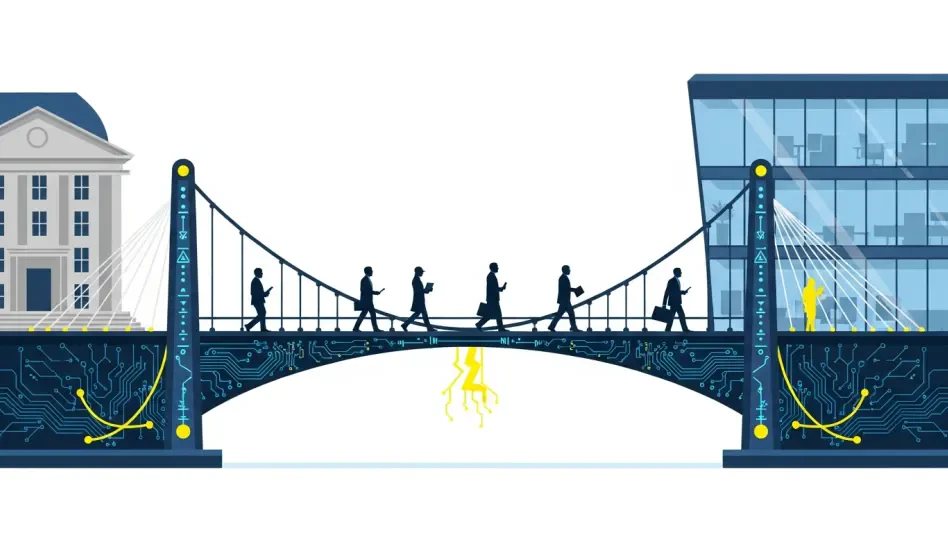
At the heart of the new expansion lies the Cyber Innovation Warfare Center, a specialized facility co-located with the Pentagon’s Defense Innovation Unit. This center is specifically designed to dismantle the “valley of death,” a systemic hurdle where innovative technologies often fail to transition from the prototype phase to full-scale operational use. By bringing military operators and private developers together under one roof, the center facilitates a seamless exchange of requirements and capabilities, ensuring that new tools are purpose-built for the realities of digital combat.
This collaborative environment promotes an iterative development process where software is tested and refined by active cyber operators before it ever reaches the field. This feedback loop eliminates the disconnect between the engineers writing the code and the specialists who must use it during high-stakes missions. Consequently, the tools emerging from the center are more resilient, more intuitive, and better aligned with the immediate operational needs of the command, significantly reducing the time required to field effective digital countermeasures.
Why Defense Experts Advocate for Private Sector Partnerships
National security leaders have reached a consensus that the government can no longer sustain a technical advantage without deep integration with the private sector. Representative Don Bacon and retired Lieutenant General Charlie Moore have both emphasized that the scale of modern cyber threats exceeds the capacity of any single government agency. They argue that the military must leverage the immense research and development budgets of private corporations to maintain a competitive edge, particularly in the rapidly advancing field of artificial intelligence.
In addition to resource sharing, these partnerships provide the military with a diversity of perspective that is often lacking in traditional defense circles. Commercial developers frequently approach problem-solving with a level of creativity and speed that differs from military norms. By adopting these private-sector methodologies, Cyber Command can enhance its defensive posture and develop more sophisticated offensive capabilities, ensuring that the United States remains the dominant force in the digital domain.
The Strategic Roadmap for Securing Elite Talent and Technical Superiority
The command established a three-pillar framework that prioritized human capital as the ultimate decisive factor in digital superiority. This strategy included the Cyber Innovation Warfare Center for technical advancement, a dedicated Cyber Talent Management Organization to streamline recruitment, and an Advanced Cyber Training and Education Center. These entities functioned in unison to identify and nurture the specialized skills required for modern warfare, ensuring that the command remained populated by the nation’s most capable digital thinkers.
By maintaining a permanent presence in Northern California, the military successfully bridged the cultural divide that previously separated top-tier tech talent from national service. The initiative allowed the command to recruit individuals who were passionate about solving complex national security problems but preferred to remain connected to the innovation hubs of the West Coast. This strategic roadmap ultimately secured the technical foundation of the command, ensuring that the United States maintained its digital dominance through a sustainable pipeline of elite innovators and cutting-edge operational tactics.