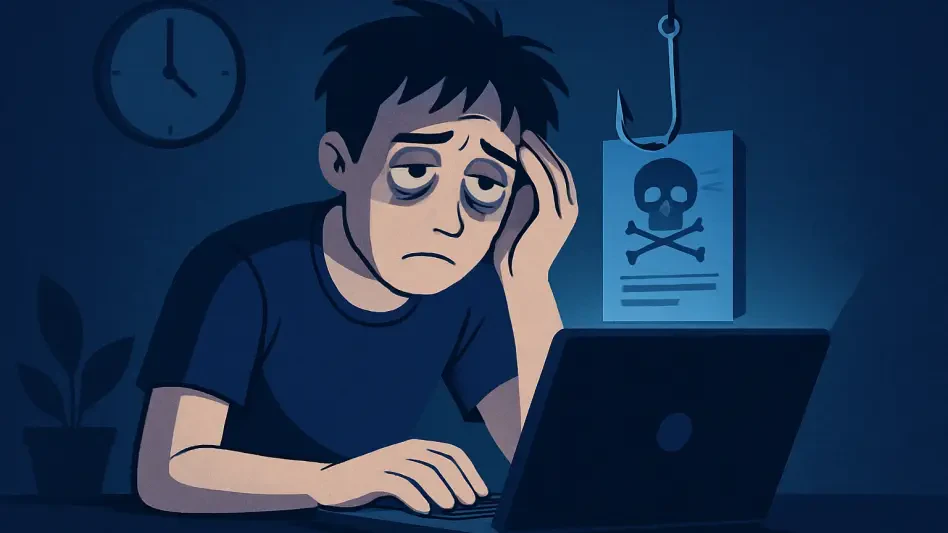
Clinical observations indicate that even those who do not feel impaired may still lack the critical discernment necessary to avoid clicking on dangerous digital links. This reality has come to the forefront following a comprehensive analysis from researchers at the University of California, Irvine, who utilized the annual daylight saving time transition as a unique laboratory for human behavior. By examining the subtle shifts in cognitive performance that occur when the population loses just one hour of sleep, the study uncovered a direct correlation between fatigue and cybersecurity failures. Traditionally, digital defense strategies have focused on robust software and hardware solutions, yet this new evidence suggests that physiological health is equally vital to maintaining a secure environment. The research demonstrated that even a mundane change in a person’s sleep routine can noticeably degrade their ability to spot malicious communication. This suggests that the front line of cyber defense is not just in the server room, but also in the bedrooms of every employee.
The Impact: Examining Minor Rest Disruptions
Study Methodology: Utilizing Natural Experiments
The scale of the simulation conducted by the university was extensive, involving a diverse group of more than 11,200 employees within a controlled institutional environment. These individuals were unknowingly participants in a long-term safety test where they received simulated phishing emails designed to mirror the tactics used by real-world digital criminals. The timing of these emails was carefully orchestrated to capture data during two distinct periods: the Monday immediately preceding the spring time change and the Monday directly following it. By using the “spring forward” clock adjustment as a natural experiment, the researchers were able to isolate the effects of a single hour of sleep loss on a massive scale. This methodological approach allowed the team to observe how a minor disruption to the circadian rhythm influences the split-second decisions people make while managing their daily digital correspondence. The study successfully highlighted how a routine event can create a window of opportunity for fraud.
To ensure the accuracy of the observations, the researchers maintained a consistent baseline by using simulated attacks that remained unchanged in complexity between the two phases of the study. This consistency was vital for determining whether the increase in successful phishing attempts was truly a result of fatigue rather than more sophisticated deceptive techniques. By keeping the variables of the emails identical, the study focused entirely on the human reaction to the stimuli. This approach naturally leads to a better understanding of how a tired brain processes mundane tasks that it might otherwise handle with ease. The setting of a university provided a broad cross-section of professionals, from administrative staff to faculty, ensuring that the results were not limited to a single specific job function or educational level. This variety strengthens the argument that sleep-related vulnerability is a universal human trait rather than a localized issue among specific demographics or certain types of technical workers.
Statistical Findings: Measuring the Increase in Risk
The empirical data gathered from the study revealed a significant uptick in susceptibility to cyber fraud when the participants were under the influence of minor sleep deprivation. Before the clock adjustment, the baseline rate for clicking on suspicious links stood at approximately 16 percent, a figure that provides a snapshot of standard user behavior in a relatively alert state. However, following the loss of just one hour of sleep due to the spring transition, the click rate rose to nearly 18 percent among the same group of employees. This data highlights that human error is not a constant variable but one that fluctuates based on physiological conditions. The research emphasizes that cybersecurity is deeply rooted in the physical well-being of the workforce. When individuals are tired, their ability to process information and detect red flags is measurably compromised, turning a routine task like reading an email into a potential gateway for a successful and damaging cyberattack.
Building on this foundation, the significance of a two-percentage-point increase cannot be overstated when considering the sheer volume of digital interactions in the modern era. While a shift from 16 to 18 percent might appear subtle, it represents a 13 percent relative increase in the proportion of individuals who succumbed to the simulated scam. In a corporate or governmental setting with thousands of employees, this jump represents a substantial widening of the attack surface that cybercriminals can exploit. This data underscores the fact that cybersecurity is not just a technical challenge but a physiological and psychological one, heavily dependent on the alertness and cognitive integrity of the end-user during every interaction. Because criminals often time their attacks to coincide with periods of high stress or distraction, understanding these windows of vulnerability is crucial for defense. The findings suggest that a tired workforce creates a recurring and predictable security risk for any large-scale organization.
The Science: Cognitive Fatigue and Security
Neurological Deficits: Brain Function and Alertness
To understand why a small amount of sleep loss has such a profound impact, experts point to the specific architecture of the human brain, particularly the prefrontal cortex. This region is responsible for executive functions such as complex planning, impulse control, and critical judgment, making it the primary defense against deceptive social engineering. Unfortunately, the prefrontal cortex is also exceptionally sensitive to even minor sleep deprivation, which strains the communication between brain regions required for maintaining high-level alertness. Tasks that people often perceive as routine or mindless, such as checking an inbox or scrolling through notifications, actually require a high degree of cognitive discernment to perform safely. When the brain is fatigued, it struggles to notice subtle discrepancies that serve as red flags, such as a slightly altered URL or an unusual tone in a message. Without a fully functioning prefrontal cortex, the ability to filter information is severely compromised.
This biological vulnerability naturally leads to what researchers describe as the self-assessment gap, which is a dangerous disconnect between perceived and actual cognitive ability. One of the most insidious effects of sleep loss is that it impairs the brain’s ability to judge its own performance accurately. Individuals who have lost rest frequently report feeling completely normal or only slightly tired, unaware that their reaction times have slowed and their analytical skills have deteriorated. Because these individuals do not feel “impaired” in a traditional sense, they are less likely to employ the extra caution or double-checking procedures that might prevent a costly mistake. This lack of awareness creates a “soft target” for cybercriminals, who rely on the fact that an unsuspecting person will act on impulse rather than deliberate thought. This suggests that the subjective feeling of being awake is a poor indicator of whether a person is actually fit to handle sensitive digital tasks.
Actionable Solutions: Strategic Defense Measures
The implications of this cognitive decline extend far beyond the realm of email safety and into various high-stakes daily activities that require precision. Experts suggest that a brain struggling with a sleep deficit is prone to making broader financial and professional errors, such as missing incorrect charges on bank statements or misinterpreting the tone of a colleague’s communication. Furthermore, the loss of “active maintenance” capabilities can lead to health risks, including forgetting to take medication or failing to notice safety hazards while driving. To combat these risks, prioritizing sleep hygiene and maintaining a regular schedule is essential for stabilizing the circadian rhythm. A useful strategy involves the “wait and see” rule, where individuals postpone making major financial moves or clicking on unexpected links until they are well-rested. By acknowledging that fatigue is a physical state rather than just a feeling, users can adopt more disciplined habits to protect their digital identities.
Ultimately, the research provided a vital reminder that sleep serves as a foundational pillar of cognitive health and digital security. Researchers concluded that the boundary between a secure digital life and a successful scam often depends on the physiological state of the user. To mitigate these risks, it was suggested that organizations integrate sleep awareness into their broader security training programs. Experts noted that caffeine provided a false sense of alertness and did not restore the quality of judgment, which led individuals to make suboptimal decisions more rapidly. It was also recommended that users develop a habit of navigating directly to official apps or websites instead of clicking on embedded links when they felt fatigued. These findings shifted the focus from purely technical defenses to the biological realities of human error. By recognizing that sleep loss creates predictable vulnerabilities, individuals and institutions began to better prepare for the psychological challenges of modern cyber fraud.