A sophisticated global ransomware campaign has been uncovered, revealing how the long-standing Phorpiex hacker network is leveraging deceptive Windows shortcut files to deploy a potent offline ransomware variant. A recent security analysis details how this operation masterfully combines low-tech social engineering with advanced, self-sufficient malware to bypass conventional security protocols and encrypt user data without ever needing an internet connection. The attack, which distributes the Global Group ransomware, begins with a cleverly disguised phishing email, luring unsuspecting users into executing a malicious LNK file they mistake for a standard document. This method highlights a dangerous evolution in ransomware deployment, demonstrating that even devices that are temporarily or permanently disconnected from the network are not immune to attack. The entire infection chain is designed for stealth and efficiency, using the victim’s own system tools against them before erasing its own tracks, leaving behind encrypted files and a ransom demand.
Exploiting User Trust Through Deception
The initial infiltration vector relies on a carefully crafted phishing email, a simple yet consistently effective method for gaining a foothold in a target system. These emails often carry an innocuous subject line like “Your Document” to pique the recipient’s curiosity and encourage them to open the contents. Attached to the email is a Zip folder containing what appears to be a document file, for example, Document.doc.lnk. The attackers cleverly exploit a default setting in most Windows operating systems that hides known file extensions. As a result, the user only sees “Document.doc,” leading them to believe they are opening a safe and familiar Microsoft Word file. This simple act of deception is the critical first step in the attack chain. Once the user double-clicks this shortcut file, they unwittingly trigger a series of commands embedded within it, initiating a process designed to download and execute the ransomware payload without any further interaction or obvious signs of malicious activity on their computer. The effectiveness of this stage hinges entirely on manipulating user perception and exploiting common system configurations.
The true ingenuity of the attack becomes apparent immediately after the user interacts with the malicious LNK file. Instead of dropping an external hacking tool that might be flagged by antivirus software, the shortcut initiates a “Living off the Land” (LotL) technique. This strategy involves using legitimate, pre-installed system utilities to carry out malicious actions, making the activity appear as normal system behavior. The LNK file executes a command that calls upon native tools such as PowerShell and Command Prompt, instructing them to connect to a remote server and download the primary malware payload, the Global Group ransomware. Upon being downloaded, the ransomware further conceals its presence by disguising itself as a critical system file, often adopting a name like windrv.exe and placing itself within protected system folders. This self-masquerading tactic is crucial for evading detection by security software that scans for unfamiliar or unauthorized executables, allowing the ransomware to persist on the system long enough to complete its destructive objective.
A Self Sufficient and Destructive Threat
A key differentiator of the Global Group ransomware is its unique ability to operate in a “mute” mode, allowing it to function entirely offline. Unlike the majority of ransomware strains that must establish a connection with a command-and-control (C2) server to receive an encryption key, this variant is completely self-sufficient. It generates the necessary encryption key locally on the infected machine, severing the need for any external communication that could be monitored or blocked by network security tools. This offline capability makes it a formidable threat to all environments, including those with air-gapped systems or computers that are only intermittently connected to the internet. The ransomware employs the powerful ChaCha20-Poly1305 encryption algorithm, a modern and highly secure cryptographic cipher that renders file recovery virtually impossible without access to the unique decryption key. This combination of offline operation and strong encryption ensures that once the malware is executed, the damage is almost certain and irreversible without paying the ransom.
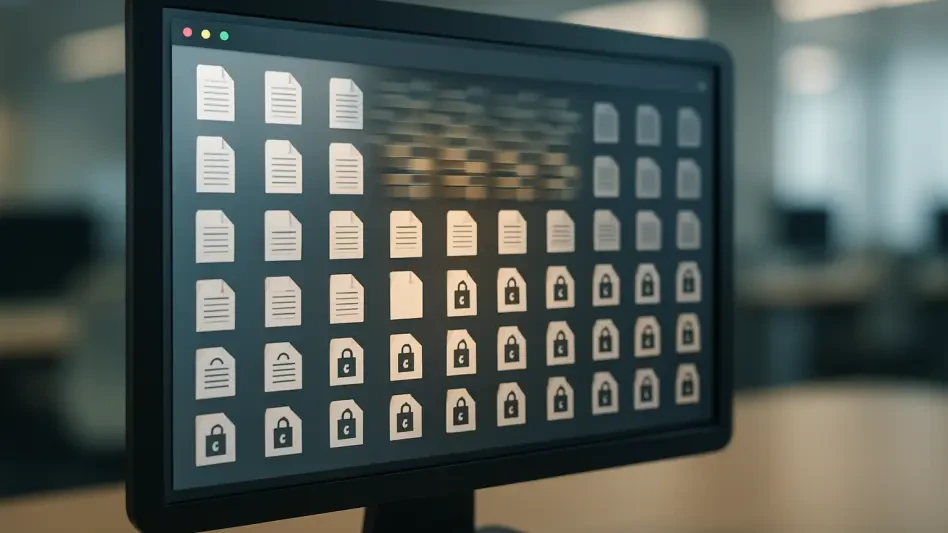
Once the encryption process was complete, the malware meticulously erased its own presence to frustrate forensic analysis and recovery efforts. The ransomware initiated a ping command to the local address 127.0.0.7, a clever technique that used the command’s default delay as a brief timer before the malware’s own executable files were deleted from the system. In its final and most devastating step, the malicious code actively sought out and destroyed all Volume Shadow Copies on the machine. By eliminating these built-in Windows backup and recovery points, the attackers ensured that victims could not use system restore functions to easily recover their encrypted data, thereby increasing the pressure to pay the ransom. The attack’s completion was signaled to the user when their files were appended with a .Reco extension and their desktop wallpaper was replaced with a ransom note. This campaign ultimately demonstrated a troubling trend where simple social engineering was effectively merged with sophisticated, self-contained malware to create a highly successful and clean criminal operation.