
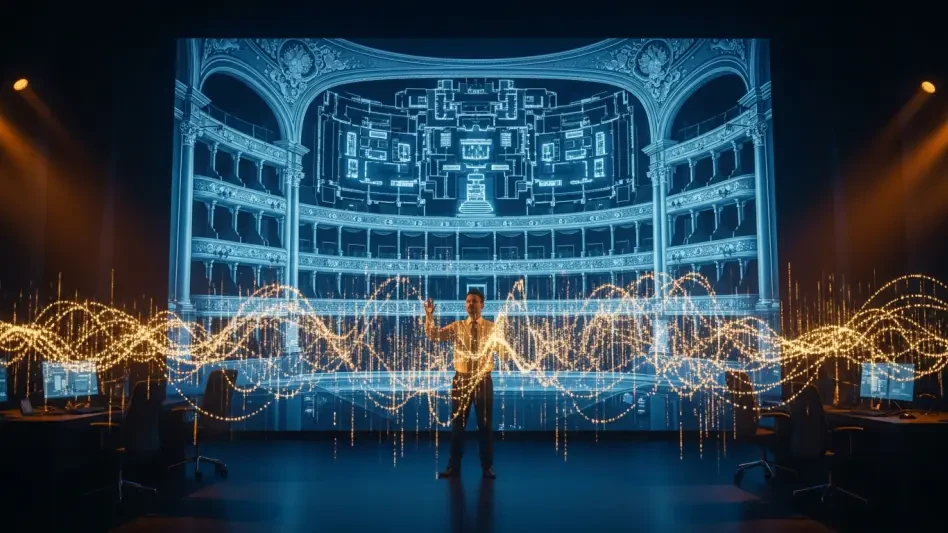
The dramatic tension inherent in a Puccini aria might seem light-years removed from the clinical coldness of a binary exploit, yet the underlying psychological mechanics of these two worlds are remarkably similar. In the modern security landscape, the transition from the opera stage to digital defense has revealed that the arts provide a foundational framework for high-level technical work. This synergy is built upon rigorous training, the ability to maintain composure under blinding spotlights, and a unique form of creative resilience that traditional computer science curricula often overlook. As the boundary between creative thinking and algorithmic execution blurs, professionals with backgrounds in the performing arts are proving that their non-linear experiences are not just curious anomalies but strategic advantages. These individuals bring a level of focus that turns the grueling process of code auditing into a refined performance, where every line of logic must be executed with the same precision as a difficult passage.
Adapting to a Changing Professional Landscape
The Rising Value of Human-Centric Skills
In the current environment where artificial intelligence has successfully automated many of the routine aspects of penetration testing, the human element has emerged as the primary differentiator for success. Organizations realize that while machines can find known patterns, they lack the nuanced intuition required to navigate the complex social and psychological layers of a targeted cyber campaign. Recent industry surveys indicate that over eighty percent of senior security executives believe that technical mastery alone is no longer sufficient to lead a modern defense team through a crisis. Instead, the focus has shifted toward individuals who can translate technical findings into actionable strategies while maintaining clear communication with diverse stakeholders. This shift highlights a growing demand for practitioners who possess high social intelligence and the ability to exercise sound judgment when automated tools fail to provide a clear path forward in high-stakes digital environments where every second counts.
This evolution in professional requirements underscores the importance of soft skills that were once dismissed as secondary to coding proficiency or network engineering expertise. Effective leadership in the cybersecurity sector now requires a level of stakeholder management that mirrors the intricate negotiations found behind the scenes of a major theatrical production. Practitioners must influence others without direct authority, build consensus among competing departments, and explain the gravity of a threat without resorting to counterproductive alarmism. These human-centric capabilities are particularly vital in decentralized or offshore environments where cultural nuances and remote communication add layers of complexity to daily operations. By prioritizing these interpersonal skills, security organizations can foster a culture of transparency and trust that is essential for long-term resilience. The ability to manage the human narrative around a security event is often just as critical as the technical resolution itself.
Iterative Practice and Creative Exploration
Excellence in both opera and cybersecurity is the result of an obsessive commitment to iterative practice and an uncompromising attention to detail that borders on the fanatical. A professional singer might spend weeks rehearsing a single phrase to ensure vowel placement and breath support are flawless, just as a security researcher must relentlessly probe an edge case until it yields a definitive answer. This stage-inspired work ethic prevents researchers from falling into the trap of superficial analysis or simply following a pre-defined checklist of common vulnerabilities. It encourages a deeper, more intuitive engagement with the target system, where the practitioner understands the underlying architecture so well that they can feel when something is slightly out of tune. This level of technical intimacy is what separates a standard auditor from a master researcher who can uncover zero-day flaws by recognizing subtle anomalies that others miss during a standard review of the codebase.
Beyond the foundation of rote practice, the concept of the “cadenza”—a moment of improvisation in a classical piece—serves as a vital metaphor for the unstructured exploration in advanced security. While standard operating procedures are necessary for maintaining baseline security, they can also create a rigid mindset that misses novel or highly sophisticated threats. By embracing a degree of creative freedom, security professionals are able to step away from the established “sheet music” of their playbooks and follow a hunch that leads to an unexpected discovery. This creative approach allows for the identification of logical flaws and business logic vulnerabilities that automated tools are fundamentally incapable of detecting. It requires a willingness to experiment and a tolerance for failure rooted in the artistic process, where every unsuccessful attempt at an interpretation is seen as a necessary step. Cultivating this mindset within a technical team ensures that the defense remains as dynamic as the adversaries.
Performance Under Pressure and Team Dynamics
Psychological Resilience and High-Stakes Collaboration
The intense pressure of a live performance, where there are no retakes, closely mirrors the atmosphere of a real-time incident response during a massive data breach. In the opera house, a performer who misses a cue or experiences a technical malfunction must find a way to recover instantly without breaking character or alerting the audience. This specific brand of psychological fortitude is invaluable in the cybersecurity world, where the ability to maintain composure under duress can prevent a minor incident from spiraling into a total systemic collapse. Professionals who have been trained to perform in front of thousands bring a unique emotional stability to the “war room,” allowing them to think logically and implement solutions even when the viability of the entire organization is at risk. This resilience ensures that the team remains focused on the objective rather than the panic of the moment, facilitating a more effective and organized response to the unfolding crisis in real time.
Managing a team of world-class security researchers often involves navigating high-intensity personalities and strong opinions, a dynamic that is frequently observed among elite performers in the theater. These individuals are typically driven by a deep commitment to the quality of their work, which can sometimes lead to friction if not managed with a clear organizational structure. Aligning these diverse talents toward a common goal requires a leader who understands how to harness individual brilliance without allowing it to disrupt the collective effort. In a high-stakes security environment, this means creating a culture where different perspectives are valued as part of a larger ensemble rather than viewed as threats to personal authority. When these intense personalities are properly synchronized, the resulting output is far greater than what any individual could achieve in isolation. The synergy created by a well-conducted team allows for the rapid deconstruction of complex problems.
The Maestro-Student Relationship in Mentorship
The traditional apprenticeship model found in the arts, specifically the relationship between a maestro and a student, offers a superior framework for corporate mentorship and professional development. Rather than simply delegating repetitive tasks or providing a generic list of learning modules, senior leaders in the security industry should adopt a more hands-on approach that emphasizes the transfer of internal thought processes. This method involves guiding junior researchers to discover their own professional “voice” by showing them how to think through a problem rather than just providing the answer. By treating career growth as a personalized journey of discovery, organizations can foster a more resilient and innovative workforce that is capable of independent critical thinking. This transition from a top-down management style to a mentorship-focused model allows for the preservation of deep institutional knowledge while encouraging fresh perspectives that challenge the established status quo.
The integration of performance-based disciplines into technical security strategies became a cornerstone for organizations seeking to navigate the complexities of a volatile digital environment. By valuing psychological resilience and creative exploration as much as coding expertise, leaders established a more robust defense posture that stood up to the most sophisticated threats of the period. This approach moved beyond traditional training methods, emphasizing the importance of human-centric leadership and the maestro-style mentorship that allowed junior talent to flourish. The most successful teams were those that recognized the value of the “cadenza” in their workflows, permitting the kind of intuitive leap that discovered vulnerabilities long before they could be exploited by adversaries. Moving forward, the industry demonstrated that the bridge between the arts and the sciences was not merely a theoretical concept but a practical necessity for survival in an increasingly high-stakes digital landscape.