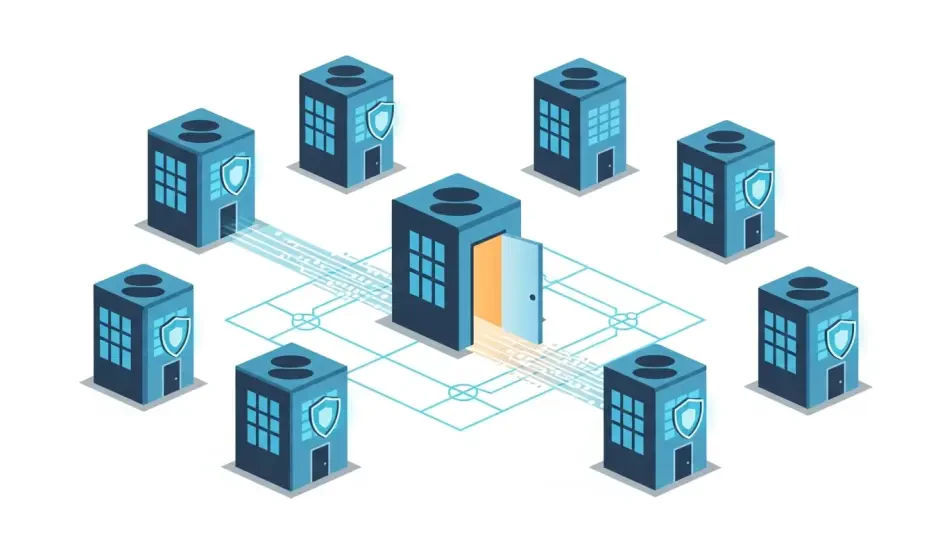

A sophisticated and aggressive botnet, meticulously crafted in the Go programming language, is systematically compromising Linux-based servers on a global scale through relentless brute-force attacks. This malware, identified as GoBruteforcer, specializes in targeting a variety of internet-exposed services that are often secured with weak or default password configurations, including common platforms like FTP, MySQL, PostgreSQL, and the web-based database management tool phpMyAdmin. Recent analysis has revealed the emergence of a highly evolved “2025 variant” of the malware, which incorporates significant technical enhancements over its predecessors. This new iteration has already managed to successfully compromise tens of thousands of servers worldwide, presenting a substantial and escalating threat to the stability and security of global internet infrastructure by exploiting both legacy vulnerabilities and surprisingly modern, AI-driven configuration trends.
The Threat Landscape
Widespread Vulnerability and Attack Surface
The potential impact of the GoBruteforcer botnet is immense, with comprehensive analysis suggesting that more than 50,000 internet-facing servers may be at immediate risk of a successful compromise. This alarming figure is put into stark context by the staggering number of potentially vulnerable services that are currently exposed online without adequate protection. Security researchers have identified approximately 5.7 million FTP servers, 2.23 million MySQL servers, and 560,000 PostgreSQL servers that are operating on their default, well-known network ports, effectively creating a vast and inviting attack surface for the botnet to systematically exploit. This widespread exposure underscores the critical nature of the threat, as even a statistically low success rate for individual brute-force attempts can translate into a massive number of successful breaches when applied at such a colossal scale. The malware’s operational model thrives on this volume, turning the collective neglect of basic security hygiene into a potent weapon for widespread system compromise.
The sheer scale of this vulnerability highlights a persistent and systemic issue within modern IT infrastructure management. The exposure of millions of critical database and file transfer services on their default ports points to a combination of rushed deployments, lack of security awareness, and the continued use of legacy configurations that do not adhere to current security best practices. For the operators of GoBruteforcer, this landscape represents a target-rich environment where minimal effort can yield significant results. The botnet does not need to employ complex zero-day exploits; instead, it leverages the path of least resistance by automating the process of guessing weak and common passwords across millions of potential targets. This approach is not only effective but also highly efficient, allowing the threat actors to build and expand their botnet with relatively low overhead. The situation serves as a powerful reminder that the most widespread threats are often those that exploit the most basic and frequently overlooked security failings, rather than those relying on cutting-edge hacking techniques.
Exploiting Modern and Legacy Weaknesses
The current wave of GoBruteforcer’s success is attributed to its clever exploitation of two distinct but equally significant trends in server administration. The first contributing factor is a novel and modern phenomenon involving the mass reuse of AI-generated server deployment examples. As an increasing number of system administrators turn to large language models (LLMs) for assistance with generating configuration scripts and setup guides, a pattern has emerged where these AI models frequently suggest common, non-unique operational usernames like “appuser” and “myuser” as default placeholders in their examples. The threat actors behind GoBruteforcer have astutely observed this trend and have incorporated these exact predictable usernames into their brute-force credential lists, thereby significantly increasing their probability of guessing a valid login on systems configured with the help of these popular AI tools. This represents a new frontier in security vulnerabilities, where the very tools designed to improve efficiency are inadvertently creating standardized weaknesses at scale.
The second critical factor fueling the botnet’s growth is the continued and widespread persistence of legacy web application stacks, with platforms such as XAMPP serving as a prime example. These all-in-one server solutions are popular for their ease of deployment, particularly in development and small-scale production environments. However, they often expose critical services with minimal security hardening and are frequently deployed with weak, easily guessable default credentials that are seldom changed by the end-user. GoBruteforcer systematically targets these legacy stacks, which act as a perennial soft spot in the internet’s security posture. By combining the attack vector against modern, AI-suggested defaults with the targeting of old, insecure software stacks, the botnet’s operators have created a highly effective, two-pronged strategy. This approach allows them to successfully compromise a diverse range of servers, from the most recently deployed cloud instances to older, unpatched web servers, ensuring a continuous supply of new bots for their network.
Anatomy of the Attack
Systematic Brute-Force Operations
The botnet’s brute-force methodology is both systematic in its execution and economically viable for the attackers who operate it. An in-depth investigation found that the credential lists used by GoBruteforcer have a notable overlap with known breached data, matching approximately 2.44% of a reference database that contains 10 million leaked passwords. While this percentage may appear low on the surface, the sheer volume of exposed services online makes this attack vector highly profitable and efficient. This finding is strongly corroborated by Google’s 2024 Cloud Threat Horizons report, which determined that the use of weak or entirely missing credentials was the initial access vector in a staggering 47.2% of compromised cloud environments. Operationally, the botnet’s command-and-control (C2) server strategically distributes lists of 200 credentials to each infected bot, which then carries out the brute-force tasks. To maintain effectiveness and evade simple defensive measures, the campaign profiles and target lists are rotated several times per week.
The password lists themselves are generated from a relatively small but potent core database, typically containing between 375 and 600 of the most commonly used weak passwords. This core list is then dynamically expanded through the use of algorithmically generated variants that are based on the target username. For instance, if the target username is “appuser,” the bot will also attempt variations such as “appuser123” or “appuser@123,” significantly broadening the scope of the attack without requiring a massive password dictionary. This intelligent and resource-efficient approach allows the botnet to maximize its chances of success while minimizing the data that needs to be transmitted from the C2 server to the individual bots. It demonstrates a sophisticated understanding of password creation habits and leverages this knowledge to bypass simplistic security measures, making it a formidable threat to any service that relies solely on password-based authentication without additional layers of protection like multi-factor authentication or account lockout policies.
The Sophisticated 2025 Variant
The 2025 variant of the GoBruteforcer malware represents a significant leap forward in technical sophistication, showcasing the threat actors’ commitment to evolving their tools to overcome modern defenses. Its Internet Relay Chat (IRC) bot component, which is responsible for handling all communications with the command-and-control server, has been completely rewritten in the Go programming language, replacing an older and less efficient C-based implementation. This migration to Go offers benefits in terms of cross-platform compilation and concurrency, making the bot more versatile and performant. Crucially, this new module is heavily obfuscated using the Garbler tool, a specialized utility designed to make Go binaries significantly more difficult to analyze and reverse-engineer. This layer of obfuscation presents a major challenge for security researchers and automated analysis systems, effectively slowing down the development of detection signatures and mitigation strategies, thereby extending the operational lifespan of the malware in the wild.
Furthermore, the malware now employs a range of advanced defense evasion and anti-monitoring techniques designed to help it operate undetected on a compromised host. It utilizes the prctl system call, a function specific to Linux, to change its own process name to “init.” This is a particularly cunning tactic, as “init” is the name of the fundamental system process that is the parent of all other processes on a Unix-like operating system. By masquerading as this essential and legitimate process, the malware can easily evade casual inspection by a system administrator who is scanning the process list for suspicious activity. In addition to this name-cloaking technique, the malware actively overwrites its argv memory buffers. This action effectively erases the command-line arguments that were used to launch it, making it extremely challenging for system administrators and forensic analysis tools to inspect its activities or determine its initial configuration and intended targets, further cementing its stealthy and persistent nature.
Botnet Operations and Objectives
Financial Motivation and Cryptocurrency Theft
The primary motivation behind the extensive GoBruteforcer campaigns appears to be overwhelmingly financial, with a strong and specific focus on the theft of cryptocurrency. Security researchers uncovered a specific campaign where, upon a successful compromise of a server, the threat actors proceeded to deploy additional Go-based tools onto the victim’s machine. These secondary payloads were highly specialized and included a TRON balance scanner and sophisticated token-sweeping utilities. These tools were meticulously designed to automatically search for and steal funds from cryptocurrency wallets associated with the TRON and Binance Smart Chain (BSC) networks, two popular blockchains known for their high transaction speeds and active decentralized finance (DeFi) ecosystems. This targeted approach indicates that the attackers are not just indiscriminately compromising servers but are actively seeking out systems that may hold or manage valuable digital assets, turning compromised infrastructure into a direct source of revenue.
The success of these financially motivated attacks was not merely theoretical; it was confirmed through concrete digital forensic evidence. During the investigation of one compromised host, investigators recovered a file that contained a list of approximately 23,000 TRON wallet addresses. This discovery provided a direct link between the botnet’s activities and large-scale cryptocurrency theft operations. To further validate these findings, a subsequent on-chain transaction analysis was performed. This analysis verified that funds had indeed been illicitly transferred from wallets associated with the addresses found in the file. The ability to trace the stolen funds on the public blockchain provided irrefutable proof of the botnet’s financial success and underscored the significant monetary risk that GoBruteforcer poses to any organization or individual whose servers are breached. The operation showcases a clear and effective monetization strategy, moving from initial server access to the direct exfiltration of financial assets.
Resilient Architecture and Adaptive Targeting
The architecture of the GoBruteforcer botnet is intentionally designed for both resilience and longevity, incorporating multiple features to ensure its continued operation even when parts of its infrastructure are taken down. The malware employs several fail-safe mechanisms to maintain connectivity with its command-and-control (C2) infrastructure. These include hardcoded fallback IP addresses that bots can attempt to connect to if their primary C2 server becomes unreachable, as well as domain-based recovery paths that can be updated to point to new servers. In a more advanced maneuver, the botnet has the capability to promote certain infected hosts to serve as new distribution nodes or even as IRC relays. This decentralizes its infrastructure, making it far more difficult for law enforcement and security firms to disrupt the entire network by targeting a single central point of failure. The infection chain itself is a modular process that typically begins with the deployment of web shells, which then act as a beachhead to download the main IRC bot and the bruteforcer payloads, which are updated frequently.
The malware’s targeting is highly adaptive, employing a dual strategy to maximize its reach and effectiveness. It conducts broad “spray and pray” attacks that use generic, commonly found usernames to compromise a wide variety of systems. Simultaneously, it runs more focused campaigns that are tailored to specific sectors or applications. For instance, specialized attack runs have been observed using crypto-themed usernames like “cryptouser” in an attempt to target servers related to the digital asset industry, or WordPress-specific credentials like “wpuser” to target the vast number of websites built on that platform. The botnet also demonstrates a degree of operational intelligence by actively filtering its target lists to exclude certain IP address ranges. It avoids scanning private IP spaces, networks belonging to major cloud providers, and IP blocks assigned to the U.S. Department of Defense, thereby reducing the risk of rapid detection and retaliation from high-profile, well-resourced targets. To remain stealthy during its operations, each infected host scans at a throttled rate of approximately 20 IP addresses per second while maintaining low bandwidth consumption.
Essential Defensive Measures and Concluding Thoughts
To effectively mitigate the substantial risks posed by GoBruteforcer and similar brute-force botnets, it was imperative that organizations implemented a multi-layered and robust security posture. A foundational and critical step involved the enforcement of strong, unique password policies for all services, moving away from easily guessable credentials that form the primary attack vector for this malware. Complementing this, any internet-facing services that were not strictly necessary for business operations should have been disabled or firewalled off to significantly reduce the available attack surface. The implementation of multi-factor authentication (MFA) wherever possible was another crucial defensive layer, as it would have effectively neutralized brute-force password attacks even if the attackers managed to guess the correct credentials. Finally, organizations needed to actively monitor system logs for suspicious activity, such as an unusually high number of repeated failed login attempts from a single IP address or across multiple accounts, as these were often the earliest indicators of an ongoing brute-force campaign. These proactive measures formed the bedrock of a resilient defense against this pervasive threat.