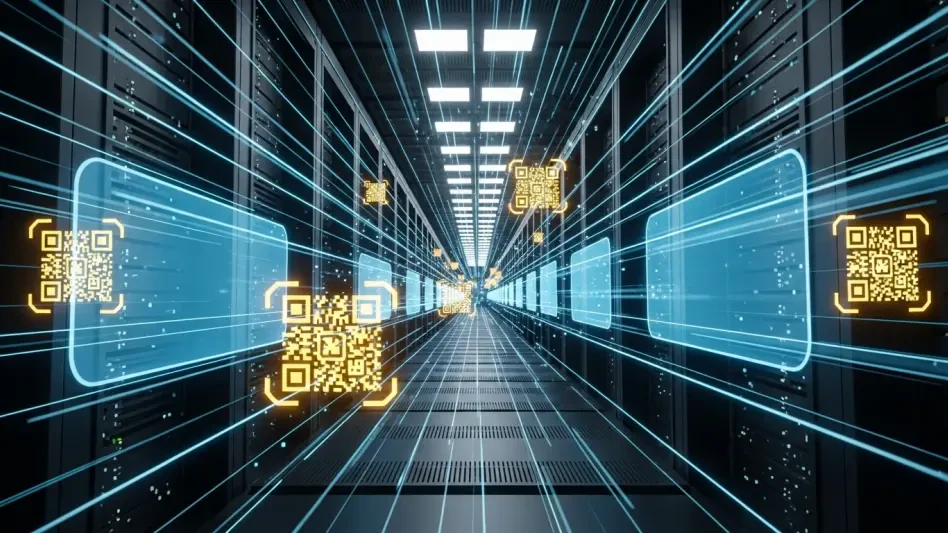
The recent emergence of the Quish Splash campaign has fundamentally challenged the prevailing confidence in automated email filtering by demonstrating how easily traditional defenses can be dismantled through clever image manipulation. Between February and March 2026, an adversary operating under the pseudonym Baron Lester orchestrated a sophisticated phishing operation that successfully infiltrated the inboxes of more than 1.6 million users across a diverse range of global organizations. Rather than relying on the typical text-based malicious links that trigger immediate red flags in modern security suites, the campaign utilized embedded QR codes hidden within Windows Bitmap attachments. This tactical shift proved devastatingly effective against platforms like Microsoft Defender, which are primarily optimized to scan body text and known file signatures. By leveraging the inherent trust associated with medical research themes, specifically COVID-19 and RSV data, the attacker managed to bypass the psychological and technical barriers that usually protect corporate networks from large-scale intrusion.
Orchestrating Deception Through Technical Precision
The Art of Infrastructure Validation
A defining characteristic of this operation was the meticulous attention paid to the technical reputation of the sending infrastructure, which ensured that the emails appeared legitimate to gateway scanners. The campaign was not a crude blast of spam but a highly engineered effort where every message was configured to pass rigorous Sender Policy Framework, DomainKeys Identified Mail, and Domain-based Message Authentication, Reporting, and Conformance checks. By successfully validating these protocols, Baron Lester granted the malicious messages a low spam score and a high trust rating, allowing them to glide past initial perimeter defenses that typically block unauthenticated traffic. Furthermore, the decision to embed malicious payloads within BMP image files represented a strategic exploitation of a common blind spot in security software. Since traditional automated scanners are designed to parse and analyze text strings or script-based attachments, the static nature of an image file allowed the embedded link to remain invisible to most signature-based detection algorithms currently in use.
Individualized Payloads and Hash Evasion
Beyond the initial delivery success, the Quish Splash campaign employed an advanced technique known as hash evasion to maintain its longevity and prevent security systems from identifying the threat through shared patterns. Each email sent to the 1.6 million targets contained a unique QR code generated specifically for that individual recipient, ensuring that the file hash of the attachment was never identical across different messages. This variability meant that even if one organization identified the email as a threat and blacklisted the specific file signature, the security systems at another organization would fail to recognize the slightly altered version of the same attack. This industrialized level of customization turned the phishing effort into a ghost-like presence within corporate networks, as there was no consistent digital fingerprint for security teams to track or block. The use of unique tracking IDs allowed the attacker to monitor the success rate of the campaign in real-time, providing insights into which sectors or management levels were most susceptible to the deception.
Strategic Wave Tactics and the Mobile Security Gap
The Multi-Phase Offensive Strategy
The execution of the campaign followed a calculated three-wave approach designed to maximize the internal spread of the threat while minimizing the risk of early detection. The first phase involved a small-scale, highly targeted test aimed at high-level managers, whose credentials provided the most significant potential for further exploitation. Once these accounts were compromised or the delivery method was confirmed as successful, the attacker launched massive automated bursts targeting the direct reports of those original managers. This social engineering tactic exploited the internal hierarchy of organizations, as employees are far more likely to trust and interact with a message that appears to originate from an executive or a supervisor. Between these waves, researchers noted a massive jump in the attacker’s tracking IDs, indicating a global offensive that ran in parallel across numerous industries. The hackers even utilized automated Out of Office replies to confirm which email addresses were active and monitored, effectively cleaning their target list for subsequent, more aggressive phases.
Exploiting the Personal Device Perimeter
Perhaps the most significant vulnerability exploited during this operation was the increasing reliance on personal mobile devices for professional tasks, which often lack robust corporate security controls. When an employee receives a phishing email on a secured laptop, the local software might prevent a link from being opened; however, scanning a QR code with a personal smartphone completely bypasses the corporate firewall and monitoring tools. This shift from corporate hardware to mobile platforms allowed the attackers to lead victims to credential harvesting sites on a medium where users are generally less cautious and security visibility is minimal. Because mobile browsers often hide full URL paths and lack the advanced anti-phishing extensions found on desktop systems, the fraudulent nature of the landing pages remained obscured. This tactical transition highlights a critical disconnect between the hardened security of the traditional office environment and the porous nature of the mobile-first workplace, where a simple scan can bridge the gap between a protected network and a malicious external server.
Reassessing Email Defense Protocols
The success of the Quish Splash operation demonstrated that the cybersecurity industry had become overly reliant on text-based analysis and established domain reputations. Organizations discovered that their existing defensive layers were insufficient when faced with an adversary who understood the exact parameters of automated scanning. To address these gaps, security teams began prioritizing the implementation of computer vision technologies capable of scanning images for QR codes in real-time. This adjustment moved beyond simple metadata checks to include deep content inspection of every attachment, regardless of file type. Companies also recognized the necessity of extending their security policies to include mobile device management and comprehensive user training focused specifically on the dangers of unsolicited QR codes. The shift toward a zero-trust architecture for all incoming media became a priority, ensuring that no file was deemed safe simply because it originated from a verified domain. Ultimately, the incident served as a stark reminder that as defensive technologies evolved, attackers would continue to find success by exploiting the most basic elements of digital convenience.