The contemporary landscape of cybercrime has undergone a fundamental transformation where attackers no longer rely on brute force to penetrate perimeters but instead leverage stolen digital identities to bypass sophisticated security protocols with alarming ease. This shift represents a move toward the path of least resistance, where a single set of compromised credentials provides a skeleton key to an entire enterprise’s digital ecosystem. Instead of exploiting unpatched software vulnerabilities, modern threat actors are increasingly focused on exploiting human trust and the digital footprints left behind by billions of users. This crisis is compounded by the sheer volume of personal data available for purchase on the dark web, where full identity packages are sold for less than the price of a cup of coffee. To combat this, security professionals must acknowledge that identity is the new perimeter, and traditional defenses built on static passwords or simple firewalls are no longer sufficient to protect sensitive assets. Organizations that fail to adapt to this reality find themselves caught in a reactive cycle, constantly playing catch-up with adversaries who move at the speed of automated scripts. Achieving a state of digital resilience requires a holistic understanding of how identity theft and account takeover intersect to create a persistent threat loop that demands a more sophisticated, multi-layered response to safeguard both corporate and personal interests.
Defining the Components: Identity Theft Versus Account Takeover
Identity theft remains the foundational building block for a vast majority of cyberattacks, acting as the primary source of raw material for fraudulent activities. This process involves the unauthorized acquisition of personally identifiable information such as full names, social security numbers, birth dates, and residential addresses. In the current environment, criminals often utilize synthetic identities, which combine legitimate data with fabricated details to create entirely new personae that are difficult for traditional credit monitoring systems to flag. These synthetic identities allow fraudsters to open fraudulent accounts, apply for credit lines, and even redirect government or payroll benefits without the immediate knowledge of the victim. This form of theft is particularly insidious because it targets the essence of an individual’s legal and financial presence rather than just their immediate assets. In a professional context, this can lead to massive payroll fraud or the creation of ghost employees, where funds are siphoned off through channels that appear legitimate on paper. By the time the discrepancy is discovered, the attacker has usually moved the funds through multiple layers of obfuscation, making recovery nearly impossible and leaving the victimized organization with a complex mess of legal and financial liabilities.
Account takeover represents the tactical execution phase where stolen information is weaponized to gain control over existing digital profiles. Unlike identity theft, which focuses on the creation of new fraudulent identities, account takeover targets the established trust between a user and a service provider. Once an attacker gains access to a primary email account or a corporate portal, they immediately work to solidify their position by altering security settings, such as recovery phone numbers and secondary email addresses. This effectively locks the rightful owner out of their own digital life, giving the intruder free rein to conduct lateral movement within a network. In a corporate setting, a single compromised account can serve as a beachhead for a larger campaign, allowing the attacker to impersonate an executive and authorize fraudulent wire transfers or harvest sensitive intellectual property. The speed at which these takeovers occur is often faster than the response time of standard IT help desks, leading to a situation where the damage is done before an alert is even triggered. The transition from a simple data breach to a full-scale account takeover is a critical turning point that can escalate a minor security incident into a systemic failure that threatens the operational continuity of an entire business.
Primary Attack Vectors: The Evolution of Digital Intrusion
The proliferation of advanced artificial intelligence has revolutionized the way phishing campaigns are conducted, making them far more convincing and difficult to detect than ever before. Modern attackers utilize large language models to draft messages that perfectly mimic the tone, vocabulary, and professional context of a specific colleague or superior. These highly personalized scams often reference ongoing projects, recent company news, or specific industry jargon to bypass the natural skepticism of the recipient. Gone are the days of poorly spelled emails and generic greetings; today’s phishing attempts are surgical in their precision, often accompanied by deepfake audio or video clips that can deceive even the most tech-savvy employees during a live interaction. These tools allow criminals to conduct social engineering at scale, launching thousands of unique, contextually relevant attacks simultaneously. Because these messages originate from legitimate-looking sources or even compromised internal accounts, they frequently bypass traditional email filters that look for known malicious signatures. The human element remains the weakest link in the security chain, and as AI continues to lower the barrier for high-quality deception, the frequency and success rate of these identity-harvesting operations will only continue to rise.
Credential stuffing has emerged as a dominant threat due to the persistent habit of users reusing the same passwords across multiple platforms, both personal and professional. When a low-security service experiences a data breach, attackers immediately feed the leaked combinations of usernames and passwords into automated bots that systematically test them against high-value targets like banking portals and corporate VPNs. This technique relies on the statistical probability that a significant portion of the user base has failed to maintain unique credentials for every account. In the current digital landscape, billions of credential pairs are available for purchase, and the computing power required to test them has become incredibly cheap and accessible. Organizations that do not enforce strict password policies or mandate multi-factor authentication are essentially leaving their front doors unlocked for any script kiddie with a basic understanding of automation. This method of entry is particularly dangerous because it generates successful logins that appear legitimate to most monitoring systems, as the attacker is using the correct, albeit stolen, password. Without additional layers of verification or behavioral analysis, these intrusions can persist for weeks or months, providing the adversary with ample time to map out the internal network and identify the most valuable data repositories for extraction.
Beyond automated technical exploits, the rise of sophisticated social engineering tactics like vishing and SIM-swapping presents a unique challenge to modern security infrastructures. Voice phishing, or vishing, involves attackers calling employees while spoofing internal phone numbers and posing as members of the IT department or senior leadership. These criminals use psychological pressure, creating a sense of urgency or fear to compel the victim into sharing temporary access codes or bypassing established security protocols. Concurrently, SIM-swapping has become a preferred method for defeating SMS-based multi-factor authentication. By tricking a mobile carrier’s customer service representative into transferring a victim’s phone number to a new SIM card, the attacker gains control over all incoming text messages and calls. This allows them to intercept one-time passwords and reset credentials for various accounts with ease. These tactics highlight the reality that technical defenses can be completely circumvented by targeting the human processes that support them. As long as security relies on a single point of failure like a phone number or a human’s willingness to help in an “emergency,” identity-based attacks will remain a highly effective tool in the cybercriminal’s arsenal, necessitating a shift toward more robust and unphishable verification methods.
Identifying Red Flags: Detecting Compromises in Real Time
Recognizing the early warning signs of a compromised identity is crucial for mitigating the impact of an attack before it reaches the point of total account takeover. One of the most reliable indicators of unauthorized access is the detection of “impossible travel,” where a user logs in from two geographically distant locations in a timeframe that would be physically impossible to traverse. For instance, if an employee accesses their corporate portal from New York and then again from Singapore forty minutes later, it is a clear sign that at least one of those sessions is fraudulent. Advanced identity and access management systems now incorporate geolocation and IP reputation analysis to flag these anomalies instantly. Furthermore, a sudden surge in failed login attempts followed by a single successful entry is a classic fingerprint of a brute-force or credential-stuffing attack. Security teams must move beyond simple alert logging and instead implement correlation engines that can connect these disparate data points into a cohesive threat narrative. By identifying these patterns in real time, organizations can automatically revoke session tokens or trigger mandatory password resets, effectively neutralizing the threat before the intruder can begin moving laterally through the network or escalating their privileges.
Financial discrepancies and subtle changes to account configurations often serve as the first tangible evidence that a silent intruder has established a presence within a system. Attackers who gain access to administrative accounts frequently create new mail-forwarding rules that send copies of all incoming and outgoing messages to an external address. This allows them to monitor sensitive business discussions and wait for the perfect moment to interject with a fraudulent invoice or a request to change vendor payment details. Such changes are often small and easily overlooked in the day-to-day operations of a busy department, but they are nearly always indicative of a malicious presence. Similarly, the sudden appearance of new, unauthorized devices on an employee’s profile or a flurry of password reset requests from a single department should be treated as a high-priority security event. Proactive monitoring of these environmental changes is essential, as it allows security personnel to intervene at the earliest possible stage. In many cases, the goal of the attacker is to remain undetected for as long as possible to maximize their financial gain; therefore, any deviation from the established baseline of user behavior or account status must be scrutinized with extreme prejudice to prevent a catastrophic breach of trust.
Strategic Solutions: Implementing a Multi-Layered Defense
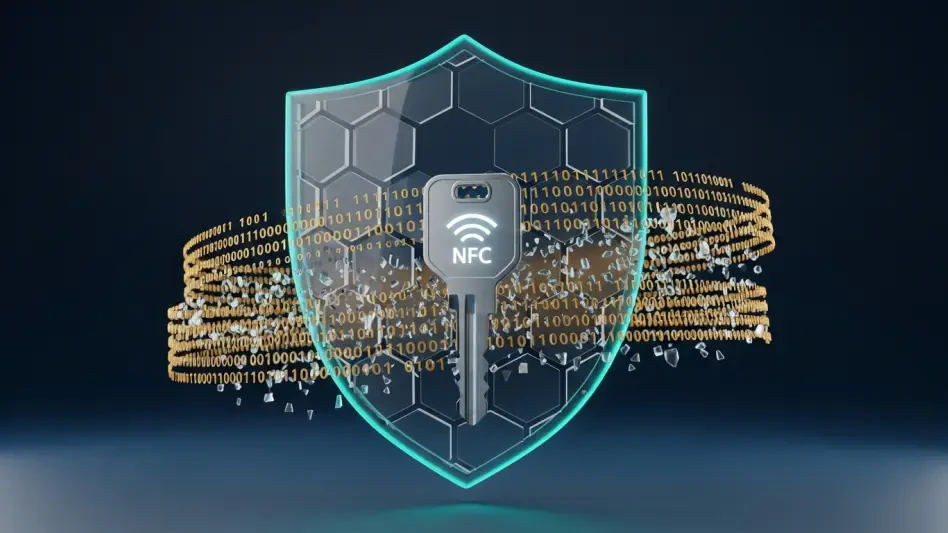
The transition toward more secure authentication methods is no longer optional in an era where static passwords can be easily bypassed or stolen. Organizations are increasingly adopting phishing-resistant multi-factor authentication, such as physical security keys that utilize FIDO2 standards. Unlike SMS codes or mobile push notifications, which can be intercepted or manipulated through social engineering, these hardware-based tokens require a physical connection or a close-proximity NFC signal to verify the user’s presence. This effectively eliminates the risk of remote account takeover, as the attacker would need to physically possess the key to gain entry. Furthermore, the integration of biometric verification, such as facial recognition and fingerprint scanning, adds a layer of non-transferable identity that is uniquely tied to the individual. While no single technology is foolproof, combining hardware keys with biometrics creates a formidable barrier that significantly increases the cost and complexity of an attack. Moving away from knowledge-based authentication—where a user proves who they are by what they know—to possession-based and inherence-based authentication is a critical step in devaluing stolen credentials and making identity-based crimes much harder to execute successfully.
Modern defense strategies are also evolving to include behavioral fraud detection and the implementation of a comprehensive Zero Trust architecture. These systems go beyond simply checking if a password is correct; they analyze the subtle nuances of how a user interacts with their digital environment. Behavioral biometrics can track patterns such as typing rhythm, mouse movement, and the typical sequence of pages a user visits. Because an automated bot or a human intruder navigates a site differently than a legitimate owner, these behavioral signatures can trigger an immediate challenge or account lockout, even if the credentials used were perfectly valid. This approach is central to the Zero Trust model, which operates on the principle of never trust, always verify. Under this framework, every access request is treated as potentially hostile, regardless of whether it originates from inside or outside the corporate network. By continuously verifying the identity and health of the device and the user throughout the entire session, organizations can minimize the blast radius of a potential compromise. This persistent state of verification ensures that even if an attacker manages to steal a valid session token, their ability to move through the network is severely restricted by the need to constantly re-prove their legitimacy.
The Human Firewall: Cultivating Resilience and Future Proofing
The final and perhaps most resilient layer of any security strategy is the cultivation of a well-informed and vigilant workforce that understands their role in the broader defense ecosystem. Effective training programs have moved away from boring, annual compliance videos toward interactive, real-world simulations that teach employees how to spot the subtle cues of an AI-enhanced phishing attempt or a vishing call. It is essential to foster a corporate culture where security is seen as a collective responsibility rather than just an IT problem. This involves creating clear, frictionless reporting channels where staff can flag suspicious activity without fear of repercussions or embarrassment if they happen to fall for a scam. When employees are empowered to question urgent, out-of-character requests from leadership and are taught to verify such requests through secondary, out-of-band communication channels, the success rate of social engineering drops precipitously. By treating humans as a vital part of the security architecture rather than the weakest link, organizations can create a human firewall that provides a crucial safety net when technical controls fail. This cultural shift, combined with robust technical safeguards, creates a comprehensive defense-in-depth posture that is capable of withstanding the evolving tactics of modern cybercriminals.
Strategic shifts in identity management successfully moved the needle toward a more secure digital environment by focusing on the underlying value of credentials rather than just the perimeter. Organizations that prioritized the decommissioning of legacy authentication protocols and replaced them with phishing-resistant hardware tokens saw a marked decrease in successful account takeover incidents. The implementation of behavioral analytics allowed security teams to detect anomalies at the speed of the attack, providing a decisive advantage over automated threats. Furthermore, the integration of identity-centric security into the broader business workflow ensured that protection followed the user, regardless of their location or device. Leaders who invested in the psychological resilience of their teams found that a culture of skepticism and open communication was the most effective deterrent against social engineering. As the techniques used by attackers became more sophisticated, the most successful countermeasures were those that combined high-tech monitoring with basic human intuition. These actions established a new standard for digital trust, proving that while identity theft may never be fully eradicated, its impact was significantly mitigated through a disciplined, multi-layered approach to security that treated every login as a critical moment of verification.