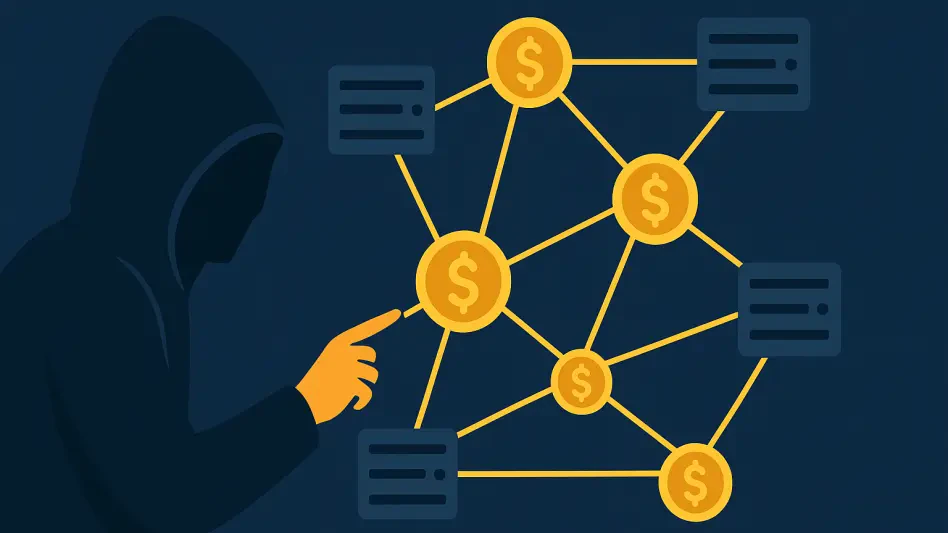

The fundamental trust that engineers and IT professionals place in established version control platforms like GitHub and GitLab has become one of the most significant security vulnerabilities in the modern enterprise landscape. Because these platforms are viewed as essential pillars of the global software development lifecycle, most corporate security protocols and Secure Email Gateways (SEGs) are specifically configured to whitelist their domains, essentially granting them a free pass through traditional digital checkpoints. This inherent credibility allows cybercriminals to deliver malicious content directly into a high-value corporate inbox without triggering the usual red flags that accompany unknown or suspicious domains. Recent observations indicate that the scale of this exploitation is reaching unprecedented levels, with 2026 seeing a dramatic increase in campaign volume. While GitHub remains the primary target for these activities, accounting for roughly 95% of identified cases, GitLab is increasingly being used to fill the gap. This shift represents a calculated move by threat actors who recognize that the infrastructure of productivity is often the most effective delivery vehicle for sophisticated cyberattacks.
Engineering Deception Through Trusted Infrastructure
Leveraging Internal Features for Payload Delivery
Technical sophistication within these campaigns has evolved to exploit the very features designed to facilitate collaboration among legitimate developers. Threat actors frequently host malicious payloads within public repositories or hide them inside the comment sections of well-known, high-traffic projects to maximize their reach. By utilizing specific redirection links through the “raw.githubusercontent.com” domain, attackers can initiate silent file downloads in the background that bypass the standard scrutiny of traditional antivirus software. To further complicate detection, these payloads are often packaged in password-protected .zip or .7z archives, which prevents automated platform scanners from inspecting the contents. This method ensures that only the victim, who receives the password in a seemingly official phishing email, can unlock the threat. In more advanced scenarios, attackers have begun implementing browser user agent detection to tailor the malicious experience based on the victim’s operating system. A user on a Windows machine might be served a Remote Access Trojan, while a mobile user is redirected to a fraudulent login page designed to harvest sensitive account credentials.
Building on these technical maneuvers, the tactical use of trusted platform elements creates a sense of false security that even seasoned developers can find difficult to navigate. When an email contains a link to a known GitHub repository, the psychological barrier to clicking is significantly lowered compared to a link from an obscure third-party site. This reliance on domain reputation is precisely what attackers exploit, as they can create new accounts or compromise existing ones to host their infrastructure at zero cost. Furthermore, the ability to automate the creation of these repositories means that even if a platform provider takes down one malicious link, ten more can appear in its place within minutes. This game of digital whack-a-mole has forced a realization that the security of a file is not guaranteed by the reputation of the site hosting it. Instead, the focus must shift toward examining the behavior of the files themselves and the context in which they are delivered, rather than simply trusting the origin of the link in a corporate communication.
The Rise of Multi-Stage Phishing Operations
The current threat landscape is increasingly defined by “dual-threat” campaigns that combine traditional credential harvesting with the immediate installation of malware. In these complex scenarios, a single infection chain is designed to maximize the return on investment for the attacker by compromising both the user’s local system and their cloud-based identities. For instance, a victim might be lured into clicking a link that simultaneously downloads an information stealer like Muck Stealer while redirecting the browser to a highly convincing fraudulent login portal, such as a fake DocuSign or Microsoft 365 gateway. This two-pronged approach ensures that even if the malware is detected and removed, the attacker may still have harvested the credentials necessary to maintain persistent access to the corporate network through official channels. Statistics show that roughly 58% of these platform-based attacks are primarily focused on credential theft, while 42% prioritize direct malware delivery, illustrating a nearly even split between those who want to steal data and those who want to control the hardware itself.
This convergence of attack vectors represents a strategic shift where the objective is no longer just a simple infection but a total compromise of the digital identity. By integrating malware that can bypass multi-factor authentication or capture session tokens, threat actors are able to circumvent some of the most robust security measures currently in place. The use of legitimate-looking documents and official branding within these platform-hosted files adds a layer of professional polish that makes the deception particularly effective against corporate employees who are accustomed to high-frequency digital signatures and shared development tasks. As these campaigns become more integrated into the daily workflow of modern business, the distinction between a legitimate collaboration request and a malicious phishing attempt continues to blur. This necessitates a more granular approach to security where every interaction, regardless of the platform, is treated with a baseline of skepticism and verified through multiple layers of automated and manual inspection to prevent the successful execution of these multifaceted attacks.
Navigating the New Cybersecurity Threat Landscape
Evolution of Malicious Remote Access Tools
Remote Access Trojans (RATs) have emerged as the primary weapon of choice for attackers utilizing developer platforms, providing them with a persistent and unauthorized foothold in compromised networks. Remcos RAT currently leads the pack, accounting for approximately 21% of the total volume of malware delivered through these channels, due to its robust feature set and ease of deployment. Following closely behind are other variants such as Byakugan, AsyncRAT, and DcRAT, each offering unique capabilities for data exfiltration, keystroke logging, and remote system manipulation. These tools allow an attacker to monitor a victim’s activities in real-time, often for months at a time, without raising any suspicion from the user or the local security software. The persistence of these RATs is particularly damaging because it allows threat actors to move laterally through a network, identifying and compromising higher-value targets once an initial entry point has been established through a simple GitHub or GitLab link.
The prevalence of these tools is largely due to their availability in the underground market and their constant updates, which allow them to evade the latest signature-based detection methods. Attackers frequently modify the code of these Trojans to ensure they remain undetected by standard security suites, often using custom obfuscation techniques that are specific to the platform being exploited. For example, a RAT delivered via GitLab might include specific triggers that only activate if it detects a corporate development environment, making it harder for security researchers to analyze the malware in a vacuum. This level of customization demonstrates a deep understanding of the target audience’s technical environment and a willingness to invest time in specialized delivery methods. As these remote access tools continue to evolve, they represent a permanent threat to organizational integrity, making it vital for security teams to look for the behavioral signs of an active Trojan rather than relying solely on the identification of known malicious file hashes.
Strategic Shift Toward Behavioral Defense Models
In light of these sophisticated exploitations, the traditional reliance on domain reputation and blacklisting has proven insufficient for protecting modern enterprise environments. Organizations have begun to recognize that simply trusting a link because it originates from a reputable site like GitHub is a flawed strategy that ignores the reality of platform abuse. Consequently, there has been a move toward implementing behavioral-based email analysis that looks for anomalies in how links and attachments behave rather than where they come from. This approach involves analyzing the metadata of an email, the structure of the linked page, and the hidden actions of any downloaded files to identify patterns associated with malicious activity. By focusing on the “what” and “how” of an interaction instead of the “who,” security systems can catch zero-day threats that have not yet been flagged by traditional databases. This shift is essential for staying ahead of attackers who are constantly finding new ways to weaponize trusted infrastructure for their own gain.
The final defense against these sophisticated campaigns involved a combination of technical safeguards and rigorous user awareness programs that prepared employees for the realities of modern phishing. Organizations implemented strict multi-factor authentication protocols that utilized hardware keys or biometric verification to limit the utility of stolen credentials. Security teams encouraged a culture of skepticism where any unexpected link from a developer platform was treated as a potential threat until verified through out-of-band communication. Furthermore, the use of isolated browser environments and sandboxing for all downloads from public repositories became a standard practice for high-risk roles. Employees were specifically trained to recognize the signs of dual-threat attacks and were cautioned against opening password-protected archives from unknown sources. Through these proactive measures, businesses successfully reduced their attack surface and moved toward a more resilient posture that accounted for the inherent risks of a collaborative digital world. This holistic strategy ensured that the trust required for innovation did not become a permanent gateway for digital exploitation.