
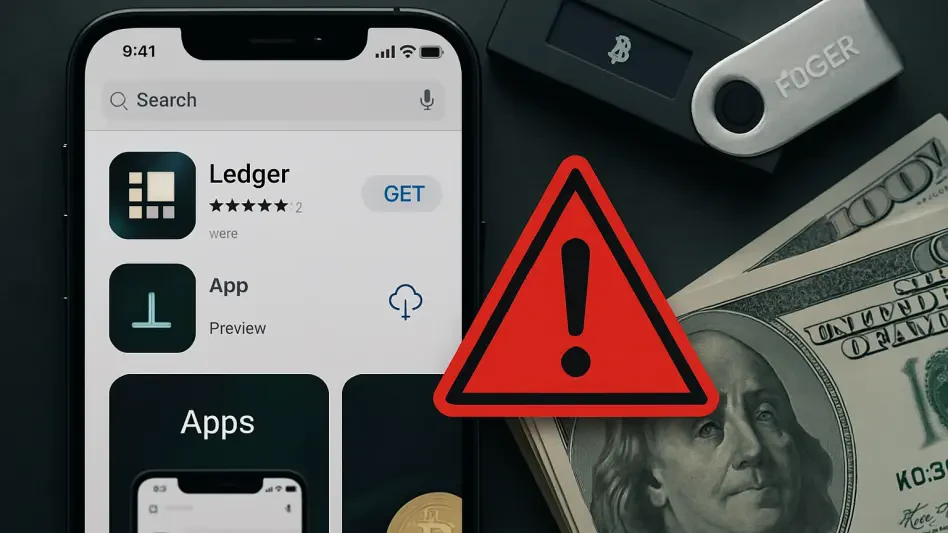
The digital gold rush has turned the modern smartphone into a high-stakes vault, but for dozens of investors, that vault was cracked open not by a master thief, but by a simple click on a trusted platform. Between April 7 and April 13, a malicious application masquerading as the official “Ledger Live” software managed to bypass the rigorous security filters of the Apple App Store. This breach of trust resulted in the staggering theft of $9.5 million, proving that the perceived safety of a centralized marketplace can often be a dangerous illusion for those navigating the decentralized world of finance.
This incident serves as a chilling nut graph for the current state of cybersecurity: the “walled garden” of the Apple ecosystem is no longer impenetrable. While hardware wallets are engineered to keep private keys offline and away from hackers, the software interfaces used to manage these devices have become the new frontline for cyber warfare. When a fake app climbs the rankings and wears the badge of an official store, the fundamental layer of user trust is weaponized against them, turning a routine update into a financial catastrophe.
The High Cost: A Single Download
While Apple often markets its App Store as the gold standard of security, this specific breach demonstrated that even the most cautious investors can lose everything with one tap. The fraudulent software, published by entities listed as “SAS Software Company” and “Leva Heal Limited,” successfully mirrored the branding of the legitimate Ledger Live app. By the time the trap was sprung, unsuspecting users had voluntarily surrendered their digital livelihoods, thinking they were simply syncing their hardware devices with a verified tool.
This heist was not a result of a sophisticated technical exploit of the blockchain itself, but rather a surgical strike on the human element of security. By convincing users to enter their 24-word recovery phrases into the mobile interface—a move that goes against every rule of hardware wallet safety—the attackers gained total control over the victims’ funds. The incident emphasizes that in the world of decentralized finance, a convincing fake interface is just as lethal as a direct protocol hack, as it circumvents all physical security measures.
The Illusion: Safety in Centralized Marketplaces
The theft highlights a growing and systemic vulnerability within the digital asset ecosystem: the misplaced trust that users harbor for official app stores. Although hardware wallets like Ledger are designed to act as cold storage, the reliance on third-party marketplaces for management software creates a bridge that attackers are now exploiting with increasing frequency. The myth of the “walled garden” was shattered when Apple’s review process failed to flag a malicious app that stayed live long enough to drain millions.
The human element remains the most significant variable in any security equation, and attackers are shifting their focus from code to psychology. Instead of trying to break encryption, they focus on social engineering to bypass the user’s intuition. This specific heist had a massive cross-chain impact, with the thieves siphoning assets across Bitcoin, Ethereum, Solana, Tron, and XRP. This breadth of theft proves that no specific asset class is inherently safe if the software used to access it has been compromised at the source.
Anatomy of the Heist: From Metadata to Money Laundering
The success of this operation relied on a sophisticated blend of brand imitation and lightning-fast asset movement. To achieve manufactured credibility, the attackers populated their listing with fake positive reviews and utilized standard App Store metadata to climb search rankings, making the app appear legitimate to casual or rushed users. Once installed, the execution speed was devastating; significant losses occurred within hours, including a single day where over $3.23 million in USDT vanished following a $2 million sweep of Bitcoin and Ethereum.
Blockchain investigator ZachXBT eventually traced the path of the stolen funds, revealing a complex laundering pipeline designed to thwart recovery. The assets were funneled through more than 150 deposit addresses on the KuCoin exchange, a tactic meant to dilute the paper trail. Finally, the attackers utilized “AudiA6,” a centralized mixing service, to break the link between the theft and the final destination of the coins. This level of professional obfuscation makes law enforcement intervention incredibly difficult, as the illicit proceeds are blended into a sea of legitimate transactions.
A Pattern: Systemic Failures Across Platforms
The Ledger incident is not a standalone event but part of an alarming trend of “copycat” applications infiltrating the world’s largest tech ecosystems. These events suggest that the vetting protocols of global tech giants are failing to keep pace with the evolving tactics of crypto fraud. For instance, a fake version of Rabby Wallet appeared on the App Store before the official version was even approved, draining the accounts of early adopters who were eager to try the new interface.
Similarly, a fraudulent “LassPass” app recently bypassed Apple’s filters, threatening the security of thousands of people who rely on password managers for their digital safety. Microsoft’s platform has seen similar issues, with a fake Ledger app resulting in an $800,000 theft in late 2023. Attackers are also adept at exploiting brand transitions; when companies like Ledger rename their software, it creates a nomenclature gap that scammers fill with malicious listings, preying on the confusion of users searching for the correct tool.
Essential Strategies: Digital Asset Protection
As attackers become more adept at buying “trust” through official platforms, the primary responsibility for security has shifted toward the individual. One of the most effective strategies is to verify the developer name against the official company website before clicking “Get” or “Install” on any app store. Furthermore, the golden rule of recovery phrases must be strictly observed: a 24-word seed should never be typed into any digital device or app, as these phrases are meant to be entered exclusively into the physical buttons of a hardware wallet.
To avoid being misled by search results, users should navigate to the official manufacturer’s website and use their direct download links rather than searching for names in an app store. Staying updated on official brand communications is also vital to recognize legitimate rebranding efforts and avoid “grey area” imitators. By maintaining a high level of skepticism and verifying every digital interaction, investors can protect their assets from the increasingly sophisticated traps set within the platforms they once trusted.
The security landscape required a radical shift in perspective as users realized that official verification badges were no longer a guarantee of safety. Vigilance became the only viable defense against a new generation of predators who mastered the art of platform infiltration. Proactive measures, such as the use of multi-signature accounts and regular security audits of personal software, proved to be the most effective way to mitigate the risks posed by fraudulent applications. Ultimately, the industry moved toward more decentralized software distribution methods to eliminate the single points of failure inherent in centralized app stores.