
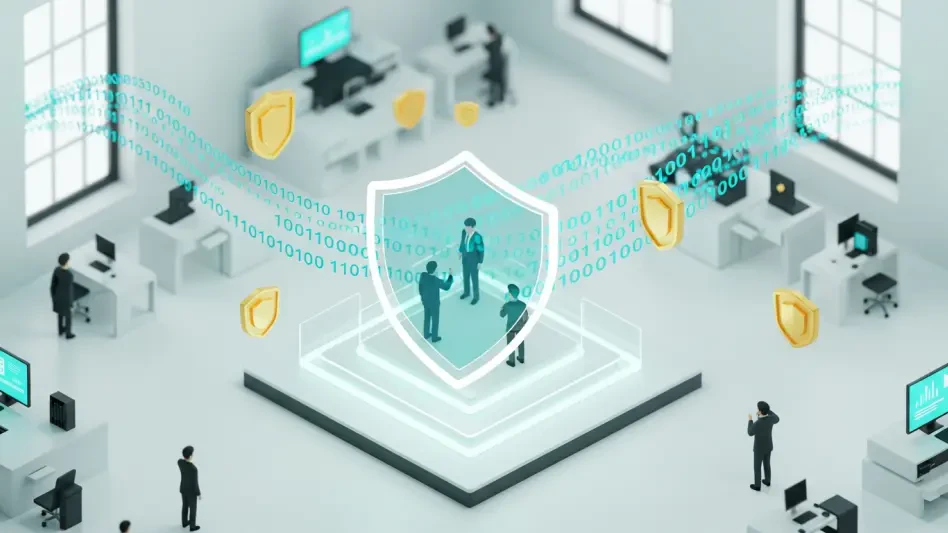
Themassiveinfluxofsophisticatedsocialengineeringtacticshasfinallyforcedalong-overduereckoningwithintheglobalcybersecuritycommunityregardingthelimitationsoftraditionalemployeetraining. For several years, the prevailing wisdom suggested that a simple annual seminar or a mandatory instructional video would be enough to inoculate a workforce against the dangers of phishing and credential harvesting. However, as attackers began using generative artificial intelligence to craft hyper-personalized lures, these antiquated methods proved insufficient for protecting sensitive data and critical infrastructure from compromise. Modern organizations are now pivoting toward a more holistic framework known as Human Resilience Management, which treats human behavior as a dynamic variable that can be measured, analyzed, and optimized over time. This approach recognizes that security is not just a technical problem to be solved with software, but a human challenge that requires understanding the psychological triggers and environmental pressures that lead to mistakes. By shifting the focus from blame to resilience, security leaders are finding ways to integrate behavioral science with technical controls to create a more robust defense layer that evolves alongside the threat landscape.
Transitioning From Education: The Shift to Operationalized Risk
Measuring Real Outcomes: Moving Beyond Compliance Metrics
Conventional security awareness programs frequently fall into the trap of prioritizing administrative compliance over actual risk reduction, leading to a false sense of security among leadership teams. When an organization reports a hundred percent completion rate for its quarterly training modules, it often mistakes this participation for a high level of preparedness against external threats. In reality, an employee can navigate through a series of slides or watch a video without internalizing the critical thinking skills necessary to identify a sophisticated business email compromise attempt. These legacy systems typically offer a one-size-fits-all curriculum that ignores the specific threats faced by different departments, such as the finance team being targeted with fraudulent invoices or the engineering department dealing with malicious code repositories. By focusing solely on the “checkbox” of completion, companies leave themselves vulnerable to attackers who specialize in exploiting the very human tendencies that generic training programs fail to address or even acknowledge.
To effectively counter these vulnerabilities, security professionals are now adopting data-driven methodologies that shift the focus from simple participation to measurable behavioral outcomes. Instead of merely tracking who finished a course, advanced platforms analyze how individual employees interact with simulated threats and real-world security alerts in their daily environment. This shift allows security operations centers to identify specific patterns of risk, such as which departments are most likely to click on suspicious links or which users consistently ignore multi-factor authentication prompts. Furthermore, the industry is moving toward “reporting rates” as a primary indicator of health, valuing the proactive identification of threats over the mere avoidance of mistakes. When an employee takes the time to report a suspicious email through the proper channels, they provide the security team with invaluable intelligence that can be used to protect the entire enterprise. This operationalized view of human risk turns the workforce into a distributed sensor network that actively contributes to the defense.
Behavioral Context: Contextualizing Human Risk in Business Environments
Effective risk management requires a deep understanding of the specific environment in which employees operate, acknowledging that different roles carry significantly different risk profiles. A developer with administrative access to production servers represents a vastly different threat vector than a marketing associate, yet traditional training often treats them as identical entities. Human Resilience Management seeks to bridge this gap by tailoring interventions and monitoring based on the level of access and the specific types of data each individual handles. By applying behavioral science to these diverse roles, organizations can implement more granular security controls that reflect the actual likelihood of a targeted attack. For instance, high-value targets like executives or legal counsel might receive more frequent and specialized briefings that address high-level social engineering tactics like “whaling” or sophisticated deepfake audio scams. This targeted approach ensures that resources are allocated efficiently, providing the strongest protections to the individuals who are most likely to be targeted by advanced persistent threats.
Beyond individual roles, the context of the work environment itself plays a crucial role in how employees respond to security challenges, particularly during periods of high stress or urgency. Security researchers have long noted that people are far more likely to make errors when they are rushed, distracted, or operating under the pressure of tight deadlines, which is exactly when attackers strike. Human Resilience Management accounts for these fluctuations by identifying “high-risk moments” within the business cycle, such as end-of-quarter financial reporting or major product launches. By understanding these situational pressures, security teams can adjust their technical safeguards and provide just-in-time support to help employees make better decisions when they are most vulnerable. This might include automated reminders about secure practices during peak activity periods or temporarily increasing the sensitivity of email filters when a specific department is known to be under duress. By acknowledging the human element of performance, organizations can build a safety net that supports employees rather than punishing them for natural cognitive limitations.
The Maturity Model: Achieving Sustainable Behavioral Change
Strategic Alignment: Moving From Training to Habituation
The journey toward a more resilient workforce is best understood through a maturity model that tracks the evolution of security culture from reactive compliance to proactive defense. In the initial stages, organizations focus on establishing a baseline of awareness through mandatory training and basic phishing simulations designed to test recognition of common threats. As they move into the middle stages of maturity, the focus shifts toward engagement and habituation, using frequent micro-learning sessions and psychological nudges to reinforce positive behaviors. This constant, low-friction reinforcement helps to embed security thinking into the daily routine of every employee, making it a natural part of their workflow rather than an external obligation. Instead of a single annual event, security becomes a continuous conversation that evolves alongside the threat landscape, ensuring that the workforce stays sharp and informed. This level of maturity is characterized by a high degree of transparency, where employees feel comfortable reporting potential issues without fear of retribution or embarrassment.
At the highest levels of the maturity model, organizations achieve strategic alignment where human resilience is fully integrated into the broader corporate governance and risk management framework. This stage involves the creation of dynamic risk profiles that aggregate data from multiple sources to provide a real-time view of the organization’s human attack surface. These profiles allow for a level of personalization that was previously impossible, enabling security teams to deliver hyper-relevant content and technical interventions based on an individual’s recent behavior. For example, a user who has recently struggled with phishing simulations might be automatically enrolled in a specialized training track, while also having stricter web filtering policies applied to their workstation. This proactive management of risk ensures that the organization can adapt to emerging threats as they happen, rather than waiting for a breach to occur before taking action. By reaching this level of sophistication, the company transforms its workforce into a resilient barrier that is capable of identifying and neutralizing threats before they can take hold.
Systematic Enterprise Resilience: Integrating Human Signals Into Defense
The ultimate objective of this behavioral evolution is to reach a state where human signals are seamlessly integrated into the technical defense architecture to create a unified security ecosystem. In this advanced state, the organization does not rely solely on the employee to make the correct choice; instead, it uses behavioral data to trigger automated protections in real-time. For instance, if a user who is typically very cautious suddenly starts clicking on multiple suspicious links, the system might automatically step up authentication requirements or isolate their session in a secure sandbox. This integration ensures that the technical controls are responsive to the human context, providing an extra layer of defense that adapts to the shifting risk profile of the workforce. By bridging the gap between behavioral science and technical security, organizations can finally move past the outdated concept of the “human firewall.” Instead, they create a collaborative environment where smart systems and informed people work together to detect anomalies and prevent unauthorized access, ensuring that the entire enterprise remains resilient against even the most persistent adversaries.
Forward-thinking organizations successfully navigated this transition by fundamentally reimagining the relationship between their security teams and the broader employee population. They moved away from punitive measures and instead fostered a culture of shared responsibility where every individual understood their vital role in protecting the collective digital assets. Security leaders integrated advanced behavioral analytics into their existing technology stacks, allowing them to gain unprecedented visibility into the human risk factors that previously remained hidden from view. These enterprises realized that sustainable resilience required a continuous investment in both people and processes, rather than a reliance on static software solutions. By implementing these strategic changes, they significantly reduced their susceptibility to social engineering and created a robust defense that thrived on transparency and adaptability. The shift toward Human Resilience Management provided a clear roadmap for addressing the human element of security, transforming a potential weakness into one of the organization’s most valuable defensive assets.