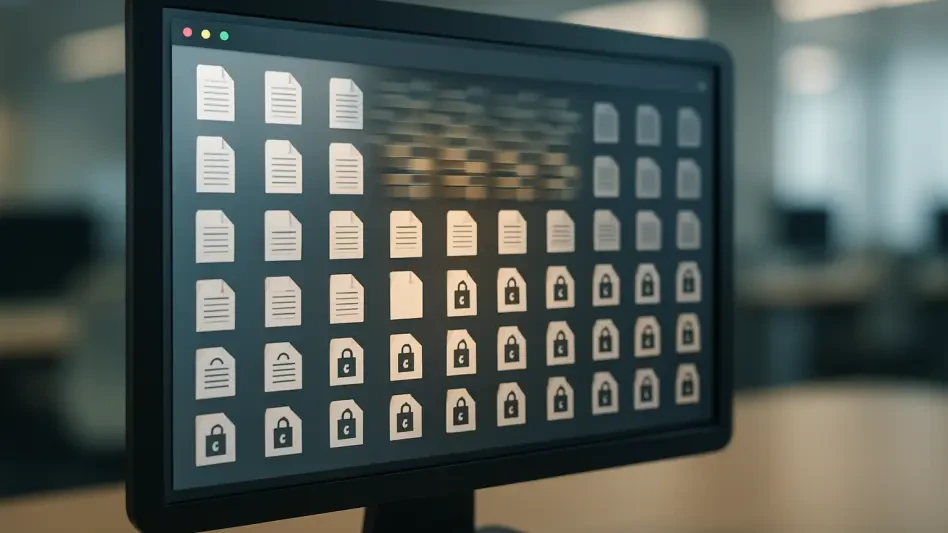
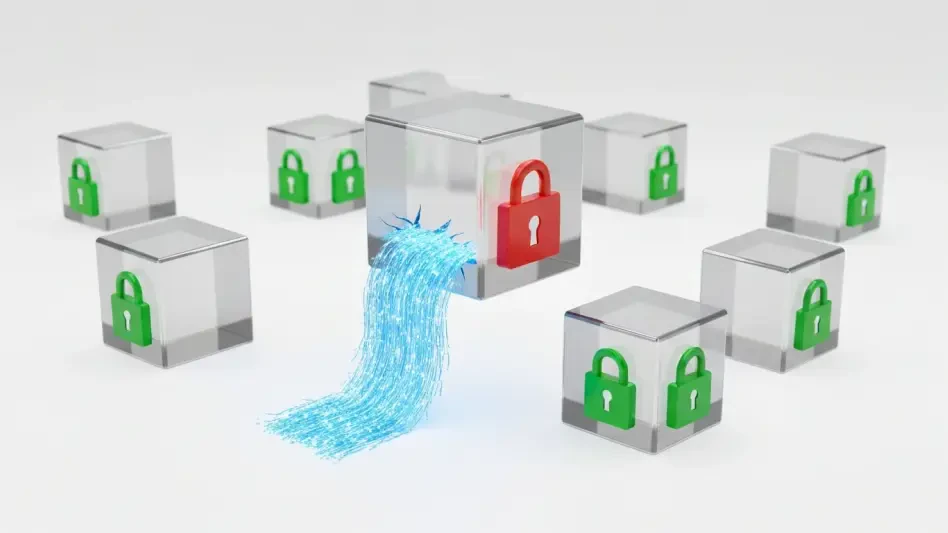
A recent wave of cyberattacks targeting approximately 50 global organizations has starkly illuminated a dangerous oversight in corporate security, revealing that the greatest threat may not be a sophisticated zero-day exploit but a simple, forgotten password from years ago. A threat actor, identified as “Zestix,” orchestrated these widespread breaches not by hacking into systems but by simply walking through the front door using old, yet still active, login credentials. This campaign capitalized on a fundamental failure within the affected enterprises: the absence of multi-factor authentication (MFA) on critical cloud file-sharing platforms. The incidents serve as a sobering reminder that in the complex world of cybersecurity, the most basic principles of credential hygiene remain the most crucial. The actor’s success highlights a pervasive and often underestimated vulnerability, turning long-dormant data from old malware infections into potent weapons for catastrophic, present-day security failures that have compromised terabytes of sensitive corporate and customer information.
The Latency of a Lingering Threat
The methodology employed by Zestix was deceptively straightforward, exposing a critical flaw in how organizations manage digital access over time. The actor scoured dark web marketplaces for infostealer logs, some of which were several years old, containing troves of usernames and passwords harvested by common malware variants like RedLine, Lumma, and Vidar. These initial infections may have occurred long ago, leading to a false sense of security. However, the investigation revealed a profound “latency of the threat,” where a failure in corporate credential management allowed these old credentials to remain potent. Many of the compromised passwords had never been rotated, and, more critically, the associated user sessions were never invalidated. This oversight meant that credentials stolen in the past were still valid keys to the kingdom. With no multi-factor authentication enforced on cloud services such as ShareFile, Nextcloud, and OwnCloud, the actor faced no secondary barriers. This simple login process granted Zestix direct, unfettered access to highly sensitive data without needing to bypass complex security measures or deploy advanced hacking tools, demonstrating that neglect of basic security protocols can be just as damaging as a sophisticated cyberattack.
A Cascade of High-Profile Breaches
The consequences of this “ignored security” approach have been devastating, leading to the auction of highly sensitive data from numerous high-profile organizations. The breadth of the victims underscores the industry-agnostic nature of this vulnerability. For instance, Iberia Airlines saw 77GB of technical and fleet data compromised, exposing operational details to potential misuse. A law firm representing Mercedes-Benz USA suffered the theft of over 18GB of data, including confidential customer information and litigation strategies. The breach at Brazilian firm Maida Health was particularly alarming, with over 2TB of military police health records exfiltrated, creating a massive privacy and national security risk. Furthermore, Turkish defense manufacturer Intecro Robotics had 11GB of valuable military intellectual property stolen. These examples illustrate a disturbing trend where major enterprise breaches are succeeding not because of attackers’ ingenuity but because of organizations’ fundamental oversights. The incidents collectively paint a picture of systemic failure, where the absence of a single, crucial security layer—MFA—led to a cascade of catastrophic data loss across multiple sectors.
Rethinking Credential Management for a New Era
The widespread success of these attacks underscored a critical lesson for organizations globally: the most effective defense was often the most fundamental one. It became clear that a reactive security posture was insufficient when faced with threats that exploited long-standing, unaddressed vulnerabilities. The incidents prompted a necessary shift in focus toward proactive and rigorous credential hygiene. The paramount importance of enforcing mandatory multi-factor authentication across all externally accessible services, especially cloud storage and collaboration platforms, was brought into sharp relief. Companies were reminded that consistent password rotation policies and, crucially, the invalidation of old or suspicious sessions were not optional best practices but essential security controls. The events served as a powerful catalyst for enterprises to re-evaluate their entire approach, recognizing that the battle against cyber threats was won not only by defending against the new but by diligently cleaning up the old.