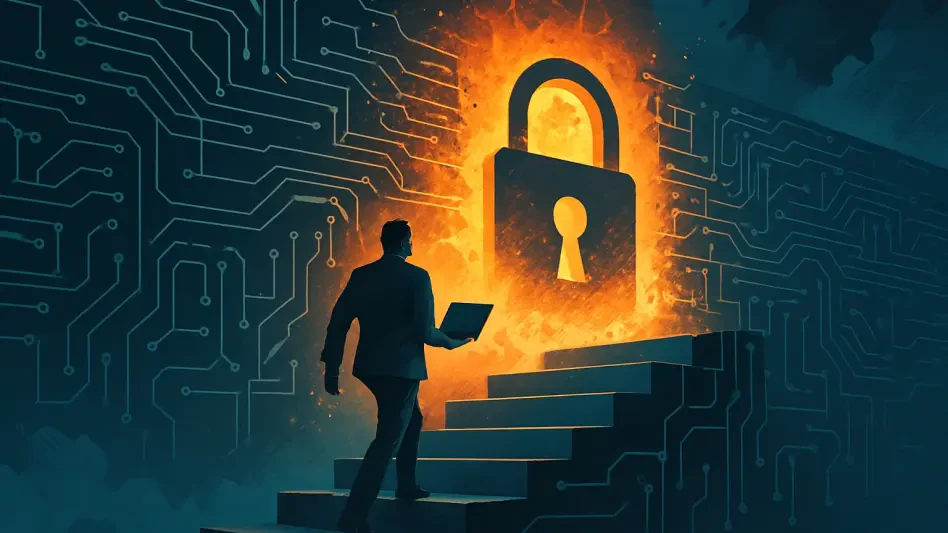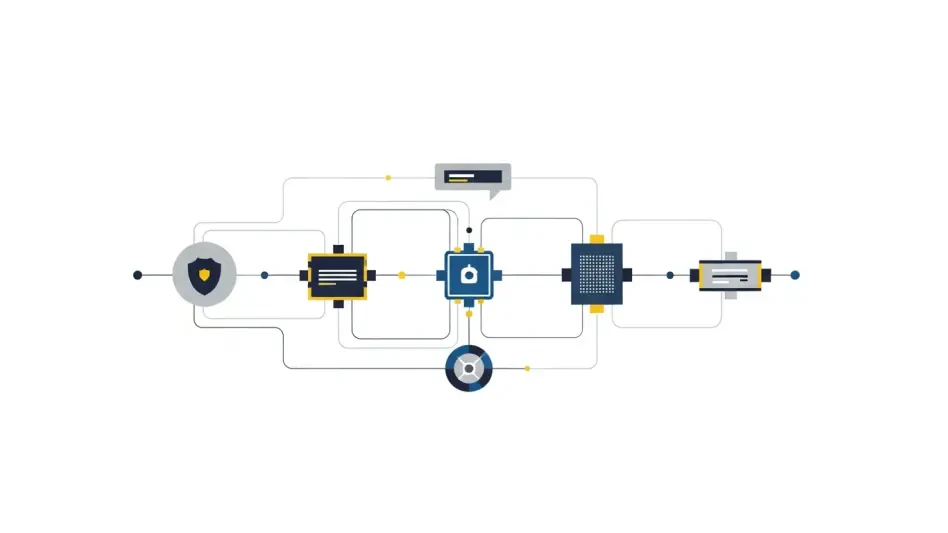

The FBI’s annual report on cybercrimes shows a 26% increase in incident-related losses, totaling $20.9 billion in 2025. This statistic points to the evolving nature of cyberattacks. Criminals are no longer relying primarily on malware and password theft. They are using AI to impersonate executives, manipulate employees, and, in some cases, threaten the physical safety of business leaders and their families. This article explores the cybersecurity threats reshaping the risk landscape for business leaders and what it takes to build defenses that hold against them.
AI Has Made Social Engineering More Dangerous
Generative AI has removed the technical barriers that once limited sophisticated cyberattacks to well-resourced criminal organizations. Creating a convincing audio or video impersonation of a senior executive once required technical expertise and computational resources. Today, off-the-shelf tools can produce synthetic video and audio that deceive even trained observers.
The cybersecurity implications for corporate security are direct. An attacker who builds a voice model of a CFO can instruct employees to authorize wire transfers, approve vendor changes, or share sensitive credentials. These attacks work because they bypass technology entirely and exploit something no firewall protects: the trust employees place in familiar voices and faces. Research indicates that even professionals correctly identify deepfakes only 55% to 60% of the time.
These attacks can be deployed at scale, compounding cybersecurity risk. AI models scan LinkedIn profiles, press releases, and social media to generate personalized phishing messages that reference recent company announcements, colleagues by name, and industry-specific context. What once required manual research now happens automatically across many targets simultaneously. The volume and personalization of these attacks overwhelm cybersecurity teams relying on traditional detection methods.
When Cybersecurity Threats Become Personal
The threat landscape has extended beyond organizational systems into the personal lives of business leaders. According to the Security Executive Council (SEC), threat actions against executives increased in 2025, with criminals using compromised personal data to threaten the physical safety of leaders and their family members. This is not a ransomware attack against a corporate network. It is direct coercion targeting people.
The approach follows a consistent pattern. Attackers obtain personal information through data breaches, social media scraping, or dark web purchases. They contact the target with specific details about family members, home addresses, or daily routines, then issue demands, typically for cryptocurrency. The psychological pressure is designed to trigger panic, which leads people to make decisions that benefit the attacker and ensure their physical safety.
Synthetic media adds another layer to this reality. Attackers can threaten to release fabricated but convincing content showing an executive in a compromising situation. This content can spread at a speed that makes conventional crisis management inadequate. By the time legal teams respond, the reputational damage may already be done.
The evolution of attacks fundamentally changes what cybersecurity teams must protect. Effective cybersecurity at this level requires coordination between IT security, executive protection, human resources, and law enforcement. That scope would have seemed excessive five years ago. It is now a baseline requirement for organizations with significant public exposure.
The Regulatory Shift: Cybersecurity Is Now a Board-Level Obligation
Regulators have observed the changing threat landscape and responded with heightened expectations for board-level accountability. Recent regulatory guidance makes explicit what many directors have preferred to avoid: cybersecurity is a leadership responsibility, not a technical function that can be delegated.
The practical implications for governance are significant. Directors need enough understanding of AI-driven cybersecurity threats to ask substantive questions and evaluate management’s responses. Claiming ignorance of the threat landscape will not provide legal protection when regulators or shareholders investigate a breach. Personal liability for directors who fail to ensure adequate cybersecurity defenses is a genuine and growing risk.
Regulatory focus is shifting toward two dimensions: speed (real-time responsiveness) and transparency (granular data visibility). Organizations face increasing pressure to report cybersecurity incidents faster and with greater specificity about root causes and remediation. The era of quietly managing breaches without public disclosure is ending. Standardized frameworks for assessing AI-specific cybersecurity risks are emerging, and organizations that have not adopted them will face difficult questions from auditors and insurers.
Compliance with minimum standards is no longer sufficient. Regulators are looking for evidence of an embedded cybersecurity culture, continuous improvement, and proactive threat management. Enterprises that demonstrate they are actively working to stay ahead of evolving threats are in a stronger competitive position than those that can only point to a compliance checklist.
Building a Workforce That Recognizes and Resists AI-Driven Attacks
Technology cannot solve a cybersecurity problem rooted in human psychology. The most sophisticated detection systems fail when an employee overrides security protocols to fulfill what appears to be an urgent legitimate request. Real cybersecurity resilience requires treating workforce education as a continuous objective.
Simulations of AI-generated phishing attempts and synthetic voice calls build the kind of muscle memory that abstract training cannot. Employees who have experienced the pressure of hearing a familiar voice make an unusual request are better equipped to pause and verify when it happens in practice. Verification through a separate, pre-established channel should become the default response to any request involving sensitive information or financial action, regardless of how convincing the source appears.
This verification culture requires organizational reinforcement. Employees who delay a legitimate request while confirming its authenticity need to know that caution is valued, not penalized. The minor friction of an extra verification step is a worthwhile trade-off against the consequences of a successful social engineering attack. If anything, companies that penalize caution effectively train their people to take cybersecurity shortcuts.
Psychological preparation matters as much as procedural training. When executives receive extortion threats, the natural response is panic, which benefits the attacker. Clear escalation protocols, pre-established relationships with law enforcement, and access to support help targeted individuals respond deliberately rather than reactively. Normalizing discussion of these threats within leadership teams reduces the isolation that attackers deliberately create.
Threat Intelligence: Getting Ahead of Attacks Before They Cause Damage
Reactive cybersecurity is insufficient against adversaries who continuously adapt their methods. Organizations need intelligence capabilities that provide early warning of targeted campaigns before attacks reach their intended targets.
Modern cybersecurity threat intelligence platforms monitor dark web forums, leaked credential databases, and underground marketplaces for signals about planned attacks. When an organization’s credentials appear for sale or threat actors discuss targeting a specific company or sector, early detection creates the window for proactive defense. Research shows that companies with mature threat intelligence programs, such as tailored managed detection and response, identify breaches 74 days faster than those without.
Behavioral analytics provides a complementary layer of cybersecurity defense. These systems establish baselines for how individual users typically interact with corporate systems, including login times, applications accessed, data locations navigated, and connection origins. Deviations from established patterns can trigger additional authentication requirements or temporary access restrictions before damage occurs. If an executive’s account begins accessing financial systems at an unusual hour from an unfamiliar location, automated cybersecurity controls can intervene before the session causes harm.
The combination of external threat intelligence and internal behavioral monitoring creates a layered cybersecurity defense. Even when attackers successfully obtain valid credentials, their behavior inside the network will differ from the legitimate user’s patterns. This detection capability is particularly valuable against the synthetic identity attacks that AI has made more convincing.
Zero Trust: The Cybersecurity Architecture Built for an Era of Identity Spoofing
In an environment where AI can convincingly replicate any identity, the assumption that users inside the corporate perimeter are trustworthy is a cybersecurity liability. Zero Trust architecture operates on a different principle: it treats every access request as potentially hostile, regardless of where it originates.
In practice, Zero Trust means users must continuously verify their identity throughout a session, not only at initial login. Network segmentation divides the corporate network to ensure that compromising one system does not provide access to others. Sensitive data receives additional protection requiring elevated verification. At the same time, hardware security tokens, which require physical possession of a specific device, provide authentication that AI cannot simulate. Organizations that have deployed multi-factor authentication report a reduction of up to 99% in successful automated attacks.
The distributed nature of modern work makes Zero Trust a cybersecurity requirement. Employees connect from home networks, public locations, and while traveling. The concept of a protected corporate perimeter has become operationally irrelevant. Cybersecurity must attach to identity and data rather than network location. This requires significant investment but provides protection that perimeter-based approaches cannot match in the current threat environment.
Collective Cybersecurity: Why No Organization Can Defend Alone
AI-driven cybersecurity threats are shared across industries and sectors. The attackers share tools, techniques, and target information. Defenders need to do the same. Collaborative cybersecurity networks where organizations share anonymized threat data and incident reports are becoming essential infrastructure for collective resilience.
Information sharing produces concrete cybersecurity benefits. When one organization identifies a new phishing approach or social engineering technique, rapid dissemination allows others to build defenses before facing the same attack. Industry-specific information sharing and analysis centers (ISACs) facilitate this exchange while protecting competitive sensitivities. Regulatory bodies actively support ISACs, recognizing that stronger cybersecurity across an entire sector reduces risk for every organization within it.
Partnerships with managed security service providers extend internal cybersecurity capabilities in ways many organizations cannot replicate independently. These providers observe attack patterns across hundreds of clients, providing perspective and early warning that internal teams operating within a single organization cannot develop. Their forensic capabilities also prove valuable when incidents occur, enabling faster understanding of what happened and more effective prevention of recurrence.
Organizations that combine internal cybersecurity investment with external partnerships and peer intelligence sharing are better positioned to detect, contain, and recover from AI-driven attacks than those operating in isolation.
The Business Case for Cybersecurity Investment
At the same time, cybersecurity spending decisions have become survival decisions. The average cost of a data breach reached $4.44 million in 2025, with AI-enabled attacks trending higher. Underinvestment in cybersecurity defenses is effectively a bet that attackers will choose other targets. As modern attacks become more automated, that bet becomes less reasonable with each passing year.
Cyber insurance markets reflect this shift. Insurers require detailed evidence of cybersecurity maturity before providing coverage. Organizations with robust defenses, including Zero Trust architecture, continuous monitoring, and regular penetration testing, receive better terms. Those with significant cybersecurity gaps may find coverage unavailable at any price, leaving them fully exposed to incident costs.
The question for leadership has shifted from whether cybersecurity investment is affordable to whether the consequences of insufficient investment are. Legal liability, regulatory penalties, reputational damage, and operational disruption all carry quantifiable costs. When measured against potential losses, cybersecurity spending is less a cost center than a condition of continued operation.
Conclusion: Cybersecurity Is a Leadership Responsibility
Cybersecurity threats are real, active, and getting more sophisticated. Companies that have invested in layered identity verification, behavioral monitoring, workforce training, and board-level accountability are operating from a position of resilience. But those who have not are carrying an exposure that they may not fully see until a compromise occurs.
That gap comes down to leadership, not technology. Boards without direct visibility into their cybersecurity posture, businesses still treating compliance as the finish line, and leaders who have not prepared their people for AI-driven social engineering are accumulating risk with every improvement attackers make to their capabilities.
AI is not slowing down, and neither are the people using it to target organizations. The leaders who appreciate this reality and treat cybersecurity as a continuous discipline rather than a solved problem are building sustainable defenses. For those who have not yet made that commitment, the cost is accumulating. By the time it becomes visible, it is usually an enterprise-wide crisis.