
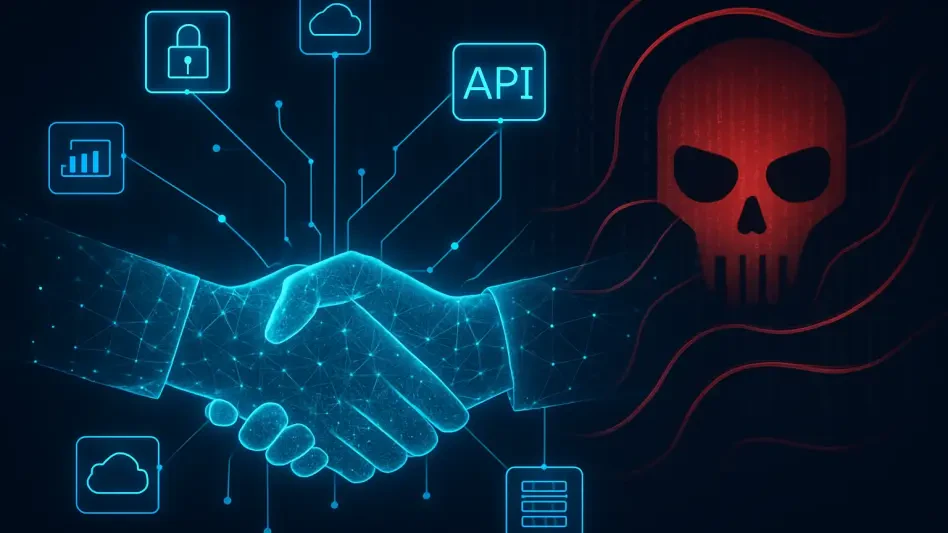
Modern digital infrastructure now rests on a delicate web of invisible handshakes that exchange more sensitive data in a single second than entire databases held a decade ago. This shift has turned Application Programming Interfaces (APIs) into the primary target for global cyber adversaries, leading to a staggering 113% annual increase in attack frequency. As enterprises move away from monolithic architectures, these interfaces have become the most vulnerable points of entry, often left exposed by the sheer speed of digital transformation.
The transition from traditional code injection to sophisticated, logic-based exploits marks a strategic pivot in the threat landscape. Rather than trying to break the lock, attackers are now manipulating the internal logic of the application to gain legitimate-looking access. This research investigates how agentic AI and automated workflows have expanded the vulnerability window, allowing threat actors to launch high-volume campaigns that are both cheaper to execute and harder to detect through standard security protocols.
Analyzing the Strategic Shift Toward API-Centric Cyber Threats
Current data reveals a troubling reality where 87% of businesses reported significant API-related security incidents over the past year. The migration from legacy web application exploits to behavior-based attacks suggests that hackers are no longer satisfied with simple entry points. Instead, they are targeting the very pathways that AI systems use for data exchange, recognizing that these channels often lack the rigorous oversight applied to traditional user interfaces.
This study is vital for maintaining organizational stability because it highlights the financial and operational risks posed by “blended attacks.” These campaigns combine API abuse with Layer 7 DDoS activity, creating a smokescreen that degrades system performance while simultaneously exfiltrating valuable information. For a Chief Information Security Officer, understanding this evolution is the difference between a secure perimeter and a catastrophic breach of data integrity.
The Evolution of the Digital Threat Landscape and Its Impact on Global Business
The reliance on AI-driven automation has fundamentally altered how data moves across global networks. Because modern AI agents require constant API interaction to function, the surface area for potential exploits has grown exponentially. This reliance creates a paradox where the tools meant to increase efficiency also provide the perfect vehicle for unauthorized access and sensitive data exposure.
Moreover, the impact on global business extends beyond immediate data loss to include long-term infrastructure costs. When botnets fueled by AI-enhanced scripts target APIs, they consume vast amounts of bandwidth and computing power. This form of economic sabotage forces companies to over-provision resources, turning security failures into ongoing operational liabilities that can stall growth and damage brand reputation.
Research Methodology, Findings, and Implications
Methodology
The research utilized comprehensive traffic patterns and incident data from global networks to identify emerging trends in cyber activity. By employing the OWASP Top API Security Risks framework, the study categorized vulnerabilities to determine which weaknesses were being most frequently exploited. This structured approach allowed for a direct comparison between siloed security tools and integrated platforms designed for holistic mitigation.
Findings
Daily API attacks per organization surged to an average of 258, more than doubling the volume recorded in previous cycles. Logic-based attacks, which involve unauthorized workflows and abnormal activity, now account for 61% of all incidents. The rise of agentic AI has notably exacerbated these risks, as automation makes it easier for threat actors to execute repeatable, sophisticated campaigns at a fraction of the traditional cost.
Implications
Traditional firewalls are no longer sufficient to stop modern adversaries who operate within the logic level of an application. Organizations must adopt behavior-based detection systems that can distinguish between a legitimate AI agent and a malicious bot. Furthermore, the findings indicate that shadow APIs—unmonitored or forgotten interfaces—represent the weakest link in modern infrastructure, requiring a strategy of total visibility to secure the environment.
Reflection and Future Directions
Reflection
The difficulty in defending against multi-vector attacks became evident as attackers successfully bypassed static security controls using AI-enhanced scripts. It was observed that the rapid adoption of AI technology often outpaced the implementation of necessary governance, leaving many interfaces essentially unguarded. This gap between innovation and protection created an environment where blended attacks could degrade performance while silently harvesting data.
Future Directions
Future efforts should focus on the development of autonomous security agents capable of countering AI threats in real-time. There is also a significant need for standardized, industry-wide identity-aware controls to safeguard cross-organizational data exchanges. Investigating the long-term infrastructure costs associated with Layer 7 abuse will be crucial for developing more resilient and cost-effective cloud architectures.
Securing the Digital Ecosystem Against Automated Adversaries
Protecting the digital frontier requires a move toward integrated security platforms that unify DDoS mitigation, web application firewalls, and API-specific protections. Relying on disconnected tools creates blind spots that modern automated adversaries are quick to exploit. By prioritizing visibility and adopting continuous training based on established benchmarks, organizations were able to establish a more robust defense against the current trajectory of cyber threats.
In conclusion, the focus shifted toward proactive governance and the elimination of unmonitored interfaces to ensure the sustainable growth of an AI-driven economy. Security leaders emphasized that the only viable path forward involved a commitment to total environment transparency. These steps provided a blueprint for securing the automated interactions that define the modern business world, ensuring that innovation did not come at the expense of safety.