The era of the solitary hacker operating from a basement has been replaced by a globalized, industrial-scale engine of digital theft that mirrors the world’s most successful corporate enterprises. As cybercrime evolves from isolated digital mischief into a multi-billion-dollar global enterprise, the traditional methods of reactive defense are proving insufficient. The industrialization of digital fraud has necessitated a strategic pivot toward shaping the adversary’s environment—not just by blocking attacks, but by physically and digitally dismantling the infrastructure that makes them possible. This article explores the recent shift in federal policy and the growing movement to treat cyber syndicates as Transnational Criminal Organizations (TCOs) to be systematically neutralized.
The Professionalization of Global Cybercrime Syndicates
Data Trends and the Industrialization of Fraud
Modern cybercrime functions as a mature, global industry with organizational structures mirroring Fortune 500 companies, complete with HR departments and performance metrics. These entities no longer rely on sporadic successes; instead, they utilize structured training pipelines for new recruits and rigorous internal audits to ensure maximum profitability. Recent data reveals that this corporate approach has turned digital fraud into a primary driver of the largest transfer of wealth in human history, fueled by automated AI-driven attack vectors that allow criminals to target millions of victims simultaneously.
The rise of Cybercrime-as-a-Service (CaaS) has further lowered the barrier to entry, allowing low-skill actors to rent sophisticated technology stacks and participate in global predatory schemes. This democratization of high-level hacking tools means that the volume of attacks is no longer limited by the number of expert coders. Instead, the “gig economy” of the underworld ensures a constant stream of participants who can execute complex ransomware or phishing campaigns with minimal technical knowledge, provided they have the capital to lease the necessary infrastructure.
Real-World Application and Case Studies
The emergence of “scam compounds” in Southeast Asia serves as a concrete example of the intersection between digital crime and human trafficking. In these facilities, forced labor is used to execute romance and cryptocurrency scams under the constant threat of physical violence. These are not merely digital operations; they are physical hubs where human rights abuses provide the manual labor required to fuel high-tech fraud. This reality shifts the perception of cybercrime from a victimless technical glitch to a humanitarian crisis that demands a physical as well as a digital response.
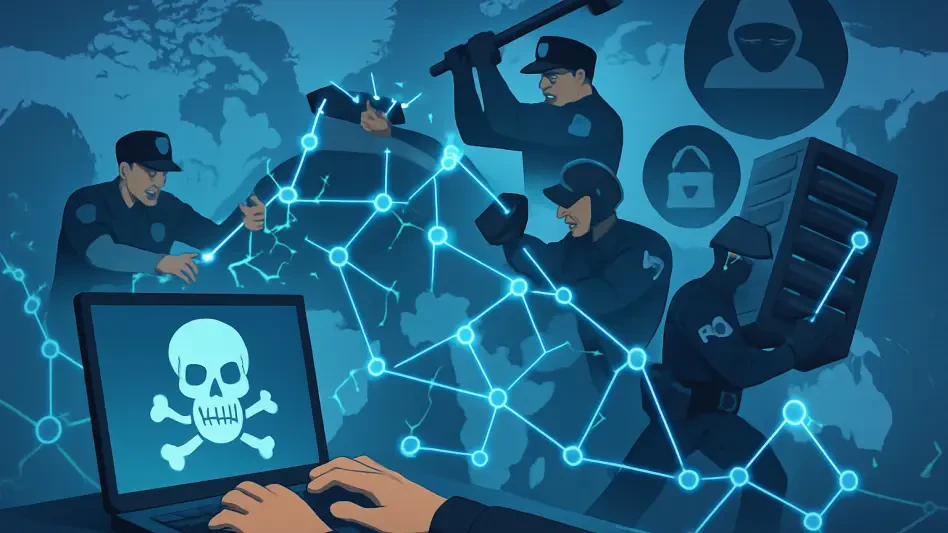
High-profile takedowns of ransomware infrastructure, such as those targeting the Hive or LockBit groups, demonstrate the move toward seizing servers and disrupting payment pipelines rather than just issuing warnings. Law enforcement agencies are no longer content with playing a defensive game of “whack-a-mole.” By infiltrating these groups and quietly seizing their decryption keys or draining their cryptocurrency wallets, authorities are attacking the financial heart of the criminal enterprise. Furthermore, the use of the Transnational Criminal Organization (TCO) designation by the U.S. government has reclassified cybercrime as a high-level national security threat, allowing for the use of diplomatic and offensive cyber tools previously reserved for state-sponsored espionage.
Insights from Industry Experts and Strategic Thinkers
The Economic Cost: Subsidizing Criminal Models
Experts like Kyle Hanslovan argue that the private sector is currently subsidizing the cybercrime industry by failing to implement basic security hygiene. When corporations neglect fundamental protections like multi-factor authentication or timely patching, they essentially reduce the “cost of goods sold” for the criminal. By making it easy and cheap for attackers to succeed, businesses inadvertently make the criminal business model more sustainable and profitable. This perspective shifts the responsibility of defense from a purely technical requirement to an ethical and economic obligation to stop funding the adversary’s growth through negligence.
Thought leaders emphasize that the shift from defense to active disruption is necessary to impose significant costs on attackers in terms of both time and capital. If a criminal group loses months of development work and millions in infrastructure every time they launch a campaign, the return on investment eventually turns negative. This “shaping” doctrine seeks to move beyond simply stopping a breach; it aims to destroy the tools, the servers, and the financial channels the criminals rely on, effectively bankrupting the syndicate before they can launch their next attack.
Legal Frameworks: The Power of Terminology
There is a growing consensus among security professionals that terminology matters: labeling these groups as “transnational” provides the legal framework required for multi-tiered responses. This classification allows for a unified approach involving international law enforcement, intelligence agencies, and even military assets. Moreover, it permits the government to treat cybercrime with the same level of urgency as drug cartels or human trafficking rings. By elevating the status of these groups, the global community can bypass the jurisdictional hurdles that once protected hackers operating from “safe haven” countries.
The Future of Global Cybercrime Deterrence
Shaping the Adversary: The New Doctrine
The future of cybersecurity will likely see a more aggressive shaping doctrine where the U.S. and its allies use offensive operations to dictate the conditions under which adversaries must operate. Instead of waiting for a ping on a firewall, proactive units will likely engage in “pre-emptive infrastructure neutralization.” This involves identifying command-and-control nodes before they go live and rendering them useless. Such a strategy requires a paradigm shift in how we view digital sovereignty, prioritizing the protection of the global financial system over the technical privacy of malicious infrastructure.
Potential developments include the elimination of international safe havens through increased diplomatic pressure and the potential for kinetic actions against physical criminal infrastructure. If diplomatic channels fail to shut down a scam compound or a ransomware server farm, the global community may move toward more direct interventions. While these strategies promise to disrupt the business model of cybercrime, they also present challenges regarding the ethical implications of offensive actions and the risk of collateral damage in interconnected networks. The balance between aggressive dismantling and the stability of the global internet will remain a central point of contention.
Collaborative Intelligence and Universal Standards
The long-term evolution of this trend will depend on the private sector’s willingness to share threat intelligence and the global community’s ability to enforce universal security standards. For a dismantling strategy to work, the “eyes” of the private sector must feed the “hands” of the government. This means moving past the fear of reputational damage and embracing a culture of radical transparency regarding breach data. If the global community can establish a baseline of security that every organization must meet, the “path of least resistance” that currently fuels the cybercrime epidemic will be permanently closed.
The dismantling of transnational cybercrime infrastructure marked a critical turning point in the digital age, shifting the focus from individual victims to the systemic destruction of criminal business models. By reclassifying these entities as organized crime syndicates and prioritizing the disruption of their physical and digital assets, the global community finally addressed the root causes of the cyber epidemic. To maintain this momentum, stakeholders must now prioritize the creation of automated, real-time intelligence-sharing protocols that bridge the gap between private detection and public enforcement. Success required a unified front where government offensive capabilities and private-sector defensive diligence worked in tandem, ensuring that the digital environment became too hostile for industrialized fraud to survive.