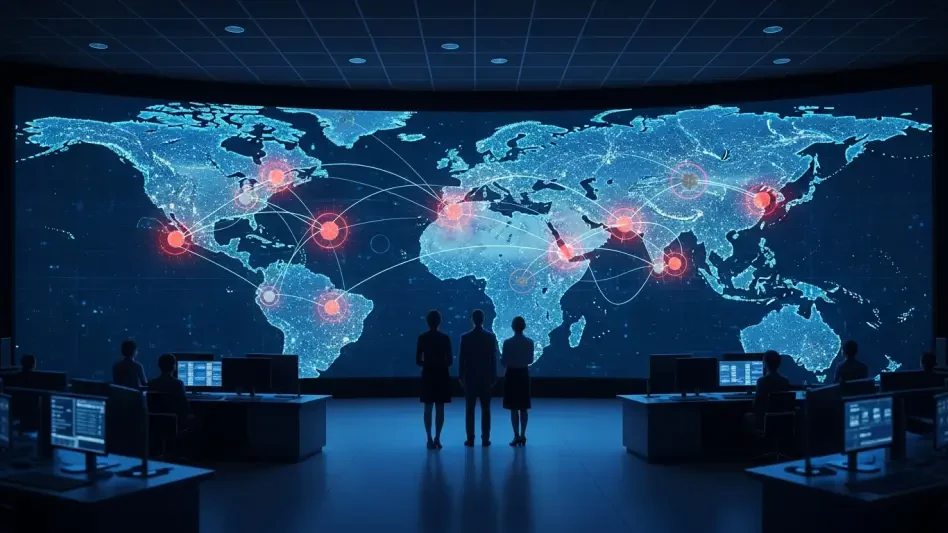

When a hospital’s digital pulse suddenly flatlines under the weight of a ransomware encryption key, the crisis transcends simple IT failure and becomes an immediate threat to human life. In the current landscape of 2026, healthcare institutions have emerged as the primary target for global cyber-syndicates, driven largely by the staggering dark-web valuation of comprehensive medical records. Unlike standard corporate data, a patient’s history is immutable and contains sensitive identifiers that facilitate long-term identity theft, making it a gold mine for extortionists.
The Rising Tide of Ransomware in Clinical Environments
Statistical Overview of the Healthcare Threat Landscape
The frequency of these digital incursions has reached a critical threshold, with medical facilities now facing a persistent barrage of sophisticated threats. Current data from the cybersecurity firm Sophos indicates a sobering reality: only 22% of healthcare entities manage to restore their systems within a single week of an attack. This sluggish recovery timeline is particularly alarming given that medical records are no longer just administrative assets but are the literal backbone of modern clinical decision-making.
The proliferation of the Ransomware-as-a-Service (RaaS) model has further lowered the barrier to entry for amateur hackers, allowing them to deploy high-grade encryption tools against complex academic medical centers. These organizations, which often balance research, education, and patient care, present a vast attack surface that is difficult to defend. Consequently, the operational growth of these criminal enterprises has outpaced the defensive investments of many state-funded health systems, leaving a gap that remains to be closed through more robust funding and technical oversight.
Real-World Application: The UMMC Recovery Model
The recent cybersecurity breach at the University of Mississippi Medical Center (UMMC) serves as a vital benchmark for understanding modern recovery timelines and tactics. In March 2026, the institution successfully restored its statewide clinic network after a week-long digital blackout that had paralyzed its primary infrastructure. The attack targeted the Epic electronic health record system, which effectively blinded clinicians and halted routine outpatient services across the state’s only academic medical pillar.
To maintain emergency services during this blackout, UMMC deployed aggressive manual workarounds that relied on legacy “paper-based” protocols. Clinicians documented patient interactions on physical charts and hand-delivered medication orders to the pharmacy, proving that clinical adaptability remains a necessary safeguard against digital fragility. The restoration effort required a massive coordination between third-party communication vendors, the FBI, and specialized forensics firms to ensure the integrity of the patient database before it was brought back online.
Industry Expert Perspectives on Resilience
Chief Information Security Officers now advocate for a “stop the bleeding” strategy during the initial phase of any ransomware event. This approach prioritizes immediate containment over investigative curiosity, aimed at preventing the lateral movement of malware into critical life-support systems. Experts agree that the current trend toward centralized electronic health record dependency has created a dangerous single point of failure where a single compromised credential can theoretically paralyze an entire state’s medical infrastructure.
Moreover, there is a growing consensus that “logistical surges” must become a standard component of post-attack planning. Following the UMMC incident, the medical center was forced to implement extended clinic hours to handle the massive backlog of postponed appointments and procedures. This requirement highlights that the true cost of ransomware is not just the potential ransom payment or the IT labor, but the long-term operational strain on a medical workforce already pushed to its limits by the initial crisis.
The Future of Healthcare Cyber-Resilience
Looking ahead from 2026, the industry is shifting toward decentralized data backups and “immutable” storage solutions that cannot be altered or deleted by unauthorized actors. These systems are designed to provide a clean recovery point even when the primary network is compromised. Furthermore, the integration of AI-driven threat detection is expected to move recovery efforts from a reactive ten-day window toward a proactive, near-instantaneous restoration process by identifying anomalous behavior before encryption can take hold.
The broader implications of these attacks suggest that hospital downtime is increasingly viewed as a public safety crisis rather than a private business loss. This shift will likely lead to stricter federal cybersecurity mandates, requiring medical institutions to prove their resilience through mandatory stress tests and audits. Failure to adapt may result in unsustainable insurance premiums and the permanent erosion of patient trust, as the public becomes less forgiving of digital privacy failures in an increasingly connected world.
Summary and Strategic Outlook
The vulnerability exposed by the loss of electronic health records highlighted the vital role that manual contingency planning played in maintaining patient safety. The industry recognized that modern recovery was no longer a simple technical task but a complex orchestration of forensics, law enforcement, and clinical adaptability. Healthcare leaders shifted their focus toward “recovery-in-depth” as a fundamental component of patient care, ensuring that life-saving services remained available regardless of the digital climate.
This strategic evolution encouraged a move away from fragile, centralized architectures toward more resilient, distributed systems. Medical institutions integrated cybersecurity into their core mission, treating data protection as an essential clinical outcome rather than an IT overhead cost. Ultimately, the lessons learned from recent breaches paved the way for a more robust healthcare infrastructure that prioritized continuity and patient privacy in equal measure. Professionals across the sector recognized that the path forward required constant vigilance and a refusal to treat digital safety as a secondary concern.