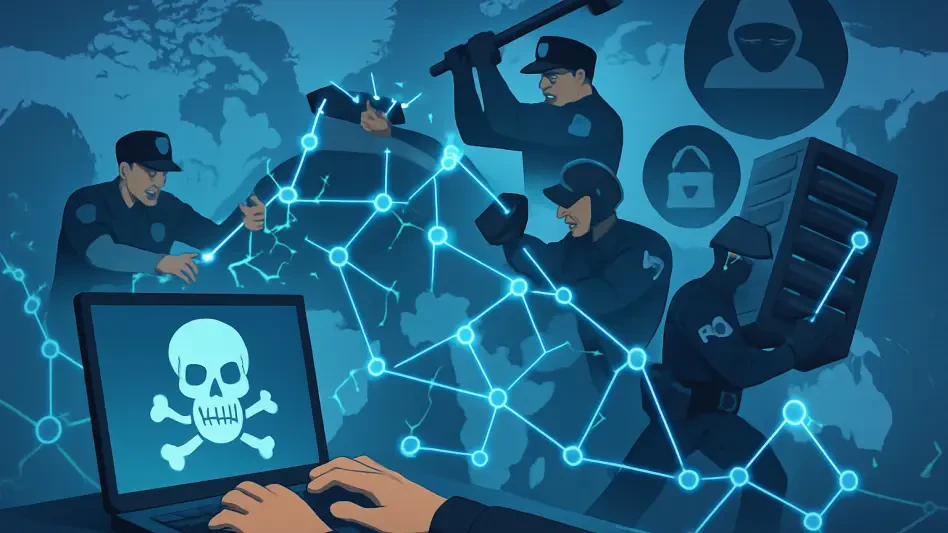
The global telecommunications industry, the very backbone of modern connectivity and commerce, is currently weathering an unprecedented and highly targeted storm of digital aggression. A comprehensive analysis of recent threat intelligence has uncovered a deeply concerning trend, revealing that cyberattacks against telecom providers have not just increased, but have escalated at an alarming rate. Between 2022 and 2025, the sector experienced a nearly fourfold spike in documented ransomware incidents, climbing from just 24 cases to a staggering 90. This dramatic surge is not a random fluctuation but a clear indicator of a strategic shift by malicious actors who now view the industry as a premier target, ripe for exploitation. The sustained nature of these campaigns suggests a calculated effort to compromise the essential infrastructure that underpins nearly every aspect of daily life, from personal communication to national security, signaling a new and dangerous era for digital defense.
The Anatomy of a High-Value Target
The intense focus on the telecommunications sector by cybercriminals and nation-state actors is driven by its unique and critical position in the global infrastructure. These companies are not merely service providers; they are custodians of immense volumes of highly sensitive data, including personal subscriber information, corporate communications, and critical operational data that governs network functionality. This makes them an exceptionally lucrative target for threat actors with diverse motivations. For cybercrime syndicates, the primary goal is financial, with stolen customer data being a valuable commodity on dark web marketplaces. For state-sponsored groups, the objective is often geopolitical leverage, where compromising a rival nation’s communications network can provide a significant strategic advantage. The dual appeal of financial gain and espionage makes the industry a constant and high-priority target, attracting some of the most sophisticated adversaries in the digital realm. The very nature of their business—connecting everyone—exposes them to everyone, including those with malicious intent.
Compounding the sector’s attractiveness as a target is a potent combination of persistent and evolving security vulnerabilities. Many telecom networks are sprawling and complex, often incorporating legacy systems alongside modern technology, creating a vast and difficult-to-defend attack surface. Threat actors have become adept at exploiting unpatched flaws in both software and hardware, with a notable increase in the rapid weaponization of critical and zero-day vulnerabilities found in internet-facing network equipment. Lax perimeter controls can provide an easy entry point, but the threat extends far beyond a company’s direct infrastructure. The industry’s heavy reliance on a wide array of third-party services and vendors introduces significant supply chain risks. Each partner and supplier represents a potential weak link in the security chain, creating additional points of entry that malicious actors can leverage to bypass primary defenses and gain a foothold within the core network, making comprehensive security a formidable challenge.
An Evolving and Geographically Focused Threat
The wave of attacks documented through 2025 was not the work of disparate, low-level hackers but was largely conducted by a concentrated group of sophisticated and highly organized ransomware gangs. The Qilin group emerged as the most prolific aggressor, with the Akira and Play ransomware gangs following closely behind, orchestrating campaigns with significant real-world consequences. A prime example of this impact was the attack on the British telecom giant Orange, which resulted in a tangible and disruptive network outage. This incident underscored the ability of these groups to not only steal data but also to cripple essential services. The threat was not evenly distributed globally; a geographical analysis revealed that the Americas were the most heavily targeted region. In 2025 alone, North and South America accounted for approximately 70% of all ransomware attacks against the telecom sector, indicating a clear and deliberate focus by threat actors on this critical economic and political hub.
Beyond the high-profile ransomware campaigns, the sector has been under a continuous and insidious assault from data thieves and state-sponsored espionage operations. The threat intelligence report detailed 444 distinct incidents involving data theft from telecom firms, a figure that includes 133 specific instances where stolen databases were put up for sale on clandestine dark web forums. These breaches are not trivial; they often involve sensitive customer information and critical operational data. To illustrate the brazen nature of these sales, one post from late 2025 advertised the administrator credentials for a major U.S. telecommunication company’s core infrastructure for a mere $4,000. Simultaneously, nation-state actors have remained a persistent threat. The global “Salt Typhoon” intrusions, attributed to China, specifically targeted telecom providers to compromise customer data and, more alarmingly, to access sensitive information related to U.S. wiretap targets, highlighting a grave national security dimension to the ongoing cyber threats.
A Mandate for Fortified Defenses
The sustained assault on the telecommunications sector underscored a critical reality for industries worldwide: the security and resilience of these networks were a matter of collective concern. The period of escalating attacks served as a stark wake-up call, demonstrating that a vulnerability within a telecom provider was effectively a vulnerability for every business and government agency that relied on its services. The consensus that emerged was that the industry’s security posture required a fundamental and immediate overhaul. It became clear that reactive measures were no longer sufficient to counter such persistent and sophisticated threats. The events of the preceding years necessitated a paradigm shift toward a more proactive and collaborative security model, one where threat intelligence was shared more freely and defensive strategies were coordinated across the entire digital ecosystem to protect the foundational infrastructure of the global economy.