
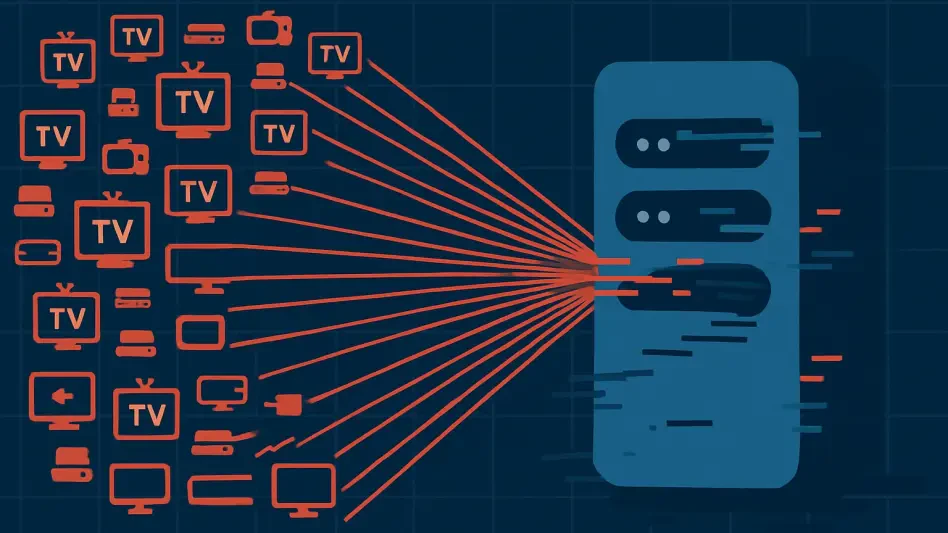
The seemingly innocuous streaming boxes that have become a common fixture in living rooms around the world have been unmasked as unwitting soldiers in a digital army, contributing to the largest distributed denial of service attack ever recorded. A recent cybersecurity report has shed light on a massive global cyber event that occurred late last year, where over two million Android-based devices were compromised in a staggering 35 seconds. The botnet, identified as AISURU/Kimwolf, primarily targeted Android-enabled televisions and unauthorized TV streaming devices, often referred to as “dodgy boxes.” These devices, prized for their ability to provide a wide range of content, have now revealed a significant and previously underestimated security vulnerability. The attack highlights how everyday consumer electronics, when not properly secured, can be hijacked and repurposed for malicious activities on a global scale, transforming a source of home entertainment into a node in a vast network designed to cripple online services and infrastructure. The sheer speed and scale of this coordinated attack serve as a stark warning about the hidden dangers lurking in the interconnected devices within our homes.
1. Unpacking the Coordinated Assault
The primary weapon in this unprecedented cyberattack was a Distributed Denial of Service (DDoS) assault, a method designed to overwhelm online services with a flood of internet traffic, rendering them inaccessible to legitimate users. Imagine a popular website or a critical online banking portal suddenly being bombarded with requests from millions of devices simultaneously; the service’s servers cannot cope with the deluge and ultimately shut down. This is achieved through a botnet, which is essentially an army of compromised internet-connected devices controlled by a single attacker. In this case, the army was composed of streaming boxes and smart TVs. Once a device is infected, it can be used as a “residential proxy,” giving the attacker the ability to conduct malicious activities using the home’s internet connection and IP address as a mask. This not only helps obscure the attacker’s true location but also implicates the unsuspecting device owner in the illegal activity. The coordinated nature of the botnet allows for these massive, paralyzing attacks that can take down essential services and cause widespread disruption across the internet.
2. From Entertainment Hub to Security Risk
The danger posed by a compromised streaming device extends far beyond its participation in external DDoS attacks; it also creates a significant breach within the home network itself. Once hackers gain a foothold on one device, they can perform what is known as “lateral movement,” effectively hopping from the streaming box to other connected devices like laptops, smartphones, and personal storage drives. This turns the entertainment device into a beachhead for a full-scale invasion of a household’s digital life. Attackers can then scan the network for valuable information, seeking out sensitive personal and private data. Financial records, personal documents, photos, and private communications stored digitally anywhere on the network become vulnerable to theft and exfiltration. The report on the incident made it clear that basic digital hygiene had become paramount for homeowners. It was advised that individuals regularly access their home router’s administrative panel to review the list of all connected devices, ensuring each one is recognized. Any unknown or suspicious devices were to be immediately removed from the network, and it became critical to ensure that all device firmware and software were kept as up-to-date as possible to patch known vulnerabilities.