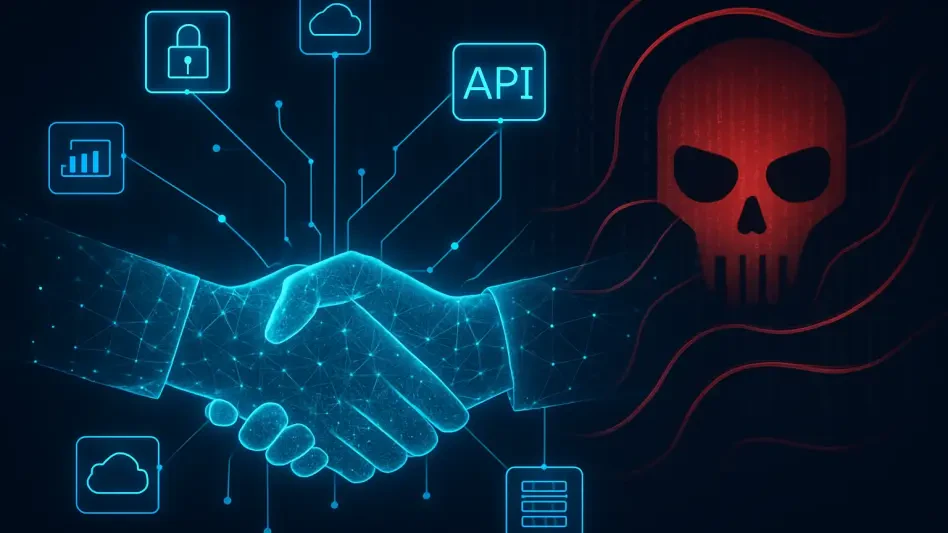

A critical investigation is underway at Salesforce after a trusted third-party application, designed to enhance customer success, was allegedly exploited to gain unauthorized access to sensitive corporate data. The incident has sent a clear message across the software-as-a-service (SaaS) industry: the convenient integrations that power modern business can also become its most significant vulnerabilities. This developing situation underscores a growing threat where the tools meant to build customer relationships are being turned into backdoors for malicious actors, prompting an urgent reevaluation of digital supply chain security for countless organizations.
When a Trusted App Becomes a Backdoor Is Your CRM Data at Risk
Enterprise ecosystems like the Salesforce AppExchange are built on a foundation of trust, offering a marketplace of vetted applications that extend the platform’s core capabilities. Companies rely on these integrations to streamline workflows, gather analytics, and drive growth, assuming a baseline of security has been met. This model thrives on the seamless connection between systems, allowing data to flow freely between the CRM and the third-party tool.
However, this incident demonstrates how that very seamlessness can be weaponized. When a trusted application is compromised, it effectively bypasses the primary defenses of the core platform. The security permissions granted to the app during installation become a liability, providing attackers with an authenticated and authorized pathway directly to the sensitive customer data held within the CRM. Suddenly, an app intended for productivity becomes a hidden entry point, putting customer lists, communications, and proprietary information at severe risk.
The Expanding Attack Surface Why Third Party SaaS Integrations Are a Prime Target for Hackers
In the modern enterprise, the digital perimeter has all but vanished, replaced by a complex, interconnected web of cloud services. Each third-party SaaS integration adds another node to this web, creating a larger and more porous attack surface for cybercriminals to probe. Security teams are no longer just defending a central fortress; they must secure a sprawling ecosystem of applications, each with its own potential weaknesses and access privileges.
Threat actors are increasingly drawn to these integrations for their strategic value. Rather than launching a frontal assault on a well-fortified platform like Salesforce, they target its smaller, potentially less secure partners. The goal is to compromise authentication mechanisms like OAuth tokens, which act as persistent digital keys. Gaining control of these tokens allows attackers to impersonate the legitimate application, granting them ongoing, often undetected, access to high-value data without needing to steal user passwords.
Unpacking the Breach A Step by Step Look at the Incident
The central focus of the investigation is the unauthorized access to Salesforce customer environments that appears to originate from an external connection with an application published by Gainsight. According to Salesforce’s initial security advisory, the compromise may have allowed attackers to access and exfiltrate certain customer data, triggering immediate containment protocols to mitigate further exposure.
Researchers from Google’s Threat Intelligence Group (GTIG) have attributed the campaign to hackers associated with the notorious “ShinyHunters” group. The primary attack vector involved the compromise of OAuth tokens. These tokens, which are designed to grant applications access to data without sharing user credentials, were stolen and used by the attackers to gain authenticated entry into targeted Salesforce instances, effectively walking through the front door with a stolen key.
This attack is not an isolated event but rather part of a disturbing trend. Austin Larsen, a principal threat analyst at GTIG, explicitly connected this campaign to the recent Salesloft Drift incident, where a similar methodology was used to harvest credentials from hundreds of organizations. This pattern highlights a calculated shift in adversary tactics toward exploiting the inherent trust between integrated SaaS platforms, a method that has proven both effective and difficult to detect.
Voices from the Frontline Salesforce Google and Gainsight Respond
Salesforce’s reaction to the threat was swift and decisive. The company immediately revoked all active and refresh tokens associated with the affected Gainsight applications, severing the connection that enabled the unauthorized access. Furthermore, the apps were temporarily removed from the official AppExchange marketplace to prevent new installations while the investigation proceeds. A spokesperson emphasized that there is no evidence of a vulnerability within the core Salesforce platform itself.
Expert analysis from Google’s Threat Intelligence Group provided critical context and scale to the incident. Austin Larsen noted the increasing focus of adversaries on OAuth tokens as a preferred attack method. A GTIG spokesperson confirmed the potential impact of the campaign, indicating that over 200 separate Salesforce instances may have been compromised, underscoring the widespread nature of the threat and the effectiveness of the attackers’ strategy.
Gainsight, the software company at the center of the connection point, publicly stated its position via a customer support post. The company affirmed it is working in close collaboration with Salesforce to investigate the security issues that led to the mass token revocation. This cooperative stance is crucial for a comprehensive investigation aimed at identifying the root cause of the compromise and preventing future occurrences.
A Proactive Defense Actionable Steps to Secure Your SaaS Environment
In light of this campaign, security experts are urging organizations to move beyond passive trust and adopt a more proactive defense posture. The first recommended step is a critical audit of all OAuth tokens within the SaaS environment. Security teams should meticulously review every integrated application, scrutinizing its permissions and revoking access for any tools that are unused, redundant, or exhibit suspicious behavior.
Establishing an immediate response protocol for such incidents is equally essential. Upon the discovery of any unusual activity related to a third-party integration, the primary action must be the immediate rotation of all relevant credentials, including API keys and OAuth tokens. This single step can effectively sever an attacker’s access and provide the security team with the necessary window to investigate the breach without the threat of ongoing data exfiltration.
Looking forward, a more rigorous vetting process for third-party applications is non-negotiable. Before integrating any new app into a critical system like a CRM, organizations must conduct thorough due diligence on the vendor’s security posture. This evaluation should include reviewing their security certifications, data handling policies, and incident response plans to ensure they meet the organization’s own security standards, thereby strengthening the entire digital supply chain.
The Salesforce-Gainsight incident was a stark illustration of the evolving nature of cybersecurity threats in an interconnected cloud world. It served as a powerful reminder that an organization’s security perimeter is no longer defined by its own walls but extends to every third-party vendor and application it integrates. The fallout from this breach highlighted the critical need for continuous monitoring, a zero-trust approach to application permissions, and a robust vetting process for all digital partners. The key lesson learned was that convenience in integration cannot come at the expense of security, a principle that reshaped how businesses approached their SaaS ecosystems.