
The invisible digital scaffolding that supports a nation’s most essential services became alarmingly visible when a sophisticated ransomware attack brought Romania’s national water authority to a standstill, paralyzing its administrative and information technology infrastructure. The incident, which began on December 20, 2025, served as a stark reminder of the profound vulnerabilities embedded within critical public utilities. Romanian Waters, the agency responsible for managing the country’s vast water resources, saw approximately 1,000 of its computer systems across its main office and ten of its eleven regional branches rendered inoperable. This digital siege immediately knocked essential services offline, crippling everything from database and domain name servers to the specialized Geographical Information Systems (GIS) used for mapping and managing water data. The severity of the breach was such that the agency’s official website was taken down, forcing public communications onto social media channels in a makeshift effort to maintain public outreach.
Anatomy of the Digital Siege
The cyberattack demonstrated a high level of sophistication, not through the use of exotic malware, but by turning a trusted security feature against its owner. Investigators discovered that the attackers ingeniously exploited BitLocker, a legitimate encryption tool built directly into the Windows operating system. By weaponizing this native feature, the hackers managed to encrypt the agency’s files while largely evading detection from conventional security software that typically scans for foreign malicious code. This stealthy approach allowed the intrusion to spread widely before it was identified. A digital ransom note was eventually found, demanding that the agency initiate negotiations within a tight seven-day window. However, the Romanian government adopted a firm and unwavering stance against capitulating to the criminals’ demands. The National Cyber Security Directorate (DNSC) publicly affirmed that Romanian Waters would not contact or negotiate with the attackers, reinforcing a national policy aimed at avoiding the funding of criminal enterprises and discouraging future attacks of a similar nature.
In response to the crisis, a coordinated, multi-agency effort was rapidly mobilized to contain the breach and begin the arduous process of system restoration. Technical teams from the Romanian Intelligence Service (SRI), in collaboration with cybersecurity experts from the DNSC, were dispatched to work directly with the water authority’s personnel. Their primary objectives were to isolate the affected systems to prevent further spread of the encryption, conduct a thorough forensic analysis to understand the full scope of the intrusion, and begin restoring critical data and services from secure backups. The incident also exposed a significant systemic vulnerability within the nation’s cyber defense framework: the Romanian Waters network had not yet been integrated into the country’s centralized cyber-protection system. This gap in coverage meant the agency lacked the comprehensive, state-level monitoring and defense mechanisms that could have potentially detected or mitigated the attack earlier. Authorities have since confirmed that plugging this gap and integrating the agency’s network has become an urgent national security priority.
The Crucial IT and OT Separation
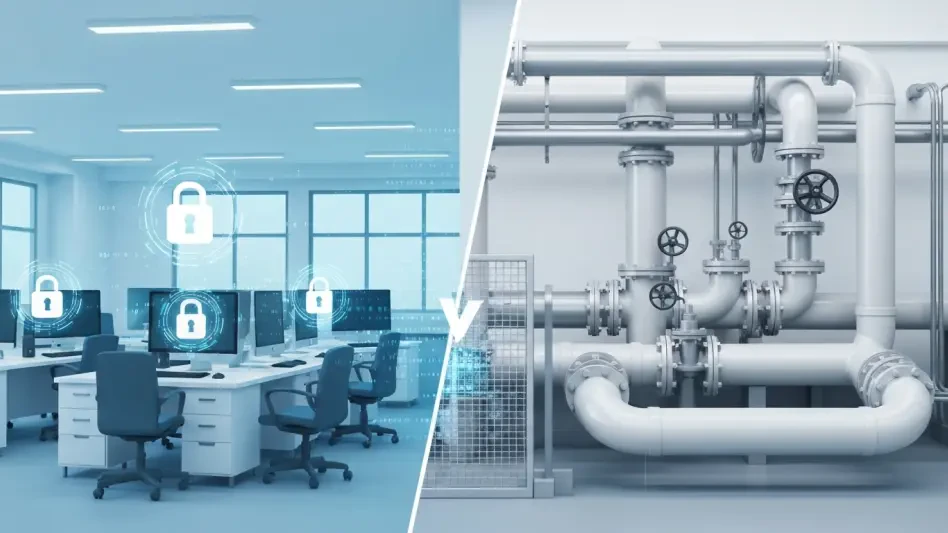
A critical distinction in this incident prevented a digital crisis from escalating into a physical catastrophe. The attack was successfully confined to the agency’s Information Technology (IT) systems, which handle administrative tasks, data processing, and communications. The far more sensitive Operational Technology (OT) systems, which directly control physical infrastructure such as dams, flood defenses, and water treatment facilities, were not breached. This separation proved to be the saving grace, as the attackers never gained control over the mechanisms that manage the flow and safety of the nation’s water supply. Had the OT network been compromised, the consequences could have been dire, ranging from manipulated water distribution to the catastrophic failure of flood control systems. The resilience of the physical infrastructure was a testament to the importance of network segmentation, a security practice that isolates critical control systems from general corporate networks to limit the potential blast radius of a cyberattack.
While the administrative side of the agency grappled with digital paralysis, on-site personnel responsible for the physical infrastructure seamlessly reverted to manual operational protocols. Staff at dams and other critical facilities relied on traditional communication methods, including radios and telephones, to coordinate their actions and ensure the continuous and safe management of water resources. This swift adaptation ensured that there was no immediate physical threat to public safety or the integrity of the water supply. The event underscored a crucial lesson for operators of critical infrastructure worldwide: while digital transformation offers immense benefits in efficiency and monitoring, maintaining robust and well-practiced manual override procedures is an indispensable failsafe. The ability to operate “off-the-grid” in the face of a digital blackout is not an outdated concept but a vital component of modern resilience, providing a last line of defense when sophisticated cyber threats breach the digital perimeter.
A Global Pattern of Emerging Threats
The incident in Romania is not an isolated event but rather a single data point in a troubling global trend of escalating cyber threats against water utilities. These essential services are increasingly viewed as high-value targets by a diverse range of malicious actors, from profit-driven cybercriminals to state-sponsored hackers seeking to disrupt rival nations. The convergence of IT and OT environments, where digital controls increasingly manage physical processes, has expanded the attack surface, creating new vulnerabilities. This pattern was vividly illustrated by a 2025 attack in Norway, where pro-Russian hackers successfully breached a dam’s control system. The attackers exploited weak security credentials to gain access and were able to manipulate a discharge valve, demonstrating a clear capability to cause physical effects through digital intrusion. Such events highlight the tangible and potentially devastating consequences of cyberattacks on critical infrastructure, moving them beyond data theft and into the realm of public safety and national security.
This heightened threat landscape has prompted stern warnings from government agencies across the globe. In the United States, federal authorities have persistently cautioned that ransomware gangs are actively targeting water and wastewater facilities, often exploiting common and preventable security lapses. Similarly, investigations in the United Kingdom have exposed numerous online water control systems lacking even basic security protections, leaving them vulnerable to unauthorized access. The common threads weaving through these international incidents are fundamental security failures, including the use of weak or default passwords, a failure to apply timely software updates and patches, and poor network segmentation between IT and OT systems. The Romanian attack, considered alongside these other events, underscored that the challenge of securing the world’s water supply was no longer a theoretical exercise. It had become an urgent, practical necessity that demanded proactive investment, international collaboration, and a fundamental rethinking of how to protect the planet’s most vital resource from digital threats.