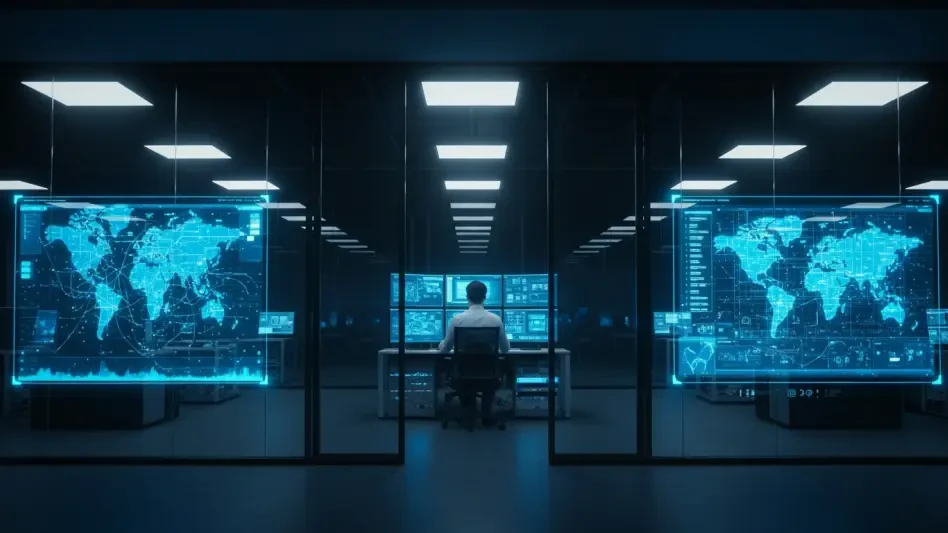

The vulnerability of the global healthcare supply chain became painfully evident this week as Stryker, a titan in the medical technology sector, grappled with a sophisticated cyberattack that disrupted critical life-saving operations across several continents. This breach did not merely target administrative files but instead struck at the very heart of the company’s Microsoft-integrated infrastructure, causing a cascading failure that affected manufacturing, order fulfillment, and logistics. With annual revenues exceeding $25 billion, Stryker represents a cornerstone of modern surgical and orthopedic medicine, making any pause in its operations a matter of international concern. Although the organization moved quickly to isolate the affected segments of its network, the ripple effects were felt most acutely at its primary international hub in Ireland, where traditional communication channels were completely severed. The incident underscores a shift in the landscape of digital warfare, where corporate giants are no longer just collateral damage but primary targets in broader geopolitical struggles. Currently, the company remains in a state of high-alert recovery as it balances the need for security with the urgency of patient care.
Scope of the Operational Disruption
Impact on International Manufacturing Centers
The immediate aftermath of the intrusion forced a near-total cessation of standard business activities at several key Stryker facilities, particularly those located in Ireland. As systems went dark, administrative and engineering personnel were reportedly sent home because the digital tools required for their daily tasks were entirely inaccessible. This paralysis extended beyond simple email access, impacting the proprietary systems used to manage the production of high-precision surgical instruments and orthopedic implants. Without the ability to track inventory or verify quality control through digital logs, the manufacturing pipeline ground to a halt, creating a significant backlog that could take weeks to resolve. The disruption highlights how deeply integrated cloud-based management has become within the manufacturing sector, where a single point of failure in the IT environment can lead to a complete physical shutdown of production lines across multiple time zones and diverse product categories.
Furthermore, the breach necessitated a shift to improvised communication methods as the corporate network was deemed untrustworthy. Employees were forced to rely on third-party messaging applications like WhatsApp to maintain basic coordination, a move that introduces its own set of security and compliance risks. The hacker group behind the incident, known as Handala, has made bold claims regarding the extent of their penetration, asserting that they successfully exfiltrated approximately 50 terabytes of sensitive data. This alleged haul includes intellectual property, personnel records, and internal strategic documents, the loss of which could have long-term competitive consequences. While Stryker continues to assess the validity of these claims, the sheer scale of the disruption suggests that the attackers gained deep persistence within the network. This level of access allowed them to observe internal responses in real-time, further complicating the recovery efforts and the restoration of secure, verified communication channels.
Sophistication of the Living-Off-the-Land Attack
What distinguishes this specific incident from a standard ransomware attack is the tactical methodology employed by the threat actors. Forensic investigators have noted a distinct lack of traditional custom malware or executable ransomware payloads, suggesting the use of “living-off-the-land” techniques. In this scenario, the attackers hijacked Microsoft Intune, a legitimate cloud-based endpoint management service that Stryker uses to manage its vast fleet of devices. By compromising administrative credentials, the hackers were able to use the company’s own authorized management tools to issue remote “wipe” commands to a staggering number of devices. This approach is particularly insidious because it leverages trusted system processes to carry out destructive actions, often bypassing traditional endpoint detection and response protocols that are designed to look for unauthorized software rather than the misuse of authorized administrative commands by a compromised user.
The result of this tactical pivot was the reported destruction of data on more than 200,000 devices, including corporate smartphones and laptops used by staff worldwide. By weaponizing a tool intended for remote maintenance and security, the Handala group achieved a level of destruction that typically requires much more complex delivery mechanisms. This method not only caused immediate operational chaos but also significantly hindered the recovery process, as the IT department had to physically or remotely re-image thousands of devices that had been wiped clean. The use of Microsoft Intune as a weapon serves as a stark warning to other multinational corporations about the inherent risks of centralized, cloud-based device management. While these tools offer unparalleled efficiency for legitimate administrators, they also provide a high-leverage target for sophisticated actors who can turn an organization’s own infrastructure against itself with devastating efficiency and speed.
Geopolitical Attribution and Defensive Shifts
Links to Iranian Intelligence Groups
Cybersecurity researchers have analyzed the signatures and behaviors of the Handala group, concluding that the collective is likely a front for “Void Manticore,” an actor closely tied to Iran’s Ministry of Intelligence and Security. Although the group presents itself to the public as a pro-Palestinian hacktivist collective, its operational targets and sophisticated methods align perfectly with Iranian state interests. This alignment became increasingly visible following the escalation of regional conflicts starting in 2024, as Iranian-linked groups shifted their focus toward entities perceived as key allies or economic engines of Western powers. By operating under the guise of hacktivism, state-sponsored actors can maintain a degree of plausible deniability while conducting aggressive operations designed to inflict maximum reputational and economic damage. This blending of ideology and statecraft allows for a more flexible and deniable form of cyber warfare that targets the private sector directly.
The history of this specific threat actor involves a consistent pattern of utilizing data theft combined with destructive “wiper” attacks to punish its targets. Unlike financially motivated cybercriminals who seek a ransom payment, the primary goal of Void Manticore and its affiliates is often the disruption of critical services and the public embarrassment of the targeted organization. In the case of Stryker, the timing and nature of the attack suggest a desire to disrupt a major American healthcare contributor, thereby sending a message regarding the reach of Iranian cyber capabilities. The group’s previous campaigns have targeted diverse sectors, but the focus on healthcare infrastructure represents a significant escalation in the willingness to risk human safety for political objectives. This strategy reflects a broader trend in which state actors utilize digital tools not just for espionage, but as a means of projecting power and causing tangible harm to the social and economic fabric of their geopolitical rivals.
Building Resilience Against Future Intrusions
In the wake of this incident, the healthcare industry must transition from a reactive posture to a more resilient, identity-centric security model. The Stryker breach demonstrated that even the most robust perimeter defenses are insufficient if legitimate administrative tools can be hijacked to perform destructive actions. Organizations moved to implement stricter conditional access policies and hardware-based multi-factor authentication for all administrative accounts, particularly those with the power to manage cloud environments like Microsoft Intune. These measures were designed to ensure that even if a password was compromised, the attacker would still lack the physical token or biometric verification required to issue high-level commands. This shift toward a Zero Trust architecture became the standard, where no user or device is trusted by default, and every action within the management console is subjected to continuous verification and behavioral analysis to detect anomalies.
The long-term strategy for protecting critical medical infrastructure involved a more collaborative approach to threat intelligence and incident response. Industry leaders recognized that the siloed nature of corporate security was a weakness that state-sponsored actors were all too happy to exploit. Consequently, more companies began participating in real-time data sharing initiatives to identify the early indicators of “living-off-the-land” tactics before they could be used to launch a full-scale attack. These partnerships allowed for the development of new detection rules that specifically monitor the misuse of administrative scripts and remote management commands. By treating cybersecurity as a shared responsibility rather than a private burden, the medical technology sector aimed to create a more hostile environment for attackers. The focus remained on ensuring that even if an initial breach occurred, the capability of the adversary to move laterally and cause widespread destruction would be severely restricted through rapid, automated containment.