
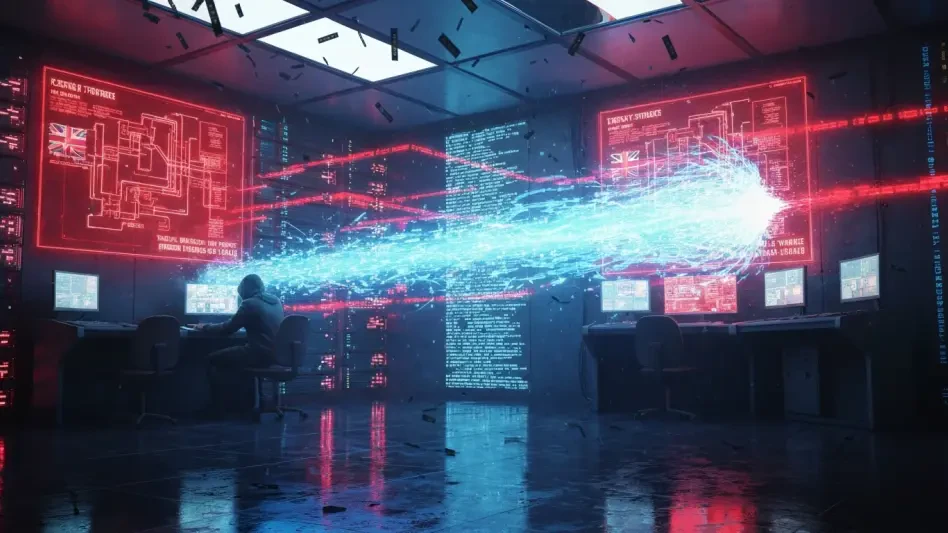
In an era where digital battlefields are as critical as physical ones, the United Kingdom has drawn a new line in the sand against the escalating cyber warfare waged by state-backed actors from Russia and China. Responding to what UK Foreign Secretary Yvette Cooper has labeled growing “hybrid threats,” the British government has deployed one of its most potent non-military weapons: targeted economic sanctions. This decisive move targets companies and individuals identified as “malign actors” directly involved in sophisticated disinformation campaigns and widespread cyberattacks designed to destabilize Western democracies. The sanctions signal a strategic shift from a purely defensive posture to a proactive counter-offensive, aiming to dismantle the very infrastructure that supports these hostile digital operations. This approach acknowledges that modern conflict is no longer confined to traditional domains but is actively fought across social media, critical infrastructure networks, and the global information ecosystem.
Targeting the Architects of Disinformation
The UK’s sanctions have placed a specific and intense focus on key Russian organizations at the forefront of information warfare, aiming to disrupt their operations and penalize their leadership. Among those targeted is the influential pro-war Telegram channel Rybar and its co-owner, Mikhail Sergeevich Zvinchuk, which have been instrumental in spreading Kremlin-approved narratives and disinformation. Another significant entity sanctioned is the Pravfond foundation, a seemingly legitimate organization that UK intelligence has identified as a front for Russia’s GRU spy agency, allegedly used to finance and orchestrate influence operations abroad. Furthermore, the measures extend to the Center for Geopolitical Expertise, a think-tank operated by the prominent nationalist ideologue Alexander Dugin, which provides the intellectual and strategic framework for many of these destabilization campaigns. By targeting these specific pillars of Russia’s hybrid warfare apparatus, the UK aims to sever financial lifelines and publicly expose the mechanisms used to poison the global information environment and undermine democratic processes.
Concurrently, the British government has taken firm action against Chinese entities engaged in wide-ranging and aggressive cyber activities that threaten national security. The sanctions specifically name two Chinese technology firms, i-Soon and the Integrity Technology Group, for their role in conducting extensive and indiscriminate cyber intrusions targeting the UK and its international partners. Unlike the more ideologically driven disinformation campaigns from Russian actors, the operations attributed to these Chinese firms are characterized by their broad scope, targeting a vast array of sectors from government and defense to private industry. This distinction highlights the multifaceted nature of the cyber threats facing Western nations. The UK’s response demonstrates a commitment to holding all state-sponsored actors accountable, regardless of their origin or methods, sending a clear message that a persistent campaign of digital espionage and sabotage against its interests and those of its allies will not be tolerated and will be met with severe economic consequences.
Forging a United Front in a Digital Age
The strategic importance of this new offensive was underscored in a major speech by Foreign Secretary Yvette Cooper, who detailed the evolving nature of modern conflict where digital sabotage and sophisticated disinformation run parallel to physical threats. She warned that these hybrid tactics are deliberately employed to weaken critical national infrastructure and erode Western solidarity, particularly in its support for Ukraine. Cooper provided concrete examples of this new form of warfare, such as the deployment of fabricated websites to interfere with Moldova’s elections and the viral circulation of manipulated videos and false news stories concerning Ukrainian President Volodymyr Zelenskyy. A central theme of her address was the increasing use of generative AI to create and disseminate this content at an unprecedented scale, “flooding social media” with convincing but entirely false narratives. This reality necessitates a fundamental rethink of national defense, one that prioritizes digital literacy, robust cybersecurity, and rapid-response capabilities to counter influence operations in real time.
The broader geopolitical context of the UK’s actions was one of reinforcing alliances in an increasingly fragmented world. Delivering her speech on the 100th anniversary of the Locarno Treaties, a historic symbol of European security agreements, Cooper emphasized the critical need for coordinated international cooperation among Western allies. This call for unity came amid a challenging landscape, marked by persistent questions over the United States’ commitment to NATO under President Donald Trump. However, following a crucial meeting with U.S. Secretary of State Marco Rubio, Cooper firmly reaffirmed the strength of the transatlantic alliance. She asserted that Europe stood strong, was united in its unwavering support for Ukraine, and remained dedicated to increasing its collective defense investments. The UK’s sanctions, therefore, were not just a unilateral action but a clear signal of its leadership role within a revitalized coalition prepared to confront the complex, hybrid threats of the current era.