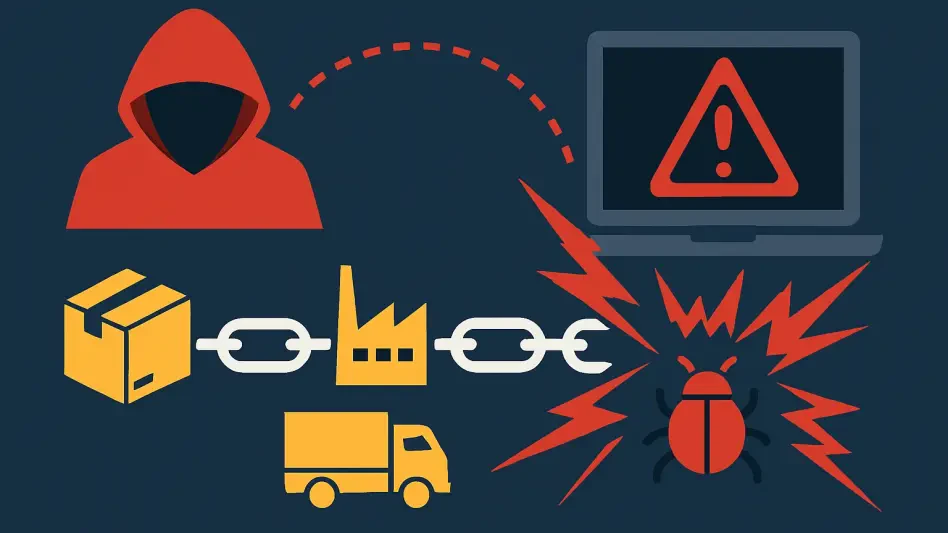
The modern software ecosystem has transformed into a high-stakes hunting ground where the very tools designed to secure the enterprise are being turned against it by sophisticated threat actors like TeamPCP. In a world where digital dependencies are deep and often unvetted, this group has managed to weaponize the inherent trust of developers to stage systemic breaches that ripple across the global infrastructure. This roundup examines the alarming shift from isolated code exploits to massive cloud infiltrations, drawing on insights from the front lines of cybersecurity to understand how these actors are redefining the boundaries of organizational risk. By analyzing recent high-profile incidents, it becomes clear that the digital supply chain is no longer just a vulnerability; it is a direct conduit for state-level and commercial espionage.
The Evolution of Open-Source Poisoning into Systemic Enterprise Breaches
Cybersecurity researchers have observed a fundamental change in how supply chain attacks are executed, moving away from simple script injection toward deep infrastructure compromise. TeamPCP has led this shift by moving beyond the mere disruption of code integrity to focus on long-term, systemic access within global institutions and high-growth technology firms. This strategy relies on the massive scale of open-source ecosystems, where a single poisoned package can reach thousands of downstream targets within hours. By targeting the core of the development process, these actors ensure that their reach is not limited to a single victim but extends to every entity that trusts the compromised repository.
The transition to systemic breaches is also characterized by a sophisticated blending of technical maneuvers and criminal alliances. Rather than working in isolation, TeamPCP has demonstrated a capacity to coordinate with other malicious entities to maximize the impact of their intrusions. This evolution represents a strategic pivot where the initial software exploit is merely the first step in a much larger campaign to dismantle the digital defenses of modern organizations. Consequently, the focus of the security community has shifted from protecting individual files to safeguarding the entire interconnected fabric of the global software supply chain.
Deconstructing the Mechanics of High-Velocity Cloud Infiltration
The Weaponization of Trusted Security Tooling and Developer Libraries
A particularly disturbing trend identified by industry analysts is the subversion of tools specifically designed for vulnerability management and security auditing. Organizations like the European Commission recently found themselves compromised by a malicious iteration of Trivy, a popular scanner intended to find flaws, not create them. This tactical maneuver exploits the “automated trust” ingrained in modern CI/CD pipelines, where DevOps teams frequently pull updates from public repositories without immediate, manual vetting. By embedding payloads in assets like LiteLLM, TeamPCP effectively transforms essential developer libraries into Trojan horses that bypass traditional perimeter defenses.
The irony of this situation is not lost on security professionals, who now see a world where the more an organization invests in automated security tooling, the larger its attack surface might become. This exploitation of the software development lifecycle shows that the threat group understands the inner workings of corporate technology stacks. Instead of trying to break through a firewall, they simply wait for a developer to invite them in through a legitimate-looking update. This reliance on the reputation of established open-source projects makes these attacks incredibly difficult to detect before the damage is already done.
The Shrinking Window: Zero-Day Exploitation and Automated Secret Harvesting
The velocity at which TeamPCP operates has effectively neutralized the traditional timelines that security teams rely on for incident response. In recent breaches, AWS API keys were harvested and utilized on the same day the malicious code was first pushed to public repositories. This “day-zero” exploitation capability means that by the time a vulnerability is officially disclosed or a patch is issued, the attackers have already moved laterally through the victim’s cloud environment. The speed of these attacks suggests a high degree of automation and a well-oiled process for identifying and acting on stolen credentials.
To achieve this near-instantaneous infiltration, the group utilizes automated tools like Trufflehog to scan for and validate sensitive secrets in real-time. This allows them to identify environment variables, SaaS tokens, and access keys almost as soon as they are exposed by the malicious package. Once these “keys to the kingdom” are in hand, the attackers can access S3 buckets, container services, and sensitive databases before the organization even realizes a breach has occurred. This rapid transition from initial access to full-scale data exfiltration represents a significant challenge for modern defensive strategies that prioritize detection over prevention.
The Criminal Conglomerate: Overlapping Jurisdictions of TeamPCP, Lapsus$, and ShinyHunters
The current threat landscape is increasingly defined by what some call a “convergence of chaos,” where different criminal groups specialize in different stages of an attack. TeamPCP often serves as the technical vanguard, securing initial access through supply chain poisoning, while notorious groups like Lapsus$ and ShinyHunters handle the high-stakes extortion and data leaking. This ecosystem functions like a dark-web assembly line, where stolen proprietary source code and sensitive databases are passed between groups to maximize profit. Despite reports of internal friction or “beefing” between these collectives, their combined efforts create a relentless pressure campaign against their victims.
This collaborative but competitive environment makes attribution exceptionally difficult for law enforcement and security researchers alike. When multiple groups claim responsibility for different parts of a breach, it complicates the recovery process and makes it harder for organizations to know who they are actually negotiating with. The overlap in activities also suggests that once a supply chain entry point is established, it becomes a free-for-all for various extortionists. This synergy between technical specialists and professional extortionists ensures that a single supply chain vulnerability can escalate into a multi-front crisis involving ransomware, data leaks, and intellectual property theft.
Beyond Code Integrity: The Shift to Identity and Secret Exposure
Industry experts now recognize that the malicious package itself is rarely the final objective of a TeamPCP operation; it is primarily a gateway to identity theft and secret exposure. The group’s strategy focuses heavily on harvesting the identity and access management (IAM) credentials that govern cloud environments. By turning a software supply chain issue into a comprehensive cloud security crisis, they bypass the need to maintain a persistent presence within the compromised code. Instead, they use stolen identities to operate within the cloud infrastructure as if they were legitimate administrators.
This shift in focus makes the removal of poisoned code a secondary concern compared to the total compromise of an organization’s cloud-based identity infrastructure. Even after the malicious library is deleted and the vulnerability is patched, the stolen credentials may still allow the attackers to maintain access to sensitive resources. This reality forces security teams to reconsider their remediation priorities, shifting focus from “cleaning the code” to “resetting the identity.” The ultimate goal for the attackers is not just to run a malicious script, but to own the underlying infrastructure that powers the modern enterprise.
Transitioning from Passive Remediation to Aggressive Cloud Defense
To effectively counter the expanding reach of TeamPCP, organizations had to move beyond the simple deletion of malicious files toward a scorched-earth approach to credential management. A successful defense required the immediate invalidation of every secret, token, and API key that was even remotely exposed during the window of compromise. Security teams were forced to implement instant rotation protocols, ensuring that compromised identities could not be used for lateral movement. Furthermore, deep-dive inspections of CI/CD runners became a standard procedure to detect hidden backdoors that might have been planted during the initial intrusion.
Proactive threat hunting also emerged as a critical component of the defensive toolkit. Instead of waiting for an alert, organizations began actively searching their AWS and Azure environments for signs of unauthorized reconnaissance or the use of tools like Trufflehog. This shift toward an aggressive posture was driven by the realization that traditional remediation was insufficient against an adversary that moves with such speed. By assuming that a breach had already occurred and acting accordingly, security professionals were able to mitigate the long-term impact of these supply chain infiltrations and close the doors that TeamPCP had so effectively opened.
The Future of Defensive Postures in an Interconnected Ecosystem
The alliance between supply chain attackers and extortionists solidified a new reality where the speed of the attacker is the primary metric for risk. Moving forward, organizations must prioritize the real-time management of secrets and the continuous monitoring of the software bill of materials (SBOM) over traditional perimeter defenses. This identity-centric security posture assumes that a breach can happen at any stage of the development lifecycle, necessitating a policy of “zero trust” for every third-party dependency. As the digital ecosystem becomes more interconnected, the ability to isolate and rotate credentials instantly will be the deciding factor in whether a company survives a supply chain attack.
Future defensive strategies will likely incorporate more robust automated verification for every library and tool pulled into a production environment. Security teams should look toward implementing “clean room” build environments and cryptographic signing for all internal and external dependencies to prevent the injection of malicious payloads. The ultimate lesson from the TeamPCP era was that trust cannot be a default setting in a modern tech stack. By treating every software update as a potential threat and focusing on the integrity of cloud identities, enterprises can build the resilience needed to withstand the next generation of high-velocity supply chain maneuvers.