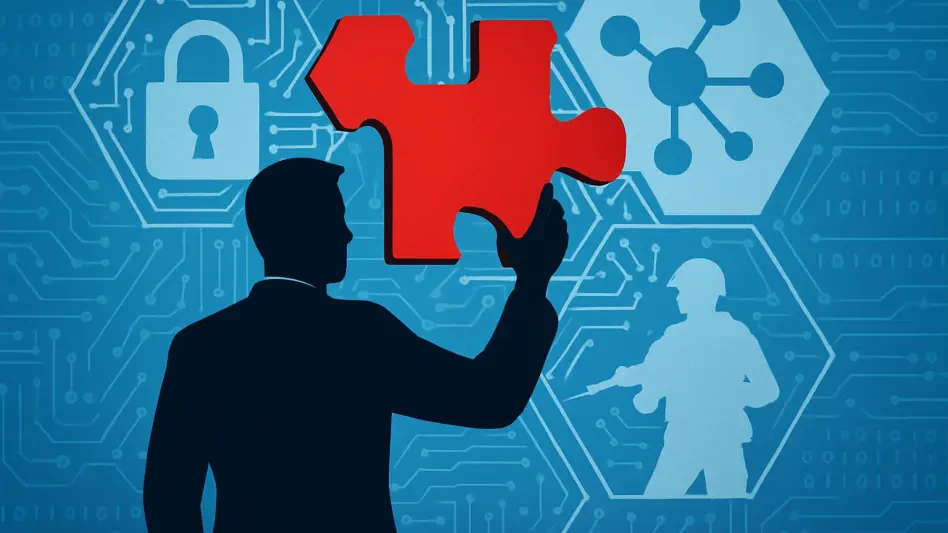

The traditional perimeter of corporate security has dissolved into a fluid landscape where algorithms now dictate the speed of both incoming attacks and defensive responses. For the modern Chief Information Security Officer, the mandate has shifted from managing firewalls and access logs to overseeing a complex ecosystem of autonomous agents and generative models. This transition is not merely a technical upgrade; it represents a fundamental change in leadership, requiring a move toward a model of rigorous AI governance.
Adapting to this environment is no longer a choice for executives who wish to keep their organizations resilient. As threat actors weaponize machine learning to craft flawless phishing campaigns and automated exploits, the defensive side must respond with equal sophistication. This guide examines how the modern security leader can navigate these shifts by focusing on defensive integration, risk management, and a renewed approach to the human-AI talent balance.
The Strategic Importance of AI Integration in Modern Security
Staying ahead of automated threats has become essential for survival as the window between vulnerability discovery and exploitation continues to shrink. Organizations that fail to integrate AI into their security operations center often find themselves overwhelmed by the sheer volume of telemetry data. By leveraging advanced analytics, a security team can move beyond reactive posture toward a predictive model that anticipates breaches before they manifest.
The benefits of this integration extend beyond simple threat detection. AI serves as a powerful force multiplier, enabling faster data analysis and maintaining a competitive edge in what has become a relentless technological arms race. However, this advantage requires a strategic approach. It is about more than just buying the latest tools; it involves creating a cohesive environment where automated systems and human expertise work in tandem to secure the enterprise.
Best Practices for Leading in the AI-Infused Security Era
Leading a security department now requires a delicate balance between fostering innovation and maintaining a robust security posture. CISOs must take actionable steps to integrate these tools while ensuring they do not introduce unforeseen vulnerabilities into the infrastructure. This process starts with aligning every technological decision with the broader risk appetite of the business, ensuring that security is a facilitator rather than a bottleneck.
Focusing on governance and strategic alignment allows the security function to remain agile. It is vital to establish clear protocols that govern how these tools are procured, tested, and deployed across different departments. By doing so, the leadership ensures that the organization reaps the rewards of automation without sacrificing the integrity of its core data assets.
Establishing Comprehensive AI Governance and Oversight
The rise of unauthorized tool usage, often called Shadow AI, presents a significant hurdle for modern governance frameworks. When employees use unvetted generative platforms to process corporate data, the risk of sensitive leaks skyrockets. Implementing a discovery program that identifies these tools is the first step toward regaining control over the digital perimeter and establishing a clear policy for data integrity.
Beyond monitoring usage, the CISO must enforce strict model validation standards to prevent issues like model hallucinations or logic flaws. Every automated system should be subject to continuous auditing to ensure that its outputs remain accurate and unbiased. Setting these high standards for integrity ensures that the organization’s reliance on automation does not lead to a degradation of its defensive capabilities.
Prioritizing Human-Centric Upskilling Over Automation
While the allure of total automation is strong, the most effective leaders recognize that technology cannot replace the nuanced intuition of a seasoned analyst. Rather than viewing AI as a replacement for human talent, the focus should remain on training existing staff to work alongside these systems. This approach addresses the skills gap by enhancing the capabilities of the current workforce rather than waiting for a perfect technological solution.
Using AI to handle repetitive, low-level tasks can significantly reduce analyst burnout and improve the overall quality of work. When the machine handles initial data sorting and alert correlation, humans are free to focus on high-level strategy and complex investigations. This synergy creates a more resilient department where technology acts as a support structure for human ingenuity.
Aligning AI Security with Broader Business Objectives
A successful CISO must be able to translate technical risks into the language of the boardroom. Issues such as algorithmic bias or model drift can have real-world financial and reputational consequences. By framing these concerns in terms of business impact, the security leader fosters a culture of cross-departmental collaboration that embeds protection into the core of the company’s strategy.
Proactive risk frameworks allow for the safe and rapid deployment of new products, turning security from a “no” department into a business enabler. When the board understands that a robust AI security posture actually accelerates time-to-market, they are more likely to provide the necessary resources. This alignment ensures that the organization remains both secure and competitive in an increasingly automated marketplace.
Final Evaluation: Balancing Machine Speed with Human Intuition
Security leaders moved toward a more nuanced perspective, acknowledging that machine speed must always be tempered by human skepticism. The most successful organizations were those that treated AI as a sophisticated assistant rather than an autonomous decision-maker. Leaders discovered that while algorithms could process data at an incredible scale, the final judgment on critical threats remained a human responsibility.
The transition from a technical gatekeeper to a strategic business leader required a focus on data maturity and rigorous oversight. Future considerations for these executives involved the continuous refinement of governance models as the technology evolved. Ultimately, the modern security mandate was defined by the ability to harness the power of the machine while never losing sight of the human expertise that defined the organization’s true resilience.