
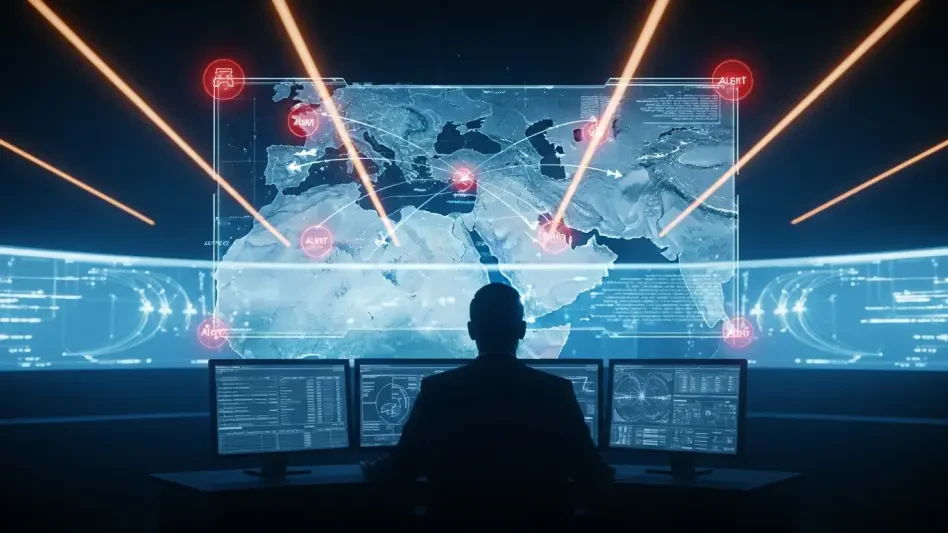
The traditional dividing line between physical battlefields and digital networks has effectively dissolved as regional powers synchronize missile barrages with sophisticated smartphone intrusions to maximize civilian psychological distress. This integration represents a fundamental shift in how modern states project power, moving beyond the binary of war or peace toward a state of constant, low-level engagement. The study examines how digital proxies and state-sponsored actors have weaponized technology to act as a force multiplier for conventional military hardware. By analyzing the intersection of cyber capabilities and kinetic force, the research addresses how these synchronized efforts undermine the stability of national infrastructures and the mental resilience of entire populations.
The central focus of this investigation rests on the concept of “physi-digital” coordination, a strategy where digital exploits are timed to coincide exactly with physical strikes. This technique moves cyber warfare from the realm of intelligence gathering into a tool of active tactical psychological operations. The research explores the logistical challenges of such synchronization and the strategic advantages it offers a nation that faces significant conventional military disadvantages. It asks whether traditional defense mechanisms are prepared for a reality where a missile alert is immediately followed by a targeted digital lure, exploiting the heightened vulnerability of citizens during moments of extreme crisis.
The Evolution of Iranian Cyber Operations in the Global Landscape
Over the last several years, the landscape of digital confrontation has shifted from isolated hacking incidents to a continuous campaign aimed at the structural integrity of adversaries. This research is situated within the broader context of Middle Eastern tensions, where digital tools have become the preferred weapon for asymmetric warfare. Unlike conventional military assets, which require massive industrial support and visible mobilization, cyber operations provide a low-cost, high-impact alternative that allows for persistence without the immediate risk of total war. This evolution reflects a calculated move by state actors to bypass the technological and firepower advantages of superior military powers through digital ingenuity and relentless harassment.
The importance of this study extends far beyond regional borders, as the tactics pioneered in these conflicts often serve as a blueprint for global actors. As digital connectivity becomes more deeply embedded in critical infrastructure, the lessons learned from the Iranian model provide vital data for global security experts and policymakers. Understanding the nuances of these operations is essential for developing robust defensive postures that can protect everything from municipal water supplies to the sanctity of democratic electoral processes. The study highlights the broader relevance of cyber resilience as a cornerstone of modern national sovereignty, emphasizing that a failure to secure the digital perimeter can render even the most advanced physical defenses obsolete.
Research Methodology, Findings, and Implications
Methodology
The methodology for this research involved a multi-layered analysis of digital forensic data, network traffic patterns, and geopolitical event logs. Researchers utilized data from leading cybersecurity firms, such as Check Point Research and DigiCert, to identify and categorize over 5,800 unique cyberattacks attributed to approximately 50 distinct groups. By mapping the timestamps of these digital intrusions against the timeline of physical military actions, the study established clear patterns of tactical synchronization. This approach allowed the team to move beyond anecdotal evidence and provide a statistical foundation for the concept of coordinated physi-digital strikes.
In addition to quantitative data, the study employed qualitative analysis of the software payloads used in these attacks. By deconstructing the code of spyware targeting mobile devices, investigators were able to determine the extent of the access granted to hackers, including control over cameras, microphones, and location tracking. The research also incorporated a review of state-sponsored media and disinformation campaigns, using artificial intelligence tools to track the spread and engagement of deepfake content across social media platforms. This holistic approach ensured that the findings accounted for the technical, psychological, and informational dimensions of the conflict.
Findings
The most significant discovery was the precise timing of digital intrusions during physical kinetic events, such as the deployment of deceptive safety links during missile strikes. These links, which promised real-time shelter information, were actually delivery mechanisms for potent spyware that compromised the devices of civilians when they were most vulnerable. Furthermore, the data indicated a shift toward high-volume, low-impact attacks designed to saturate defensive capabilities. While many of these strikes targeted minor vulnerabilities, their cumulative effect was to drain the resources of security organizations and maintain a constant state of atmospheric fear across the target nation.
Another critical finding was the deliberate targeting of “soft” infrastructure, particularly the medical sector and supply chains. Researchers identified instances where destructive ransomware was deployed against health care providers and medical technology firms like Stryker, with no accompanying ransom demand. This suggests that the primary objective was not financial gain but the deliberate disruption of essential societal services. The findings also highlighted the aggressive use of AI-generated disinformation, with some deepfake military content garnering over 100 million views, effectively muddying the waters of public perception and undermining trust in authentic information sources.
Implications
The implications of these findings are profound for the future of international security and the definition of state sovereignty. The success of synchronized digital and physical attacks suggests that defensive doctrines must now integrate civilian psychological support with traditional cybersecurity measures. Because these attacks target the “weakest links” in the national fabric, such as legacy systems in municipal utilities and small-scale private companies, national security can no longer be seen as the exclusive domain of the military. It requires a whole-of-society approach where private industry and public utilities are viewed as frontline components of the national defense infrastructure.
Moreover, the persistent nature of these operations implies that the distinction between peacetime and wartime has effectively evaporated in the digital domain. This “permanent conflict” model necessitates a shift from reactive patching to proactive, automated defense systems powered by artificial intelligence. The ability of relatively small digital groups to project power across continents means that distance no longer provides the security it once did. Organizations must recognize that their digital footprint is a liability that can be exploited by foreign state actors to pressure their respective governments, turning private businesses into inadvertent pawns in geopolitical power struggles.
Reflection and Future Directions
Reflection
Reflecting on the study reveals the immense complexity of attributing cyber operations to state actors with absolute certainty. While the patterns of synchronization and the nature of the targets pointed clearly toward specific geopolitical interests, the use of proxies and fragmented hacking groups created a layer of plausible deniability that remains difficult to pierce. One of the primary challenges encountered was the sheer speed at which digital tactics evolved during the research period; what began as traditional phishing campaigns quickly transformed into sophisticated AI-driven disinformation efforts. This required a constant recalibration of the research tools and a more flexible approach to data categorization.
The study could have been expanded by incorporating a deeper psychological analysis of the affected civilian populations to measure the long-term impact of “digital terror” on social cohesion. While the technical data confirmed the presence of the attacks, the human element remains a fertile ground for more detailed investigation. Overcoming the barriers of data silos between private security firms and government agencies was another hurdle, though the collaborative nature of the findings eventually provided a more comprehensive view of the threat landscape. The process underscored the necessity of real-time data sharing in the modern era of rapid-fire digital conflict.
Future Directions
Future research should prioritize the development of more advanced attribution frameworks that can see through the mask of proxy organizations more effectively. There is an urgent need to explore how quantum computing might eventually disrupt current encryption standards, potentially opening a new and even more volatile chapter in this ongoing struggle. Additionally, scholars should investigate the role of satellite-based internet services in providing resilient communications during digital blackouts, and how state actors might move to weaponize or disable these orbital assets. The intersection of space-based technology and terrestrial cyber warfare is an area that remains largely unexplored.
Another critical area for future exploration involves the ethics and efficacy of “active defense” or hacking back in the digital realm. As nations seek ways to deter these persistent threats, the risks of escalation through retaliatory digital strikes must be carefully weighed against the benefits of disruption. Investigating the potential for international norms or treaties that specifically address the targeting of medical facilities and civilian infrastructure during cyber operations could also provide a path toward a more stable digital environment. The goal of future studies must be to stay ahead of the curve, anticipating the next wave of technological integration before it can be used to destabilize the global order.
Conclusion: Redefining National Security in the Age of Permanent Cyber Conflict
The investigation into the digital strategies employed by regional actors revealed a sophisticated fusion of cyber operations and physical force that fundamentally changed the nature of modern geopolitical friction. By synchronizing digital intrusions with kinetic strikes, state actors successfully leveraged human vulnerability to amplify the chaos of traditional warfare. The research demonstrated that the medical sector and civilian infrastructure were no longer off-limits but had become primary targets in a strategy designed to undermine societal resilience through persistent, low-level harassment. These findings established that the era of isolated, purely military conflict has passed, replaced by a continuous digital struggle that knows no geographic boundaries.
The study concluded that the rapid integration of artificial intelligence into disinformation and attack automation served as a force multiplier that demanded a complete reimagining of national defense. Moving forward, the international community was urged to foster deeper cooperation between the public and private sectors to secure the decentralized networks upon which modern life depends. Addressing these threats required the establishment of new digital norms and the deployment of autonomous defensive systems capable of matching the speed of modern exploits. Ultimately, the research provided a vital roadmap for navigating a world where security is defined not by the strength of a nation’s borders, but by the integrity of its code and the resilience of its information ecosystem.