
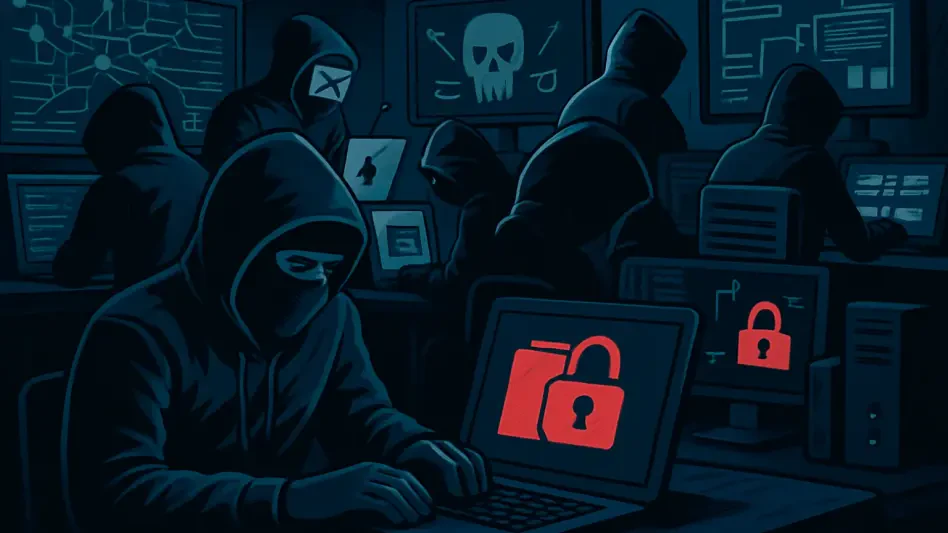
The global crackdown on high-level cyber extortion reached a pivotal milestone as federal authorities secured a guilty plea from the primary administrator of the notorious Phobos ransomware group. For years, this criminal enterprise operated with a level of sophistication that allowed it to bypass traditional security perimeters, eventually leading to the extraction of millions of dollars from vulnerable organizations. Evgenii Ptitsyn, a forty-three-year-old Russian national, stood at the center of this web, coordinating a vast network of affiliates who targeted everything from local school districts to international healthcare providers. His recent extradition from South Korea to the United States represents one of the most significant victories for international law enforcement in the ongoing battle against digital piracy. By centralizing the management of malicious code, Ptitsyn enabled even low-level hackers to launch devastating attacks, fundamentally changing how ransomware functions as a commercial product in the dark web ecosystem.
The Architecture of a Criminal Franchise
At the heart of Ptitsyn’s operations was the Ransomware-as-a-Service model, a business strategy that decentralized the labor of cyberattacks while centralizing the profits for its leaders. Under this specific arrangement, the Phobos group developed and maintained a robust platform where co-conspirators could purchase or license ready-to-use encryption software. These affiliates were tasked with the difficult work of identifying and breaching target networks, often utilizing stolen remote desktop protocol credentials or sophisticated phishing campaigns to gain an initial foothold. Once inside, the malicious actors would exfiltrate sensitive data before deploying the ransomware to lock down the system. The Phobos leadership provided the necessary decryption tools and technical support, ensuring that the extortion process remained efficient and professional. This streamlined approach allowed the syndicate to scale its operations rapidly, reaching a volume of attacks that would have been impossible for a small, isolated group of hackers.
The financial logistics of the Phobos syndicate were meticulously managed through a series of cryptocurrency wallets controlled directly by Ptitsyn and his inner circle. For every successful breach, affiliates were required to pay a standardized fee of approximately three hundred dollars just to obtain the unique decryption key needed to restore a victim’s files. Beyond this initial entry cost, the administrative team typically claimed a twenty-five percent commission on the final ransom payments, creating a steady stream of passive income for the developers. In some instances, Ptitsyn negotiated even larger shares of the proceeds, depending on the scale of the target and the level of support provided during the negotiation phase. This hierarchical structure ensured that the primary developers remained insulated from the risks associated with the actual intrusion, while still reaping the majority of the financial rewards. By treating cybercrime as a structured corporate venture, the group successfully laundered millions of dollars through complex digital channels.
Quantifying the Human and Financial Cost
The human impact of these digital sieges was particularly acute given the Phobos group’s willingness to target essential services and critical infrastructure providers. Over one thousand victims were identified globally, with nearly nine hundred of these organizations located within the United States. The list of targets included pediatric hospitals, specialized healthcare clinics, and public school districts that lacked the resources to combat high-level threats. Even more concerning was the group’s focus on contractors for the Department of Defense and the Department of Energy, suggesting that the syndicate was willing to risk national security implications for the sake of financial gain. For many of these organizations, the encryption of their data meant more than just financial loss; it meant the immediate cessation of life-saving medical services and the exposure of sensitive student or military records. The diverse nature of the targets demonstrated a callous disregard for the societal role of these institutions, prioritizing profit over the safety of citizens.
While the direct ransom payments were staggering, the total economic devastation caused by Phobos far exceeded the initial thirty million dollars collected by the hackers. Federal investigators determined that the true cost of these attacks, when accounting for system restoration, forensic audits, and legal fees, surpassed thirty-nine million dollars. For instance, a single American educational institution reported losses exceeding four million dollars as it struggled to rebuild its digital infrastructure after a total system lockdown. The hidden costs of downtime often outweighed the ransoms themselves, as businesses lost weeks of productivity and spent massive sums on emergency IT support to recover what the hackers had compromised. This secondary financial burden placed many smaller entities on the brink of bankruptcy, illustrating how a single successful intrusion can have long-lasting economic consequences. The restitution ordered by the court reflects the full scope of this damage, aiming to compensate victims not just for the ransoms paid, but for the extensive recovery efforts required.
Legal Accountability and Future Defense
The legal resolution of this case involved a complex international effort that culminated in the forfeiture of over one million dollars in personal assets and a massive restitution mandate. Ptitsyn pleaded guilty to wire fraud conspiracy, a charge that carries a maximum penalty of twenty years in federal prison, marking a decisive end to his tenure as a digital kingpin. This prosecution sent a clear signal to international cybercriminals that the reach of the law extends beyond physical borders, especially when critical infrastructure is compromised. The transition of Ptitsyn from a powerful administrator to a federal inmate served as a stark reminder of the risks associated with large-scale digital extortion. For the law enforcement community, this case validated the effectiveness of international cooperation and cryptocurrency tracking in dismantling the financial engines of global crime. However, the closure of this case also highlighted the persistent vulnerabilities that exist within many public and private networks that remain under constant threat of similar attacks.
Moving forward, the focus for organizations shifted toward proactive defense and the implementation of zero-trust architecture to mitigate the risks posed by Ransomware-as-a-Service groups. Security experts emphasized the necessity of robust backup systems that were isolated from the main network to prevent encryption during an active breach. Additionally, the enforcement of multi-factor authentication across all remote access points became a standard requirement for maintaining insurance coverage and regulatory compliance. The case of the Phobos syndicate taught the industry that relying on the benevolence of hackers for a decryption key was a failing strategy, as many victims never fully recovered their data even after paying. Instead, the emphasis was placed on rapid detection and containment, ensuring that an initial breach could not escalate into a full-scale operational shutdown. By applying these lessons, modern enterprises began to build the resilience needed to withstand the next generation of cyber threats while ensuring that extortionists could no longer operate with total impunity.