
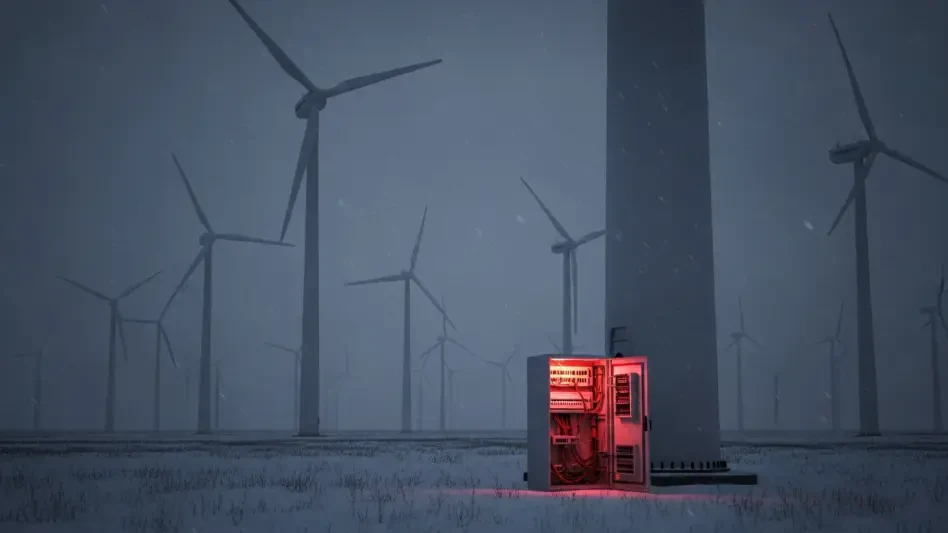
The digital silence that fell over dozens of Polish renewable energy facilities during a bitter December 2025 winter storm did not trigger a widespread blackout, yet it sent a thunderous warning across the global energy sector about the fragility of modern power infrastructure. This sophisticated cyberattack, though ultimately thwarted in its goal of causing mass power disruption, succeeded in revealing a dangerous new blueprint for compromising the world’s increasingly decentralized and interconnected energy grids. The incident serves as a critical case study, demonstrating how a tactical failure for an adversary can become a strategic wake-up call for an entire industry, exposing vulnerabilities that extend far beyond Poland’s borders.
When Failure Is a Terrifying Success a New Era of Energy Warfare
The assault on Poland’s power systems was a close call that highlighted the malicious precision of modern cyber warfare. Timed to coincide with severe weather and the New Year’s holiday, the operation was designed for maximum impact, targeting the very renewable energy sources the nation depends on for grid stability. While the lights stayed on, the attack provided a chilling proof of concept, demonstrating a viable strategy to blind, disrupt, and potentially destabilize a country’s power supply by targeting its green energy assets.
This event marks a pivotal moment for global infrastructure security precisely because it did not result in a catastrophic outage. The attackers successfully penetrated networks, moved laterally through systems, and deployed destructive malware, achieving a critical objective: a “loss of view” for grid operators. This proved that they could effectively sever the command and control links to power-generating assets, leaving them running wild on the grid. The success was not in the outcome but in the methodology, establishing a repeatable playbook that could be deployed elsewhere with far more devastating consequences.
The New Frontline Why Your Power Is More Vulnerable Than Ever
The global push toward a sustainable future has fundamentally altered the energy landscape, leading to a rapid proliferation of Decentralized Energy Resources (DERs) such as wind turbines and solar farms. This transition away from centralized fossil-fuel plants is essential for climate goals but has inadvertently created a vastly expanded and more complex attack surface for adversaries. Each new renewable energy installation adds another node to the network, multiplying the potential entry points for a cyberattack.
Connecting these thousands of disparate assets creates a security challenge of immense scale. Unlike traditional power plants with robust, long-standing security perimeters, many DERs are deployed with minimal onsite security and often rely on standard, internet-connected operational technology (OT) that can be easily compromised. The Polish incident starkly illustrated this vulnerability, as attackers leveraged insecure edge devices to gain their initial foothold. This is not merely a Polish problem; it is an inherent risk for any nation embracing the green energy revolution, from the United States to Australia.
Anatomy of the Polish Grid Attack a Step by Step Breakdown
The offensive, which unfolded on December 29 and 30, 2025, was a meticulously coordinated campaign. Attackers simultaneously targeted over 30 renewable energy farms, a private manufacturing company, and a combined heat and power plant. This multi-pronged approach indicates a high level of reconnaissance and planning, aimed at creating widespread disruption across different segments of the energy and industrial sectors.
The attackers followed a classic but brutally effective playbook. Their initial access was gained through vulnerable, internet-facing devices on the network edge. From there, they moved laterally across systems by exploiting one of the most basic yet pervasive security flaws in the industrial world: unchanged default credentials on control system hardware. This simple oversight allowed them to escalate privileges and gain access to the operational heart of the facilities without triggering immediate alarms.
Once in position, the adversary deployed a destructive “wiper” malware. This payload was not designed for espionage but for pure disruption. It systematically erased data on human-machine interfaces, corrupted the firmware of critical OT devices, and severed communication links to system operators. The immediate result was a “loss of view,” a condition where grid managers could no longer see or control the output of the affected facilities. While the turbines continued to spin, they were effectively operating blind, an untenable situation for maintaining a stable power grid.
The Shadowy Adversary Expert Attribution and a Stark Warning
A strong consensus quickly formed among international cybersecurity authorities regarding the identity of the perpetrators. Polish officials at CERT Polka, the U.S. Cybersecurity and Infrastructure Security Agency (CISA), and the industrial security firm Dragos all pointed to a highly sophisticated, Russia-aligned threat group. Dragos attributed the activity to the actor it tracks as Electrum, which has significant operational overlaps with the infamous group known as Sandworm, the entity behind previous devastating attacks on Ukraine’s power grid.
Robert Lee, CEO of Dragos, emphasized the unprecedented nature of the assault, calling it the first major, coordinated attack targeting DERs at scale. He issued a stark warning about its global implications, explaining that while Poland’s grid was resilient enough to withstand the disruption, the outcome could have been drastically different elsewhere. “If this same style of attack happened in the US or Australia or certain parts of Europe such as the Nordics where they’re very much more DER heavy, it would have been potentially catastrophic for the system,” Lee stated. This chilling “what if” scenario underscores that the same attack vector could trigger cascading failures in regions with a greater reliance on renewable energy.
From Reactive to Proactive a Framework for Defending Critical Infrastructure
In the wake of the attack, CISA released urgent countermeasures aimed at closing the most obvious security gaps. The agency’s primary recommendations focused on eliminating the easiest entry points, calling for the immediate changing of all default credentials on OT systems and mandating that vendors ship products with unique passwords. Furthermore, CISA stressed the importance of hardening hardware by prioritizing firmware verification to ensure devices have not been tampered with and are running authentic code.
Building on these immediate fixes, Dragos outlined a more comprehensive, strategic defense model centered on resilience. The firm advocated for the development of robust incident response plans tailored specifically to OT environments where control systems are compromised. This involves establishing clear decision-making authority and running tabletop exercises to prepare for worst-case scenarios. Critically, this strategy hinges on implementing a defensible architecture through network segmentation to isolate critical systems, enforcing secure remote access controls, and deploying comprehensive network monitoring to detect and respond to threats in real time.
The Polish grid incident was not the catastrophe it was intended to be, but it served its purpose as a harbinger. The event conclusively demonstrated that the vulnerabilities in the burgeoning green energy sector were no longer theoretical. For asset owners and governments worldwide, the attack provided a clear and urgent directive: the time for proactive defense was now, before a similar attack succeeds in turning the lights off.