
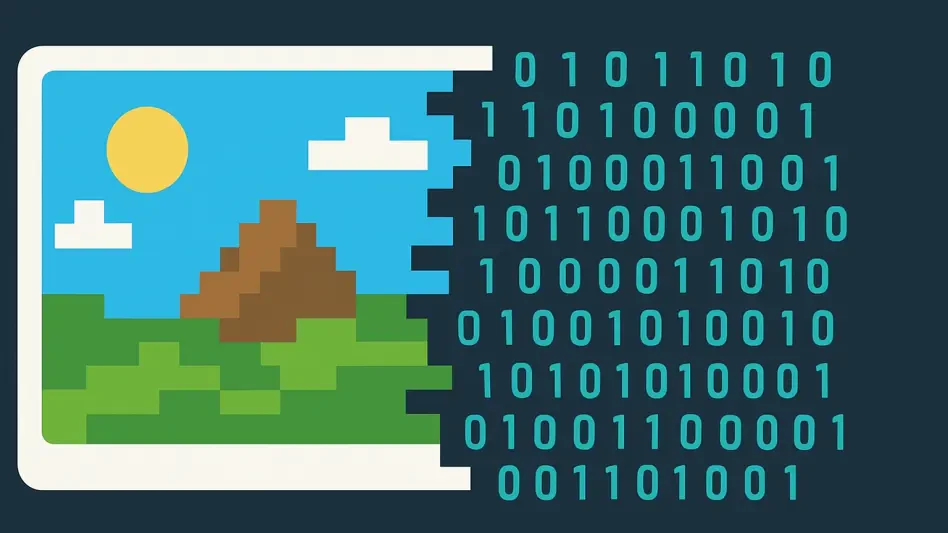
By manipulating pixel data and metadata in ordinary image files, the Earth Sirrush collective successfully hides its ‘CINDERBLOT’ malware from signature-based detection systems. This group, a Russia-aligned threat actor active since 2022, has maintained a relentless focus on Ukrainian national security assets, including border security, logistics, and defense agencies. Known in the intelligence community as UAC-0099 or SHADOW-EARTH-065, Earth Sirrush prioritizes strategic persistence over immediate financial gain, aiming to embed itself deep within the supply chains supporting the current conflict. Their tactical approach has shifted significantly throughout 2026, moving away from public vulnerability exploits like the WinRAR CVE towards refined social engineering. By deploying deceptive websites that feature fraudulent antivirus verification badges, they create an atmosphere of trust that encourages users to download malicious archives. These files often masquerade as drone procurement documents or official state directives to ensure a high success rate among targeted personnel within the defense sector.
Tactical Evolution: From Exploits to Social Engineering
The strategic shift toward social engineering marks a significant departure from the group’s previous reliance on technical software flaws. In current operations, Earth Sirrush developers have crafted a psychological trap that capitalizes on the heightened security awareness of their targets. By presenting a professional interface that supposedly validates the safety of a download, the attackers neutralize the natural skepticism of modern users. These fraudulent verification badges are not merely cosmetic; they are integrated into a larger ecosystem of deceptive web infrastructure designed to mirror legitimate government or corporate portals. This transition highlights a broader trend in 2026 where threat actors recognize that human trust is often easier to exploit than hardened software perimeters. Consequently, the group has successfully breached several highly secured logistics networks by simply appearing to be a helpful security service, demonstrating that the human element remains the most vulnerable component in the defense of critical infrastructure.
The Mechanics: How Digital Images Hide Threats
A defining characteristic of Earth Sirrush’s methodology is the use of steganography to hide malicious code within standard PNG image files. This technique allows the group to bypass traditional signature-based security tools that typically do not scan the internal pixel data of images for executable threats. By utilizing code appending or direct pixel manipulation, the attackers can embed encrypted content that remains invisible to the naked eye and most automated scanners. For example, the CINDERBLOT malware is often distributed as an innocuous-looking image of a document or a schematic. Within the actual pixel values, the binary data for the payload is woven into the least significant bits, ensuring that the image still displays correctly if opened by a standard viewer. This level of obfuscation ensures that the malicious file can reside on a disk or travel through a network gateway without raising the suspicion of automated defensive systems that are conditioned to look for common malware headers or known suspicious file extensions.
Persistence Logic: Automated Extraction and Execution
To activate the hidden payloads, the group relies on custom PowerShell scripts that programmatically extract and execute the data stored within the image files. These scripts are meticulously designed to locate the hidden markers within the PNG structure, pull the encrypted bytes, and assemble the final malware in the system memory. This process effectively leaves no trace on the physical hard drive, as the decrypted payload never exists as a traditional file that could be easily flagged by antivirus software. To ensure the malware maintains a persistent presence, these scripts are often paired with scheduled tasks that execute automatically upon system startup. By utilizing the legitimate Windows task scheduler, Earth Sirrush ensures that its access is preserved even after a system reboot or a manual shutdown. The combination of visual camouflage in images and the use of native administrative scripting makes the infection process exceptionally difficult for standard defense mechanisms to interrupt or identify during routine scans.
Strategic Capabilities: Malware Sophistication and Infrastructure
Beyond initial infection techniques, Earth Sirrush has expanded its toolkit to include specialized software designed to exploit the inherent trust users place in professional environments. One such innovation is LUNCHPOKE, a malicious plugin specifically engineered for the widely used text editor Notepad++. By leveraging a technique known as DLL proxying, the group ensures that their malicious code is automatically executed whenever a user launches the legitimate application. This strategy is particularly effective in technical environments where developers and system administrators frequently use text editors for handling sensitive configurations or logs. Because Notepad++ is a trusted, signed application, the malicious background activities of LUNCHPOKE often fly under the radar of Endpoint Detection and Response (EDR) solutions. This allows the attackers to maintain a low-profile presence on a workstation for extended periods while they monitor user activity or prepare for the deployment of even more intrusive secondary payloads across the network.
ASHVEIN: A Comprehensive Remote Access Solution
The primary tool for long-term data exfiltration within the Earth Sirrush arsenal is ASHVEIN, an undocumented .NET-based information stealer and Remote Access Trojan. ASHVEIN grants the attackers comprehensive control over a compromised host, enabling them to harvest browser credentials from Chrome and Firefox, capture high-resolution screenshots, and execute remote commands via PowerShell. This malware is not just a simple data harvester; it is a full-featured command center that allows the threat actor to pivot through the internal network of the victim. ASHVEIN is also designed with a high degree of operational security, frequently checking for the presence of debugging tools or sandboxed environments before initiating its malicious routines. If it detects that it is being analyzed by a security researcher, it will immediately terminate or alter its behavior to hide its true capabilities. This level of self-awareness makes the Trojan a formidable opponent for forensic investigators attempting to map out the extent of a breach.
Infrastructure Analysis: Organized Backend Operations
The backend infrastructure supporting these operations is as organized as the malware itself, utilizing a sophisticated network of command-and-control servers. Earth Sirrush frequently employs the Regery domain registrar and Cloudflare fronting to mask the true IP addresses of their infrastructure, making it difficult for researchers to take down their servers or trace them back to a physical location. Many of these backend systems are concentrated within specific hosting networks, such as BL Networks, which suggests a high degree of planning and resource allocation. Attribution is established through a consistent pattern of shared encryption algorithms and reused digital signatures across different campaigns, indicating a centralized development pipeline. Their operational security is further evidenced by their ability to leave implants dormant on a network for months at a time. These dormant agents wait for a specific trigger or a strategic moment to resume active espionage, ensuring that the group can maintain access even if their primary communication channels are compromised.
Future Security: Defensive Protocols and Mitigation
As the analysis of recent campaigns concluded, security professionals recognized that defending against such stealthy steganography required a move toward behavioral monitoring. Traditional blocklists proved insufficient against the group’s use of legitimate images and trusted text editor plugins. Instead, organizations began implementing robust PowerShell logging, such as Script Block Logging, to identify the specific commands used for data extraction from image files. Auditors also focused on the unusual behavior of common applications, such as Notepad++ attempting to load unauthorized DLLs or renamed system utilities performing unexpected network connections. System integrity checks were strengthened to monitor the creation of executable files in public libraries or the modification of scheduled tasks by non-administrative users. These proactive measures, combined with targeted user awareness training regarding fake antivirus prompts, established a more resilient defensive posture that significantly hampered the group’s ability to maintain long-term persistence within Ukrainian infrastructure.