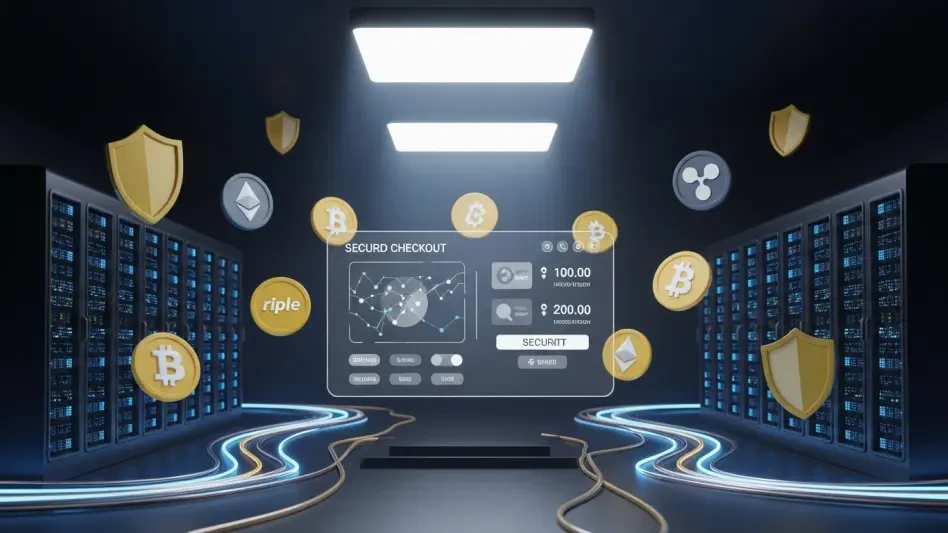
The rapid evolution of dark web marketplaces has fundamentally altered the global threat landscape by transforming disorganized criminal forums into highly efficient, professionalized digital storefronts. By 2026, these platforms have successfully moved beyond their origins as simple underground message boards to become the primary infrastructure for the global trade of stolen data and specialized cybercrime services. These modern digital hubs mirror the sophisticated user interfaces and advanced functionality of legitimate e-commerce giants, offering intuitive search filters, integrated reputation systems, and seamless checkout processes. While they maintain a veneer of familiarity for the average user, the underlying architecture is built entirely on anonymity networks and volatile ecosystems designed to facilitate criminal intent on a massive scale. For cybersecurity professionals, these marketplaces represent more than just a nuisance; they are a vital early warning system that provides a window into the current methods and targets of threat actors worldwide.
Profiles of the Primary 2026 Marketplaces
Identity and Financial Theft: The Market Leaders
The Russian Market has solidified its position as the preeminent source for stealer logs, focusing heavily on the commoditization of compromised digital identities. Unlike the simple credential lists of the past, the inventory on this platform consists of comprehensive data packages known as logs, which are harvested from infected machines across the globe. These logs include not only usernames and passwords but also browser cookies, session tokens, and device fingerprints that allow attackers to bypass multi-factor authentication by hijacking active sessions. This technical shift has made the Russian Market a top priority for security operations centers, as the presence of a single session token can grant an attacker immediate access to corporate cloud environments or internal communication tools. By analyzing the metadata associated with these logs, defenders can often identify an initial infection within their network before the breach escalates into a full-scale data exfiltration event or ransomware deployment.
In the realm of financial fraud, Brian’s Club remains a dominant force by maintaining a highly organized and searchable database of stolen payment card information. The platform operates with a level of technical sophistication that allows buyers to filter stolen assets by bank identification numbers, issuing institutions, and specific geographic regions, which significantly enhances the success rate of unauthorized transactions. This level of granularity has turned carding from a game of chance into a streamlined business process for cybercriminals. Financial institutions and risk intelligence teams actively monitor the listings on Brian’s Club to track the lifecycle of leaked card data and anticipate potential financial losses across specific customer segments. The platform’s ability to maintain a massive inventory of fresh, verified data despite constant pressure from law enforcement underscores the resilience and deep integration of the criminal supply chain in 2026.
STYX Market serves as a critical bridge between the initial theft of data and the eventual monetization of those assets by providing specialized post-theft services. Rather than just selling raw data, STYX offers a comprehensive suite of tools for financial laundering, including mule accounts, cash-out services, and sophisticated cryptocurrency mixing protocols. This focus on the “back-end” of the criminal economy makes it an essential hub for sophisticated threat actors who need to move large sums of money through the global financial system without alerting regulatory authorities. Banks and financial crime units study the activity on STYX to gain insights into the complex routes and laundering techniques currently in favor among international syndicates. By understanding the mechanics of how illicit funds are converted into usable assets, investigators can more effectively collaborate with global partners to disrupt the financial incentives that drive the majority of cybercrime activity.
Regional Operations: Resilient Infrastructure and Local Trades
The rise of WeTheNorth highlights a significant trend toward the regionalization of illicit trade, specifically targeting the Canadian and North American domestic markets. By specializing in localized contraband and counterfeit identity documents, this platform effectively bypasses many of the logistical challenges and heightened scrutiny associated with international shipping and global monitoring. Its inventory is tailored to the specific regulatory and financial systems of its target region, making it an especially dangerous tool for identity-protection teams and regional law enforcement. The success of WeTheNorth demonstrates that as global authorities improve their ability to track international transactions, criminal enterprises are responding by creating smaller, more focused hubs that can fly under the radar while still maintaining high levels of profitability. This localization creates a fragmented threat environment where security professionals must account for regional nuances in the types of data and services being traded.
Torzon Market is frequently cited by threat researchers not for a specific type of inventory, but for its remarkable infrastructure resilience and survival tactics in a hostile digital environment. Since 2022, the platform has successfully navigated numerous distributed denial-of-service attacks and coordinated law enforcement efforts by utilizing a complex web of rotating entry points and hidden mirrors. This technical agility has made Torzon a barometer for the overall health and confidence of the dark web community, as its continued uptime signals to vendors and buyers that underground trade remains viable despite increased pressure. Analysts track the technical configurations and hosting patterns of Torzon to understand the defensive measures being adopted by marketplace administrators across the ecosystem. The platform’s ability to maintain a functional marketplace while under constant siege serves as a reminder that the technical battle between illicit hosting providers and cybersecurity defenders is an ongoing arms race that requires continuous adaptation.
Emerging Hubs: Initial Access and Market Migration
Exodus Marketplace has emerged as the primary destination for the trade of corporate access, serving as a high-stakes auction house for ransomware operators and initial access brokers. Its listings are centered around high-value targets, offering everything from Remote Desktop Protocol credentials and Virtual Private Network access to stolen malware logs from executive-level employees. For many global organizations, discovering their internal network details on Exodus is the first and only warning they receive before a catastrophic ransomware event occurs. The marketplace facilitates a highly specialized division of labor where one group of hackers handles the initial intrusion while another group buys that access to deploy more destructive payloads. This separation of tasks has increased the speed and scale of corporate attacks, making it imperative for security teams to monitor Exodus for any signs of their infrastructure being offered to the highest bidder in the criminal underground.
Vortex Market represents the opportunistic and adaptable nature of the dark web as it reacts to the inevitable collapse of older, more established platforms. Whenever a major marketplace is seized by authorities or shut down due to an internal exit scam, the displaced population of vendors and buyers quickly migrates to newer entities like Vortex. Analysts track these migration patterns with great care, as they provide critical data on which vendors are active and what types of illicit products are currently trending. The rapid rise of Vortex illustrates how quickly the underground economy can regenerate itself, often emerging more decentralized and harder to track than its predecessors. This constant state of flux requires threat intelligence providers to maintain a dynamic visibility into new and emerging forums to ensure that their defensive strategies remain relevant as the criminal community shifts its base of operations.
The history of BidenCash serves as a significant case study in the lifecycle of a large-scale carding ecosystem and the effectiveness of coordinated judicial intervention. Before its eventual dismantling by federal authorities, the platform facilitated the trade of millions of compromised card numbers, generating substantial revenue and causing widespread financial disruption. The post-seizure analysis of BidenCash’s operations has provided investigators with a detailed blueprint of how these marketplaces are constructed, managed, and monetized. This intelligence has been instrumental in shaping modern enforcement strategies, allowing authorities to target the underlying financial infrastructure rather than just the visible web domains. Today, the lessons learned from the rise and fall of BidenCash continue to inform how global law enforcement agencies cooperate to disrupt the financial incentives that sustain large-scale criminal networks, proving that even the most successful markets are vulnerable to persistent and well-resourced investigative efforts.
The Structural Mechanics: Operational Pillars of Underground Trade
Foundational Architecture: Hosting and Financial Settlement
The technical success of modern dark web marketplaces is built upon several interconnected pillars that ensure operational continuity and anonymity for all participants. At the core of this architecture is the use of hidden hosting solutions and sophisticated administration protocols that leverage networks like Tor and I2P to mask the physical location of servers. Administrators on these platforms act as centralized governors, establishing listing rules, managing vendor disputes, and providing the searchable inventory systems that professionalize the illicit trade. This centralized structure allows for the commoditization of cybercrime, as buyers can easily compare prices, read user reviews, and verify the quality of goods before committing to a purchase. By providing a stable and user-friendly environment, these administrators lower the barrier to entry for novice criminals while offering a secure platform for experienced threat actors to scale their operations.
Financial transactions within these marketplaces are secured through a combination of reputation-based trust layers and robust escrow services. Because the participants are inherently untrustworthy and anonymous, the system relies on transaction histories and verified feedback to establish credibility among peers. Escrow systems play a vital role by holding funds in a third-party wallet until the buyer confirms the receipt of the illicit goods, thereby preventing direct fraud between the parties involved in the transaction. While digital currencies such as Bitcoin and Monero provide the primary means of payment, the integration of privacy-focused assets has become the standard for those seeking to avoid detection by traditional financial monitoring systems. However, the increasing sophistication of blockchain analysis tools has introduced new risks for criminals, as law enforcement agencies are now more capable of tracing financial trails back to real-world identities when mistakes are made in the movement of funds.
Systemic Instability: Exit Scams and Law Enforcement
Despite the high level of technical sophistication and the veneer of professionalization, dark web marketplaces are inherently unstable environments characterized by a constant state of flux. This volatility is driven by the persistent threat of law enforcement intervention, which can result in the sudden seizure of domains and the arrest of key administrators without warning. Furthermore, technical mistakes in server configurations or the accidental exposure of IP addresses often lead to the de-anonymization of the underlying infrastructure, rendering the marketplace vulnerable to both competitors and authorities. The constant pressure from external forces means that a marketplace’s lifespan is often measured in months or a few years rather than decades, forcing the criminal ecosystem to remain highly adaptive and mobile as it seeks out new hosting solutions and administrative structures.
Internal threats also play a major role in the instability of the underground economy, with exit scams being one of the most significant risks for both buyers and vendors. An exit scam occurs when a marketplace administrator suddenly shuts down the platform and vanishes with all the funds currently held in the escrow system, often totaling millions of dollars in cryptocurrency. These events shatter the fragile trust within the community and can cause an entire marketplace ecosystem to collapse overnight, leading to a period of chaos as participants scramble to find new platforms. Rumors of law enforcement infiltration or the presence of “honeypots” can also trigger a mass exodus of users, as fear of compromise often outweighs the desire for profit. This inherent lack of trust ensures that the dark web remains a predatory environment where even the most successful operators are always one mistake or one betrayal away from total failure.
Strategic Defense: Navigating the 2026 Threat Landscape
Analytical Frameworks: Turning Intelligence Into Action
Cybersecurity professionals and threat analysts have developed structured frameworks to monitor dark web activity without the need for direct interaction with criminal elements. By synthesizing forensic evidence from corporate breaches with public records and the data available on underground forums, analysts can build a comprehensive picture of the threat landscape. This process involves tracking the infrastructure changes of major marketplaces, monitoring the migration patterns of high-volume vendors, and analyzing the metadata associated with leaked datasets to identify potential vulnerabilities. The goal of this analytical approach is to convert raw underground data into actionable intelligence that helps organizations prioritize their defensive resources and anticipate the next move of their adversaries. This proactive monitoring allows for the identification of exposed assets, such as leaked credentials or vulnerable server configurations, before they can be exploited by threat actors.
The integration of dark web intelligence into broader risk management strategies has become essential for maintaining corporate security in 2026. Rather than treating underground markets as isolated incidents, modern defenders view them as a continuous source of telemetry that reflects the current state of global cybercrime. Organizations use this information to conduct more realistic tabletop exercises, refine their incident response plans, and improve their automated detection capabilities based on the tools and techniques being traded in the underground. By understanding the lifecycle of a cyberattack—from the initial purchase of access on a market like Exodus to the eventual laundering of funds via STYX—security teams can implement more effective controls at every stage of the kill chain. This comprehensive view of the threat environment ensures that defensive measures are grounded in the actual behaviors of criminals rather than theoretical models of risk.
The Future Paradigm: Evolving Enforcement and Identity Protection
The landscape of digital security evolved significantly as identity became the primary commodity in the underground economy and international law enforcement agencies adopted a long-game strategy for disruption. Authorities moved away from the simple tactic of shutting down websites and instead focused on dismantling the financial pathways and infrastructure that sustained the entire criminal ecosystem. This approach relied heavily on international cooperation, where shared intelligence and coordinated actions were used to shake the confidence of the underground community. The commoditization of identity via advanced stealer logs forced organizations to rethink their reliance on traditional authentication methods, leading to a widespread adoption of passwordless systems and hardware-based security keys. These shifts reflected a broader understanding that the battle for digital security was no longer just about protecting data, but about securing the very essence of digital presence against increasingly sophisticated adversaries.
Security leaders recognized that the only way to stay ahead of this evolving threat was through the continuous synthesis of real-time intelligence and proactive defensive measures. They implemented robust monitoring systems that scanned for corporate assets on emerging marketplaces and established rapid-response protocols to invalidate compromised session tokens within seconds of their appearance online. The industry moved toward a model of zero-trust architecture where every access request was verified using a multitude of signals, rendering stolen credentials and session cookies far less valuable to potential attackers. These strategic adjustments were not merely reactions to specific threats but were part of a comprehensive reimagining of how trust was established and maintained in a digital world. By prioritizing the speed and accuracy of threat intelligence, organizations successfully reduced the window of opportunity for criminals, proving that a well-informed and agile defense remained the most effective deterrent against the sophisticated hubs of the dark web.