
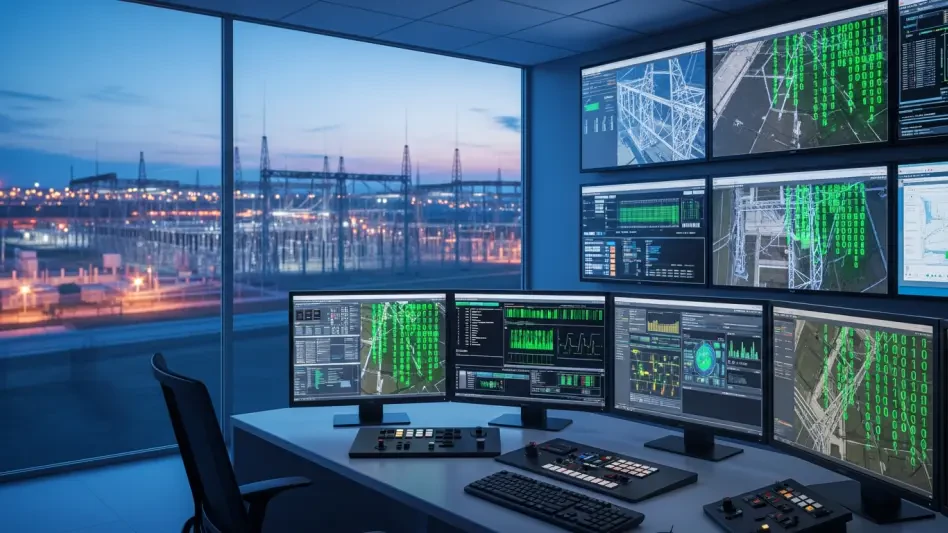
The rhythmic hum of a regional electrical substation usually signals the invisible heartbeat of modern civilization, yet a single packet of data can instantly silence that pulse more effectively than a squadron of heavy bombers ever could. The transition toward this digitized state of hostility has transformed the global landscape into a theater where the traditional boundaries of time, geography, and physics no longer provide the protection they once did. In this environment, the absence of sirens or the smell of cordite does not signify peace; rather, it often masks a sophisticated, large-scale infiltration of the systems that manage everything from municipal water treatment to the high-frequency trading floors of major financial hubs. As modern warfare expands into this fourth domain, the very infrastructure of civilian life becomes the primary staging ground for international conflict, turning ordinary utilities into latent weapons of mass disruption.
The emergence of cyberspace as a decisive battlefield marks a fundamental shift in the doctrine of national defense, moving the front line from the distant borders of a sovereign state to the internal server rooms of its private enterprises and public utilities. This is not merely a technological supplement to the existing arenas of land, sea, and air, but a transformative layer that dictates the feasibility of all other military maneuvers. When a nation-state decides to project power in the contemporary era, it no longer begins with a declaration or a naval blockade, but with a silent, synchronized effort to blind an adversary’s satellite communications and cripple its domestic energy grid. The stakes of this digital competition are existential, as the ability to maintain essential services under duress now defines the survival of a modern state as much as its ability to repel a physical invasion.
Modern geopolitical friction is increasingly characterized by a “low and slow” approach, where strategic goals are pursued through persistent digital operations that avoid the immediate escalation of a kinetic response. By embedding malicious code within the critical infrastructure of an opponent years before a shot is fired, a state actor gains a permanent form of leverage that traditional military forces cannot match. This state of perpetual “quasi-war” means that national security is no longer a temporary condition achieved through a treaty, but a continuous effort to defend the integrity of every connected device within a nation’s borders. The realization that every smartphone, server, and industrial controller is a potential entry point for a foreign adversary has forced a complete reimagining of what it means to go to war in the twenty-first century.
The Silent Prelude to the Modern Explosion
The next major global conflict will likely lack the dramatic visuals of a sudden missile strike or the mass movement of armor across a frontier, beginning instead with a quiet and devastating collapse of the invisible networks that hold a society together. In this silent prelude, the first casualties are not soldiers, but the trust and functionality of civilian systems. Imagine a city where the lights go out, the cellular networks go dark, and the water pressure drops to zero, all without a single explosion or the sound of an approaching aircraft. This scenario represents the opening move in a modern engagement, where digital sabotage is used to paralyze a nation’s response mechanisms and demoralize its population before any physical troops ever cross a border.
This evolution toward digital primacy is driven by the realization that disabling a target’s internal stability is far more efficient than destroying its physical assets. A naval blockade can be seen and countered, but a logic bomb hidden within a port’s logistics software can bring commerce to a halt without ever revealing the identity of the attacker. As global friction intensifies, the traditional arenas of land, sea, and air have been joined by this fourth, invisible domain, which operates on the logic of speed and anonymity. In this new reality, a single line of malicious code can achieve what once required an entire division of paratroopers, making the digital infrastructure of civilian life the primary staging ground for international conflict.
The transition to this fourth battlefield has effectively erased the distinction between a state’s military readiness and its civilian economic stability. Because the systems that control a nation’s power grid, banking sector, and healthcare services are interconnected, a vulnerability in one becomes a strategic weakness for the entire country. This interconnectedness allows nation-states to bypass traditional kinetic force in favor of operations that provide strategic positioning without the immediate political cost of a visible attack. The battlefield is no longer a distant field or ocean; it is the fiber-optic network that runs beneath our feet and the wireless signals that surround us, turning every home and office into a potential point of contact in a global struggle for dominance.
Why the Digital Domain Now Dictates Global Survival
The shift toward cyber-centric warfare is not merely a temporary technological trend; it is a fundamental evolution of geopolitics where historical grievances and territorial ambitions are settled through fiber-optic cables. As diplomacy falters, nation-states find that digital tools offer a way to project power that is both cost-effective and difficult to attribute. This lack of clear attribution creates a gray zone of conflict where states can engage in hostile acts while maintaining plausible deniability, avoiding the severe consequences of a formal declaration of war. Consequently, the digital domain has become the most active theater for modern statecraft, as it allows for the continuous pursuit of strategic advantages without the friction of traditional international law.
Understanding this domain is critical because it has completely redefined the concept of national survival. In previous eras, a nation’s survival was predicated on its ability to defend its borders from physical incursions. Today, survival depends on the resilience of a vast and complex digital ecosystem. If an adversary can remotely shut down a nation’s financial systems or corrupt its electoral data, they can achieve the goals of regime change or economic subjugation without ever firing a bullet. This makes every connected device a potential casualty in a “quasi-war” that never truly ends, as actors on all sides are constantly testing defenses and looking for new ways to compromise the internal workings of their rivals.
Furthermore, the digital domain has become the primary arena for “asymmetric” warfare, where smaller or less conventionally powerful states can challenge the world’s major powers on an equal footing. A country that cannot afford a fleet of aircraft carriers can still develop a sophisticated cyber command capable of causing massive economic damage to a much larger adversary. This leveling of the playing field has made the global security environment more volatile and unpredictable. As territorial disputes and ideological conflicts become centered on digital control, the ability to protect a nation’s cyberspace has become the most significant factor in its overall geopolitical stability and long-term survival.
The Triad of Conflict: Kinetic, Cyber, and the Rise of Cyber-Kinetic Strikes
Modern warfare has fragmented into three distinct modalities that are often deployed in a layered “softening” process before any physical troops cross a border. Kinetic war remains the traditional “boots on the ground” approach, but it is now almost always preceded by pure cyberwar. These aggressive digital campaigns are designed to spread misinformation, harvest intelligence, and sabotage communications, effectively preparing the physical environment by ensuring the enemy is blinded and confused. The interplay between these modes creates a new kind of synchronized combat where a digital strike and a physical maneuver are executed as a single, unified action, amplifying the impact of both.
The most concerning evolution in this triad is the rise of cyber-kinetic warfare, where digital intrusions are specifically engineered to cause physical destruction in the real world. This is no longer the realm of science fiction; it is a demonstrated capability used to sabotage nuclear centrifuges, disable water treatment facilities, and even disrupt the cooling systems of industrial plants. In 2026, the world witnessed several high-profile examples of this, such as the joint U.S.-Israeli operations known as “Epic Fury” and “Roaring Lion,” which utilized sophisticated cyber strikes to degrade Iranian radar grids and target leadership locations with extreme precision. These operations showed that while the digital component was the primary enabler, the physical destruction it facilitated was the ultimate goal, bridging the gap between a line of code and a pile of rubble.
This battlefield is further defined by a stark ideological and operational divide between global powers. The “East”—comprising the CRINK bloc of China, Russia, Iran, and North Korea—often utilizes cyber tools for unconventional and aggressive ends. China has developed a system for the massive theft of industrial intellectual property and private sector data to bolster its domestic economy and military technology. North Korea, in contrast, uses its cyber capabilities for currency extraction and cryptocurrency theft to bypass international sanctions. On the other side, the “West,” led by the Five Eyes alliance, focuses its efforts primarily on high-level intelligence gathering and national security operations. While both sides are deeply embedded in the digital theater, their motivations and the ethics governing their use of these tools differ significantly, creating a constant state of tension that threatens to spill over into full-scale conflict at any moment.
Expert Insights on the “Canary Effect” and Strategic Patience
Intelligence analysts and defense experts emphasize that nation-state actors operate with a level of strategic patience that separates them from common cybercriminals. Unlike criminal hackers who prioritize immediate financial gain and are often loud in their approach, state-sponsored actors value “dwell time”—the ability to remain undetected within an adversary’s network for months or even years. This allows them to conduct deep-seated reconnaissance and “pre-position” malware in critical infrastructure that can be activated only when it provides the maximum geopolitical advantage. This “living off the land” technique, which uses a target’s own administrative tools to avoid detection by traditional antivirus software, has become the hallmark of sophisticated modern espionage.
Experts often refer to a sudden surge in digital intrusions as the “canary in the coal mine,” providing a warning that kinetic conflict may be imminent. For instance, the 2022 invasion of Ukraine was preceded by years of “digital softening” and a dramatic spike in “wiper” malware attacks designed to erase government databases and disrupt the Viasat satellite network. These cyber operations served as a reliable indicator that Russia was preparing for a massive physical movement of troops. By monitoring these digital signals, intelligence agencies can gain insights into an adversary’s intentions long before their armies begin to move, making cyberspace the most important early warning system in modern military strategy.
The concept of the “canary effect” is currently being monitored with intense scrutiny regarding the situation in Taiwan. China’s “Volt Typhoon” campaign, which has been identified as a long-term effort to infiltrate U.S. utility, energy, and water systems, is seen by many experts as a defensive deterrent. The goal is likely to create a situation where, if the U.S. were to intervene in a physical conflict over Taiwan, China could activate these hidden digital triggers to cause widespread domestic chaos in America. This strategy of pre-positioning highlights how cyberspace is used to create a strategic stalemate, where the threat of a digital-kinetic strike against civilian infrastructure serves as a powerful tool to prevent or shape the outcome of physical territorial disputes.
A Strategic Framework for Resilience in a Digital Theater of War
To navigate this fourth battlefield, organizations and governments have begun to move beyond traditional reactive security and adopt a more proactive defense framework. This shift required identifying the signs of “pre-positioning” by monitoring for the unauthorized use of legitimate administrative tools rather than just searching for known viruses. Security experts found that the most dangerous threats did not carry the signature of a virus but appeared as normal system activities, requiring a more nuanced approach to behavioral analysis and network visibility. This transition toward “zero trust” architectures, where every internal and external interaction is continuously verified, became the new standard for protecting sensitive national and corporate assets.
Stakeholders also recognized the necessity of bridging the gap between corporate security and national defense, acknowledging that the theft of private sector intellectual property was a core component of state-sponsored economic warfare. Because modern conflicts often targeted the economic foundations of a state, the protection of a private tech company’s proprietary code became as strategically significant as the defense of a military base. This realization led to unprecedented levels of information sharing between government intelligence agencies and the private sector, as both parties understood that they were being targeted by the same sophisticated state actors. This unified front served to strengthen the overall posture of a nation, making it a more difficult and less appealing target for digital aggression.
Finally, the development of “asymmetric resilience” emerged as the only viable way to neutralize the leverage that adversaries hoped to gain through cyber-kinetic threats. This concept focused on the ability of a nation to maintain essential services like energy, water, and emergency communications even when their primary digital controllers were compromised. By integrating analog backups and localized manual overrides into critical systems, governments ensured that a single line of malicious code could not bring the entire country to a standstill. This move toward physical and digital redundancy proved that while the fourth battlefield was a place of extreme vulnerability, it was also a place where strategic foresight and architectural resilience could prevent a digital spark from becoming a global explosion.