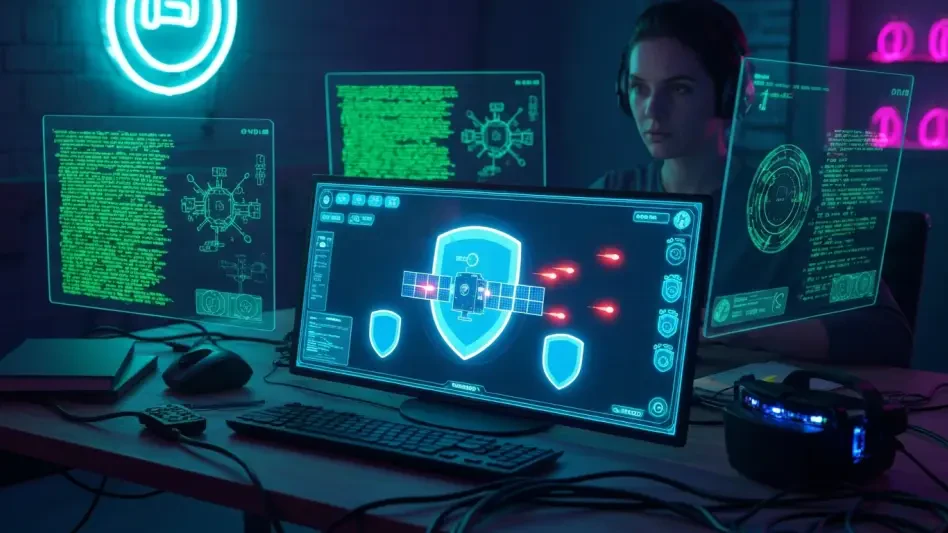
As the global community’s reliance on satellite technology for everything from financial transactions and global navigation to critical national security operations intensifies, a new and perilous frontline has emerged in cyberspace. This expanding orbital infrastructure has created a vast and increasingly attractive attack surface for malicious actors, giving rise to the ominous threat of “space terrorism” capable of disrupting modern life on a catastrophic scale. In a bold move to shift the defensive posture from merely reacting to incidents to proactively neutralizing them, researchers have developed an innovative software tool. By leveraging the engaging principles of game design, this platform aims to train and empower cybersecurity professionals, equipping them with the decision-making skills needed to defend the vital digital supply chains that support our assets in space. This novel approach recognizes that in the complex theater of cyber warfare, the most effective defense is one that can anticipate an adversary’s next move and counter it before the first shot is even fired.
A New Battlefield in the Stars
The Growing Vulnerability of Our Space Assets
The threat to space-based systems is no longer a futuristic scenario but a pressing and tangible reality. Data from security experts reveals a startling trend, with the space industry sustaining nearly 240 distinct cyberattacks over the last two years. This alarming frequency demonstrates that conventional cybersecurity measures are struggling to keep pace with the evolving tactics of sophisticated adversaries who see immense value in targeting these high-altitude assets. The consensus among leading professionals is that a fundamental paradigm shift is necessary to protect the orbital infrastructure that underpins so much of modern civilization. The path forward requires moving beyond traditional firewalls and antivirus software to a more dynamic and intelligent defense. This new approach must be centered on strengthening the most crucial component of any security system: the human operators. By empowering these defenders with the tools and training to prepare for complex, real-world threats, organizations can build a more resilient and adaptive security posture.
The core of this advanced defensive strategy lies in the proactive and intelligent application of Cyber Threat Intelligence (CTI), which is defined as contextualized and analyzed data concerning active or potential threats to an organization. Historically, the immense value of CTI has been underutilized, often relegated to post-incident analysis to understand what went wrong after a breach has already occurred. However, its true power is realized when it is used preemptively, allowing security teams to foresee attack vectors, understand adversary motives, and fortify defenses before an attack is launched. The innovative gamified software developed by researchers was specifically designed to bridge the persistent gap between possessing this critical intelligence and translating it into timely, effective action. It functions as a sophisticated training ground where defenders can immerse themselves in realistic scenarios, learning to interpret complex streams of CTI and make sound tactical decisions under pressure, thereby transforming intelligence from a reactive report into a proactive shield.
Fighting Fire with Fun and the Gamified Training Ground
To achieve an unparalleled level of realism, the training tool immerses players directly into a simulated satellite cyber supply chain environment that is meticulously constructed from the blueprints of major real-world security incidents. The simulation incorporates the specific tactics, techniques, and procedures observed in far-reaching compromises, such as the notorious SolarWinds supply chain attack and the disruptive hack on ViaSat’s satellite modems. By modeling these events, the game replicates a complete attack lifecycle, guiding the player from the initial, often subtle, signs of a breach all the way through to the potential for catastrophic disruption of critical satellite services. During this intense gameplay, participants are presented with a continuous stream of CTI, which is categorized as strategic, operational, and tactical intelligence. They are challenged to interpret this multifaceted data to make pivotal decisions at each stage of the unfolding attack, learning to recognize patterns and anticipate the adversary’s next steps in a controlled environment.
The consequences of the players’ choices within the simulation are dynamic, directly influencing the outcome of the scenario and providing immediate, tangible feedback on their decision-making process. A player’s performance is not judged on a simple pass-or-fail basis but is comprehensively measured against the system’s ability to effectively anticipate the threat, avoid its impact, withstand the assault, recover from any incurred damage, and ultimately evolve its defenses for the future. This structured evaluation provides a safe yet high-pressure environment for security teams to rigorously practice and refine their incident response protocols without putting any real-world assets at risk. This method of training offers a low-risk, high-impact means of strengthening the cognitive and analytical capabilities that are essential for modern cyber defense, ensuring that when a real threat emerges, the human defenders are prepared, practiced, and ready to respond effectively to protect our critical orbital infrastructure.
How the Game Changes the Game
Simulating Catastrophe to Prevent It
The creation of this sophisticated training tool was guided by a rigorous and collaborative methodology, standing as a testament to the power of interdisciplinary innovation. The researchers employed an iterative, expert-informed design process that seamlessly combines the structured principles of design science with the empathetic approach of human-centered design. This integrated framework allowed for continuous evaluation and refinement of the tool throughout its development lifecycle. To guarantee the simulation’s accuracy, relevance, and ultimate effectiveness in training, the development team conducted extensive consultations with a diverse cohort of industry professionals. This group included seasoned cybersecurity specialists, expert CTI analysts, highly specialized space systems engineers, and creative game designers. The constant feedback loop generated from these consultations was instrumental in honing every aspect of the game, from its overarching narrative structure and strategic objectives down to the specific intelligence cues and tactical dilemmas presented to the players during gameplay.
The result of this meticulous process is a user-centered analysis solution capable of far more than just basic training. It can precisely identify critical skill gaps within a security team, allowing organizations to target their professional development efforts more effectively. Furthermore, the platform serves as a powerful testing ground for the viability of different response strategies, enabling teams to experiment with and validate their playbooks against a variety of sophisticated attack scenarios. Perhaps most importantly, the immersive experience deepens defenders’ understanding of the intricate and often-overlooked complexities inherent in satellite cyber supply chains. It highlights the non-obvious dependencies and potential points of failure that could be exploited by an adversary. By providing this holistic and practical learning experience, the tool equips defenders with the deep situational awareness and sharpened instincts necessary to protect these vital systems against an ever-evolving landscape of cyber threats, ensuring they are not just reacting to events but are staying one step ahead.
Sharpening the Human Element
A crucial insight reinforced by this research is the often-neglected importance of the human element in achieving true cyber resilience. While advanced technology is an indispensable component of any modern defense strategy, it is ultimately the decisions made by people—often under immense pressure and with incomplete information—that determine whether a system can successfully withstand a determined attack. The gamified approach directly addresses this human factor, which is frequently the weakest link in the security chain. To provide a clear structure for this learning process, the research team developed a new Cyber Resilience Lifecycle, which was carefully adapted from established international models of incident response. This lifecycle delineates six distinct phases of a security incident and meticulously maps how different classifications of Cyber Threat Intelligence can and should be used to support defenders at each specific stage, from initial threat anticipation to post-incident evolution.
Within the game’s framework, this lifecycle serves as both a guide and a scorecard. It prompts players to recognize the unique challenges and objectives of each phase and to practice what constitutes effective decision-making in that specific context. For instance, the intelligence required to anticipate a threat is vastly different from the tactical data needed to withstand an active assault or the strategic insights necessary to evolve defenses after an attack. By simulating these distinct phases and demanding appropriate responses, the tool trains security professionals to think more strategically and holistically about incident response. It moves them beyond a purely reactive, technical mindset and fosters a deeper, more intuitive understanding of the entire cyber defense process. This empowers them not only to use tools more effectively but to make the critical judgments that technology alone cannot, thereby transforming a potential vulnerability into a formidable, well-trained line of defense.
Securing the Final Frontier
The research culminated in one of the first global efforts to specifically apply gamification to the use of Cyber Threat Intelligence within the unique and complex context of satellite cyber supply chains. The findings, which were presented at the 23rd European Conference on Cyber Warfare and Security, signaled the project’s significant relevance to the international cybersecurity community. As both nations and private corporations continued their expansion into space, this work underscored the exponential growth in cyber risk and the essential task of strengthening resilience to protect not only commercial interests but also the national security and vital public services dependent on orbital infrastructure. The project’s success paved the way for future enhancements, with considerations for multi-player versions to simulate team-based responses, the development of alternative attack scenarios, and the implementation of more refined measures for CTI quality, ensuring that our defenses could evolve alongside the threats in the final frontier.