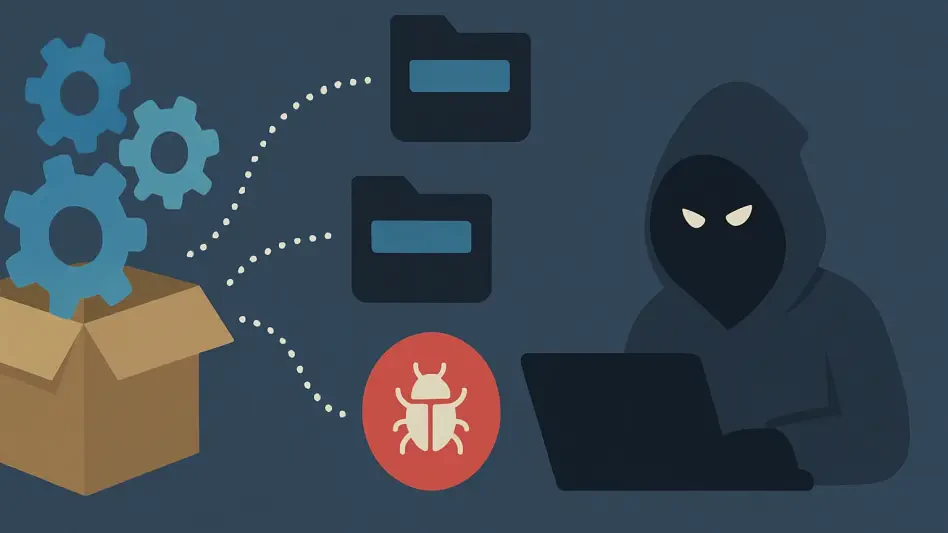

The rapid industrialization of cybercrime has reached a significant milestone with the widespread adoption of the Bluekit phishing platform, a comprehensive tool that simplifies complex attacks for a broad spectrum of threat actors. Unlike the traditional methods of the past where attackers had to manually configure separate servers, source individual phishing templates, and manage disparate exfiltration channels, this centralized Phishing-as-a-Service model provides a streamlined dashboard for every phase of an operation. By removing the steep technical barriers that once restricted sophisticated session hijacking to elite hackers, Bluekit has effectively democratized advanced cyber espionage. The platform allows even relatively inexperienced individuals to launch high-impact campaigns against major corporate targets and personal accounts by providing a pre-configured infrastructure that handles the heavy lifting of domain management and data collection. This shift represents a fundamental change in the threat landscape, as the volume of high-quality phishing attempts continues to rise alongside the technical sophistication of the tools being used.
Automated Infrastructure and Stealth Operations: Navigating Modern Evasion
The technical efficiency of the Bluekit platform is rooted in its extensive library of over forty professionally crafted website templates that flawlessly replicate the appearance and behavior of high-traffic services such as Gmail, Outlook, and various international banking portals. These templates are not static copies; they are dynamic interfaces designed to provide a localized experience for the victim, often including geolocation emulation and language adjustments to maximize the probability of a successful deception. Beyond simple visual mimicry, the system automates the arduous task of infrastructure setup by facilitating the immediate purchase and registration of domains, which allows attackers to cycle through malicious sites faster than security filters can flag them. This rapid rotation of assets ensures that campaigns remain active even as individual URLs are identified and blocked by traditional web safety protocols. By automating these foundational steps, the platform enables operators to focus entirely on the social engineering aspects of their campaigns rather than technical maintenance.
To maintain a low profile and avoid detection by automated security scanners, Bluekit employs sophisticated antibot cloaking and advanced redirection logic that filters out non-target traffic. When a security vendor’s crawler attempts to analyze a Bluekit-hosted link, the platform identifies the request as an automated bot and presents a benign or deceptive page, effectively hiding the malicious content from analysis. Simultaneously, the platform utilizes integrated Telegram bots as the primary channel for data exfiltration, delivering stolen information to the attacker in real-time. This method of communication is particularly effective because it leverages a legitimate, encrypted messaging service that is rarely blocked on enterprise networks, making it difficult for forensic teams to intercept the stolen data as it leaves the target environment. The combination of rapid domain deployment and stealthy exfiltration creates a persistent threat environment where traditional defensive measures, such as static blocklists and signature-based detection, are increasingly rendered obsolete by the sheer speed and adaptability of the platform’s operational architecture.
Sophisticated Compromise: Session Hijacking and AI-Enhanced Deception
The most critical threat posed by the Bluekit ecosystem is its ability to bypass two-factor authentication by shifting the focus from simple credential harvesting to complete session hijacking. Instead of merely storing a victim’s username and password, the kit is designed to capture the unique session tokens and browser cookies that are generated immediately after a user successfully authenticates. By intercepting these tokens post-verification, the attacker can effectively clone the victim’s active browser state, gaining full access to the account without ever needing to interact with the two-factor authentication challenge themselves. This technique makes traditional verification methods, including SMS codes and app-based push notifications, largely ineffective because the attacker is essentially stepping into a session that the user has already proven they are authorized to hold. This transition from credential theft to session takeover represents a sophisticated evolution in cybercrime, as it targets the inherent trust that modern web applications place in active session cookies.
In an effort to further enhance the persuasiveness of these attacks, Bluekit has integrated an advanced AI Assistant that leverages powerful large language models, including GPT-4 and Claude, to generate highly convincing phishing content. This module allows operators to produce tailored emails and messages that are free from the grammatical errors and awkward phrasing that often characterized older phishing attempts. By utilizing these models, attackers can create highly personalized social engineering lures that mimic the specific tone and style of legitimate corporate communications or personal interactions. This integration points toward an era where the generation of malicious content is almost entirely automated, allowing for a massive increase in the volume of convincing attacks. While the human element still plays a role in the final refinement of these campaigns, the presence of AI-driven tools within the platform ensures that even the most skeptical users are more likely to fall victim to the highly optimized and machine-generated messages produced by the system.
Strategic Defense: Implementing Resilient Security Frameworks
To effectively counter the industrialization of phishing brought about by platforms like Bluekit, organizations recognized the need to move beyond standard security awareness training and toward more robust technical controls. The primary defensive transition involved the adoption of phishing-resistant multi-factor authentication, specifically leveraging FIDO2 and WebAuthn hardware security keys. These devices established a cryptographically secure link between the user’s hardware and the specific domain they were accessing, making it impossible for a middleman kit to reuse the authentication data on a different site. By moving away from time-based codes and push notifications, security teams significantly reduced the risk of session hijacking, as the hardware keys did not transmit tokens that could be easily intercepted or replayed by an external attacker. This fundamental shift in identity verification provided a necessary layer of protection against the automated session theft techniques that have become the hallmark of modern phishing as a service.
In addition to hardware-based authentication, successful organizations implemented advanced session monitoring and proactive web filtering to identify signs of compromise in real-time. Security operation centers utilized specialized tools to detect anomalies such as sudden session token reuse from unauthorized geographic locations or unfamiliar device fingerprints, allowing for the immediate revocation of compromised sessions. Furthermore, the implementation of aggressive domain reputation filtering proved vital in blocking access to newly registered domains before they could be used in active campaigns. By combining these technical defenses with endpoint protection strategies that monitored for unauthorized access to local browser storage, defenders created a multi-layered environment that prioritized identity integrity over simple credential validation. These actions demonstrated that while tools like Bluekit continued to evolve, the shift toward phishing-resistant standards and active session oversight provided a viable path forward for securing digital assets against highly automated and intelligent threats.